RSF capture of Heglig expands South Sudan’s role in Sudan conflict
Event
On 8 December, the Sudanese paramilitary Rapid Support Forces (RSF) published a statement on its official website claiming that it had “managed to take control of the strategic area of Heglig in South Kordofan State”.
The statement stated that the paramilitary force intends to “secure and protect the vital oil facilities in the area to safeguard the interests of the brotherly Republic of South Sudan, which relies heavily on oil resources that pass through Sudanese territory to global markets”. At the time of publication, the SAF had not commented on events in Heglig.
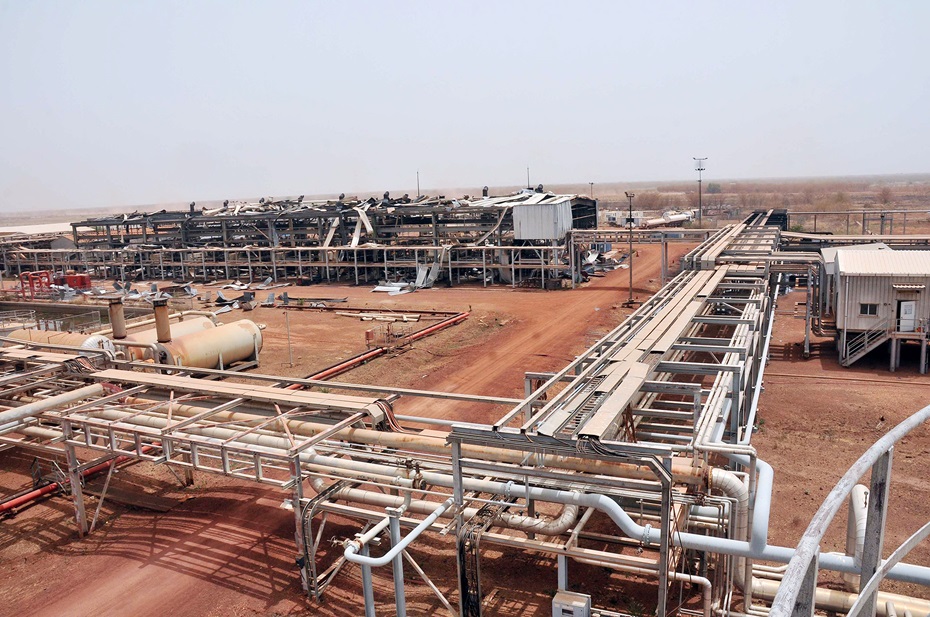
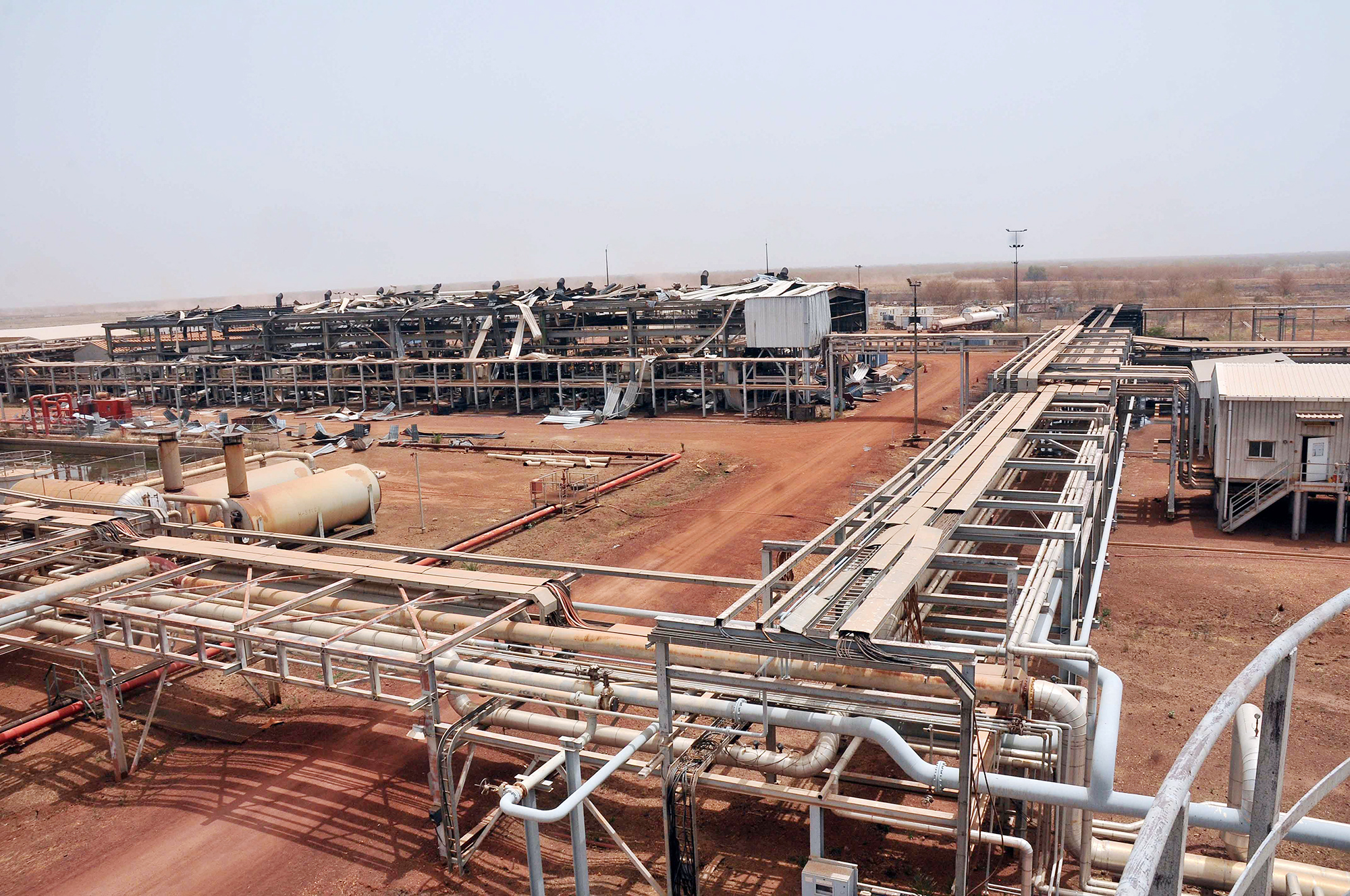 The image shows damaged facilities of an oil refinery in Sudan’s main petroleum centre of Heglig, bordering South Sudan, on 24 April 2012. Image credit: Ebrahim HamidD/AFP via Getty Images
Significance
RSF control of Heglig increases the conflict risk between the Sudanese Armed Forces (SAF) and South Sudan because the oil-rich area is administered by Sudan but is claimed by both Sudan and South Sudan. Assistant Chief of the Defence Forces for Mobilisation and Disarmament for the South Sudan People’s Defence Force (SSPDF) Lieutenant General Johnson Olony said on 8 December that the SSPDF “intends to assume control of Heglig from the RSF to prioritise regional stability”, according to an article published by the privately owned Sudan Tribune news outlet. This was followed on 10 December by reports from the South Sudan Broadcasting Corporation (SSBC) news that South Sudan had made a tripartite agreement with the RSF and SAF that allows the SSPDF to take responsibility for security in Heglig. Between March and September 2012, South Sudan occupied Heglig before international pressure forced its army to withdraw.
Tensions between the SAF and the South Sudanese government have sporadically flared since the start of Sudan’s civil war in April 2023. Janes has high confidence that tensions have been driven by the SAF’s allegations that South Sudan has supported the RSF and by the SAF’s killing of South Sudanese nationals in Sudan who were suspected of fighting alongside the RSF.
For more information, please see Alleged killing of South Sudanese civilians by SAF in Sudan very likely to cause short-term increase in communal tensions in South Sudan.
Impact on SAF revenue
Janes assesses that the loss of Sudan’s largest oilfields, located in Heglig, also very likely disrupts a legitimate source of revenue needed by the SAF to help sustain its operations. Sudan’s oil wealth is generated by processing and transit fees paid by South Sudan and partly by oil produced from the oilfields in Heglig. On 9 December, Qatari state-funded Al Jazeera news wrote that the RSF’s advance into Heglig “delivers a direct blow to what remains of the [SAF-led] Port Sudan government’s cash revenues, including fees from the transit of South Sudanese oil”.
For more information on Sudan and South Sudan’s economic interdependence, please see South Sudan's economic stability very likely reliant on Chinese and Emirati activity but weakened by Sudan conflict.
Weakening of SAF’s Central Military Region
To establish its control of Heglig, RSF fighters overran the nearby base of the SAF’s 90th Infantry Brigade of the SAF’s 22nd Infantry Division. The loss of the base further weakens the overall operational capabilities of the 22nd Infantry Division because the RSF very likely controls most of the military bases previously operated by the division’s units after their withdrawal from West Kordofan. The RSF previously captured the bases of SAF’s 92nd Infantry Brigade in Al-Meiram and the 91st Infantry Brigade in El Fula in July 2024, both of which fell under the 22nd Infantry Division. On 1 December, the RSF captured the 22nd Infantry Division headquarters in Babanusa, West Kordofan region, while the military bases operated by the 89th Infantry Brigade, the 170th Artillery Brigade, and the 697th Tank Battalion, also in Babanusa, were similarly very likely taken over by the RSF.
On 9 December, the Sudan Tribune published a video released by the SSPDF showing SAF troops retreating from West Kordofan into South Sudan after surrendering their weapons. Janes assesses that surrendered SAF equipment included at least four T-72 tanks, three ZFB-05 armoured vehicles with Sudan Central Reserve Forces insignia, two 37 mm M1939 anti-aircraft guns, one 122 mm M-30 howitzer, one towed ZPU-4 and two self-propelled ZPU-4s, one Type 63 multiple rocket launcher, and two ZU-23-2 anti-aircraft guns, as well as various rocket-propelled grenades (RPGs) and AKM assault rifles.
Despite significant SAF losses in West Kordofan since 1 December, some SAF infantry divisions continue to function in South Kordofan, such as the 10th Infantry Division and 14th Infantry Division, although there have been notable setbacks, including the capture of the 18th Infantry Brigade in En Nahud, West Kordofan, earlier in May 2025 of the 5th Infantry Division (Camel Corps) by the RSF.
Outlook
In the immediate term (one to four weeks), the RSF is very likely to maintain control of the areas surrounding Heglig and consolidate its control of South Kordofan. This will continue to weaken the SAF’s Central Military Region command and further fragment the Sudanese state. Over the short term (one to six months), South Sudan is very likely to seek to strengthen its agreement with the RSF and SAF to ensure that it can export its oil from oilfields in South Sudan’s Unity State via Heglig to Port Sudan. However, any perceived co-operation between the RSF and SSPDF is very likely to further weaken Sudan-South Sudan relations and increase the risk of South Sudan being drawn into the conflict.
Janes assesses that the tripartite agreement between the SAF, RSF, and SSPDF on South Sudanese control of Heglig’s oilfields reflects that it is in the SAF’s economic interests to allow the South Sudanese to resume oil processing and transportation so that the SAF can continue collecting transit fees.
Janes assesses that the RSF likely benefits from an unknown level of co-operation with the SSPDF and therefore it is in the RSF’s political and strategic interests to maintain close relations with South Sudan over the medium term. However, by allowing the export of South Sudanese oil via Heglig to maintain RSF-South Sudan co-operation, the RSF will simultaneously likely enable the SAF to collect transit fees, which consequently help to fund the SAF’s operations and sustain the conflict between the RSF and SAF.
For more information, please see RSF capture of Heglig expands South Sudan’s role in Sudan conflict