Anti-government protests alone unlikely to lead to government overthrow in Iran in the immediate term
Assessment
As of January based on information available in the open sources it is unlikely that the protest movement in Iran will lead to the overthrow or collapse of the government in the immediate term (next four weeks), although a high risk of escalation remains, with protest activity over the coming weekend of 10 to 11 January a key indicator of how the protest movement may develop into a more serious threat.
Janes assesses that the most likely outcome continues to be the Iranian government seeking to contain protests and riots by offering political and economic reforms.
The risk of the Iranian state utilising violence to suppress protests however is increasing as the movement continued to expand over the night of 8 January and protesters adopted a more politically oriented message with regard to Reza Pahlavi’s calls for protesters to use his name in chanting.
Context
Scale of protests
Between 28 December 2025 and 8 January 2026, Janes Events recorded a total of 274 protests across Iran.
The protests began in Tehran following a sharp depreciation of the Iranian rial (IRR), which reached IRR1.45 million per US dollar (USD).
Of the total events, 231 protests have been categorised by Janes as primarily motivated by cost of living-related issues.
However, these protests since 28 December have frequently overlapped with political demands, with 210 incidents additionally classified by Janes as primarily motivated by broader anti-government sentiment. This indicates that while economic hardship was the immediate catalyst, mobilisation has often extended into broader opposition to government policy.
Janes also recorded a smaller subset of protests, eight incidents, which the open sources report were primarily motivated by corruption-related grievances, indicating that corruption remains a secondary but persistent theme rather than a primary mobilising factor for protesters since 28 December.
In terms of event type, protest activity until 7 January has primarily been dominated by non-violent actions, including demonstrations, marches, and sit-ins. Janes has recorded an increase in violent protests since 7 January in several provinces including Tehran, Isfahan, Razavi Khorasan, and Fars.
Operations and attacks were comparatively limited, indicating that escalation remained contained overall.
However, not all locations for protests have remained peaceful. On 5 December, Ilam province recorded the most severe consequences, with approximately 30 civilians killed by Iranian security forces, with open sources indicating that around 55 people were wounded. Janes has not been able to confirm the exact number of killed or wounded in Ilam at the time of publication.
Note: All events included in this dataset meet Janes verification thresholds and are based on corroborated open-source reporting available at the time of publication. However, given ongoing information constraints, including reporting delays and access limitations, it is possible that additional protest events occurred but could not be independently verified within the reporting window.
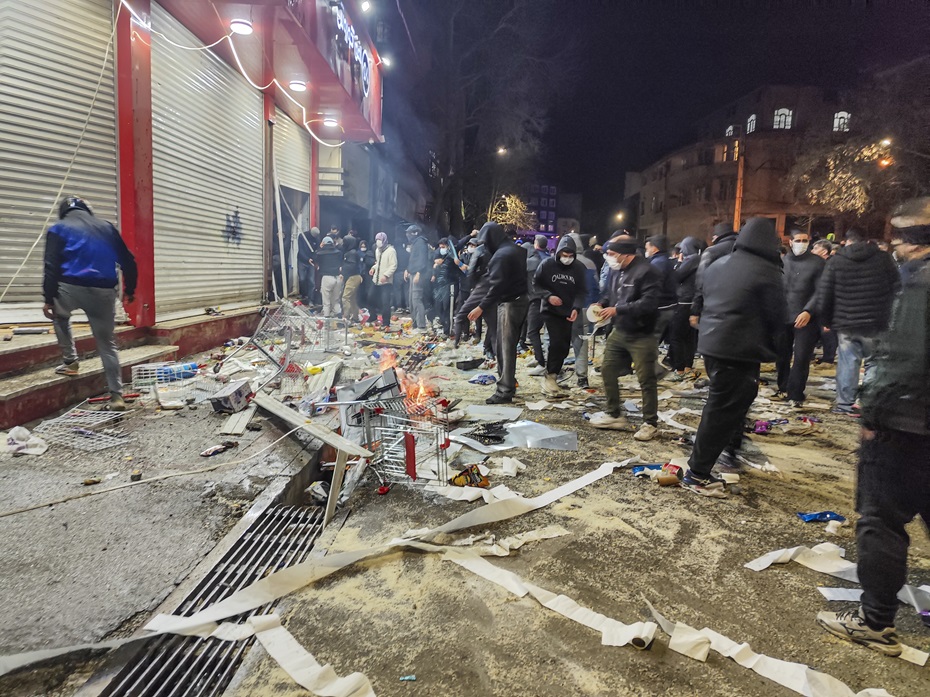
Kamran/Middle East Images/AFP via Getty Images
Geographic extent
Protest activities recorded by Janes during the reporting period were geographically dispersed, spanning multiple provinces and major urban centres, although activity remained unevenly distributed.
At the time of publication, Tehran province recorded the highest concentration of protests, reflecting its central political, economic, and symbolic importance. Protest activity in Tehran has been primarily non-violent and focused on public demonstrations linked to economic grievances.
Other provinces have experienced moderate but recurring protest activity, including Isfahan and Kermanshah, suggesting regional urban centres are, at the time of publication, secondary focal points for mobilisation.
Janes has recorded lower levels of protest activity in Fars, Lorestan, Hamadan, Khuzestan, and Kohgiluyeh and Boyer-Ahmad provinces. As mentioned above, despite its relatively low number of recorded events, Ilam province experienced the highest level of protest-related violence, including significant civilian casualties, highlighting a disconnect between protest frequency and intensity.
Separately, political mobilisation has been reported in the open sources in Khorramabad city, Lorestan province. According to initial open sources, tribal groups have pledged support for the Islamic Republic of Iran and Supreme Leader Ayatollah Syed Ali Khamenei, while acknowledging economic hardship and stating that grievances should be pursued within the framework of law and order. These groups also expressed support for the government in the event of an Israeli attack on Iran. Janes assigns a low confidence score to this event due to the lack of corroboration from other reliable sources.
8 January 2026
On 8 January, Janes recorded a total of 58 verified protest-related events across Iran. Protest activity was geographically dispersed, with events reported across 27 provinces, indicating continued nationwide mobilisation.
Tehran recorded the highest number of events, maintaining its role as the primary focal point for protest activity. Elevated activity was also observed in Kermanshah and Kurdistan provinces, while West Azerbaijan and Ilam recorded lower but violent protests. Other provinces, including Isfahan, Gilan, Kohgiluyeh and Boyer-Ahmad, also had protests taking place, reflecting sustained mobilisation across the country.
State response
State responses to protest activity during the reporting period indicate a strategy of selective containment rather than comprehensive suppression.
Janes has recorded 23 security force operations linked to countering protests, with the open sources indicating that Iranian security forces are engaging in targeted security interventions, including crowd-control measures, dispersals, and preventative actions.
One major operation was carried out in Yasouj city, Kohgiluyeh and Boyer-Ahmad province, where the Special Unit of the Iranian police arrested 85 civilians during protests against the government of Iran.
The predominance of non-violent protest actions and the relatively low number of recorded attacks (15 events) suggest that security forces have so far been attempting to use policing tactics and containment methods rather than active violent suppression of the protests.
For the full analysis, please see here: Anti-government protests alone unlikely to lead to government overthrow in Iran in the immediate term