Janes - Belt and Road Monitor - Edition 14, 2026
This edition of the Belt and Road Monitor covers developments from 1 to 28 February 2026. If you enjoy our Belt and Road coverage, consider checking out Janes IntelTrak, a visual analytics tool that tracks and maps the global activities of Chinese and Russian companies in real time and includes expanded analysis of projects highlighted in "Top Developments." The Monitor draws from transactional data collected daily by our proprietary tool, Janes IntelTrak, as well as research compiled by our team of analysts.
Belt & Road at a glance
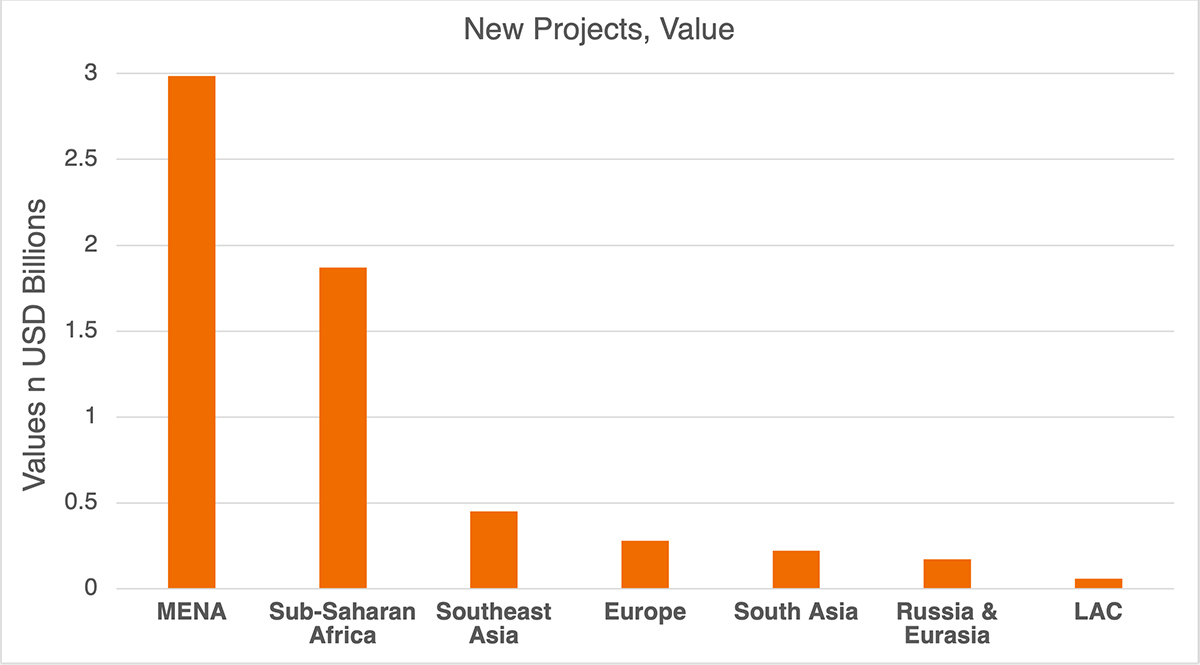
Value of all new BRI projects:

USD6.1 Billion
(Estimated)
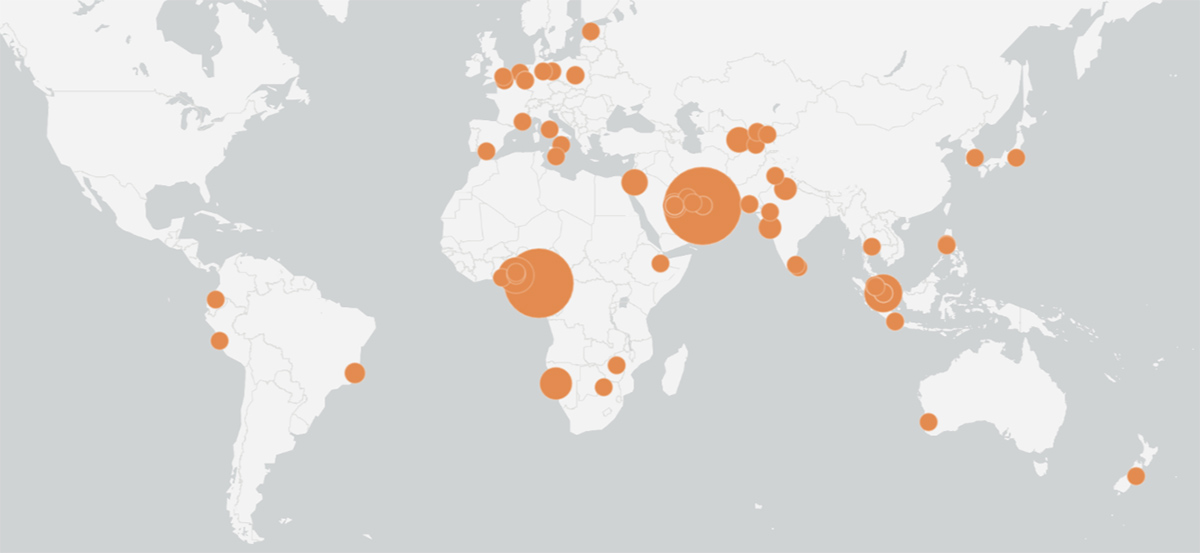
Middle East

the Region with the highest value of new bri projects
Largest New Transaction
USD 1.33 Billion
High Speed Railway project construction

Abu Dhabi, United Arab Emirates
19
automobile and component related transactions

Chinese BRI Transactions in USD Billions
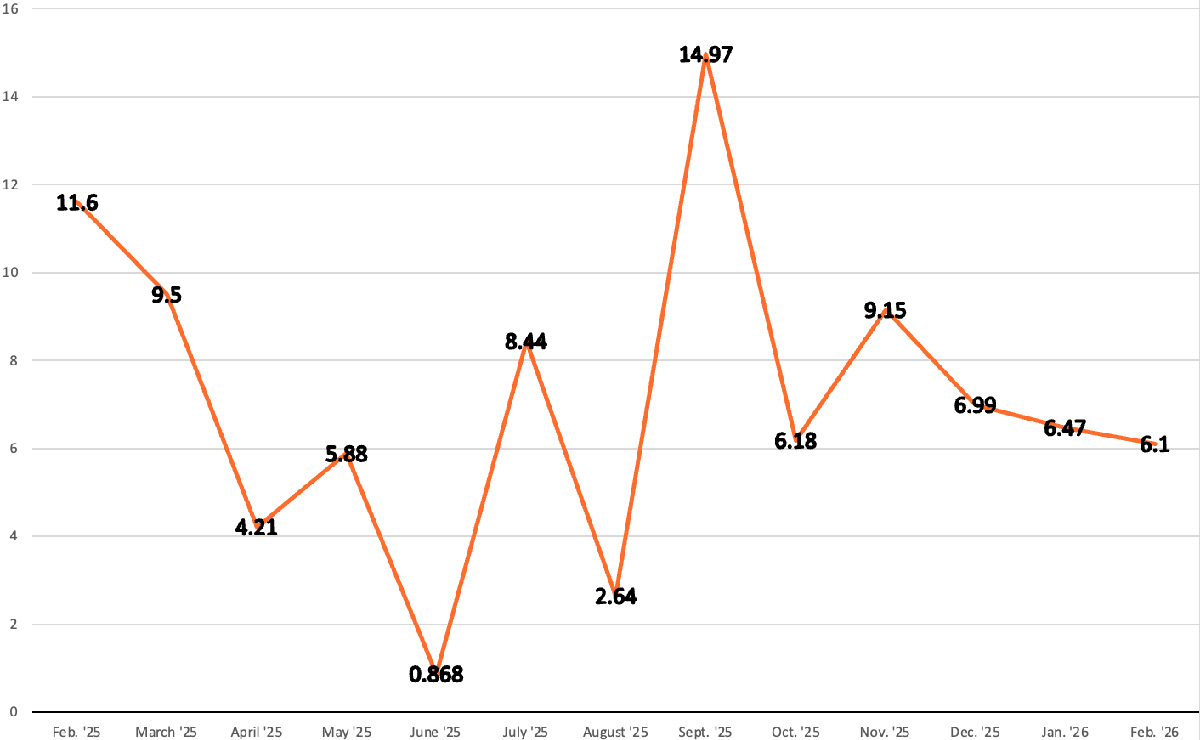
Graph notes: These transactions include Chinese loans and grants but also contracts and subcontracts. Not all transactions will come to fruition, and this graphic does not account for cancellations, disruptions, failure to disburse funds, etc. This depicts the announced values of transactions with involving Chinese entities operating overseas, which could include Chinese funded projects but also foreign funded projects involving Chinese contractors, across multiple BRI-linked sectors.
Belt and Road Initiative top developments
COSCO Shipping Expands Further into Peru
On 6 February 2026, COSCO Shipping and Anjun Logistics were awarded a 15-year contract for warehouse operating rights at the Lima International Airport, Peru’s main international airport. This is the first time COSCO Shipping has successfully bid for an international aviation hub asset, expanding COSCO Shipping's maritime presence in Peru. The warehouse will serve as a regional e-commerce forwarding hub.
China Mobile Looks to Southeast Asia for AI, Data Centre Growth
China Mobile International (CMI) is partnering with the Singapore-based clean energy company Asiaphos, as of 10 February 2026, to jointly develop data centres and artificial intelligence (AI) computing services in Malaysia, Indonesia, and Singapore. CMI will be considered a "top priority" supplier for developing and building data centres, and in return will receive potential customers through Asiaphos for data centre and AI computing services projects.
China’s Shandong Xinxu Group to Invest USD1.34 billion in Pakistan’s Port Qasim
China-based Shandong Xinxu Group proposed an investment of up to USD1.34 billion on 17 February 2026 to develop an Integrated Maritime Industrial Complex (IMIC) at Port Qasim in Karachi. As per discussions with the company in December 2025, the IMIC will enhance Port Qasim’s industrial infrastructure through three components, the modernisation of the iron ore and coal berth jetty, the establishment of shipbuilding/repair and shipbreaking/recycling facilities may support the revival of the beleaguered Pakistan Steel Mill.
Ganfeng Lithium’s Mariana Lithium Brine Project Ships First Export to China
On 19 February 2026, Ganfeng Lithium exported the first shipment of lithium chloride to China from its Mariana lithium brine project. The lithium chloride will be used to manufacture electric vehicles, electronic equipment and battery storage systems. Work on the project began in October 2014.
Chinese State-Owned Defense Company to Develop Ammunitions, Rocket Factory in Belarus
On 23 February 2026, reports stated that a USD26 million contract had been signed in 2023 between China National Electronics Import & Export Corp. (CEIEC), a state-owned defense company, and Belarusian military-industrial enterprise ZTEM. The two sides are working together to develop a factory and production line for 122 mm and 152 mm artillery rounds and 122 mm rockets compatible with Russia's BM-21 rocket launcher trucks.
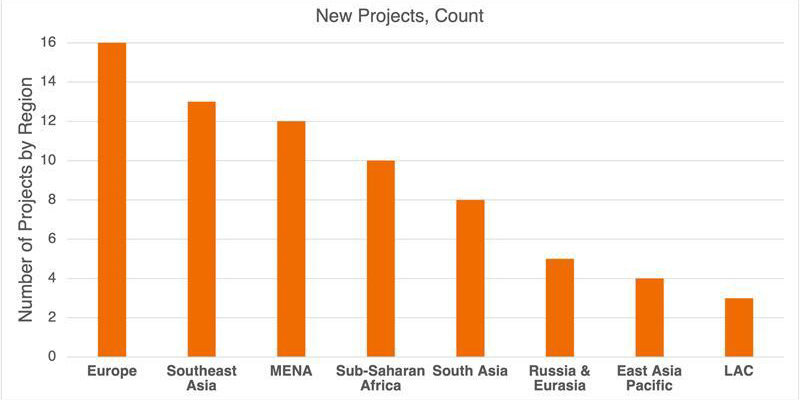
New Project Locations by Value
What They're Saying
JOHN CALABRESE, Assistant Professor, School of Public Affairs, American University
No external actor has more at stake in the Pakistan-Afghanistan rupture than China….For over a decade, Beijing has advanced a regional architecture built around connectivity. At its centre lies the China-Pakistan Economic Corridor (CPEC), a network of highways, energy projects, and the port of Gwadar, widely valued at roughly $65 billion. In 2025, Afghanistan was formally incorporated into the broader Belt and Road framework, with discussions focused on linking Afghan mineral deposits — including copper and lithium — to CPEC infrastructure….The vision was straightforward. By integrating Afghanistan economically through Pakistan, Beijing hoped to reduce incentives for instability and create a contiguous trade corridor linking western China to the Arabian Sea and beyond….The war now exposes the fragility of that assumption.
By the Numbers