Chinese military parade highlights rapid progress towards modernisation
The following is an extract from a Janes Equipment Intelligence special report covering just two of the many systems that the People’s Liberation Army displayed at its 3 September military parade. The full report includes analysis of weapon systems and technologies ranging from submarine-launched missiles and unmanned systems, through to armoured vehicles, microwave weapons and lasers.
DF-61 Intercontinental Ballistic Missile (ICBM)
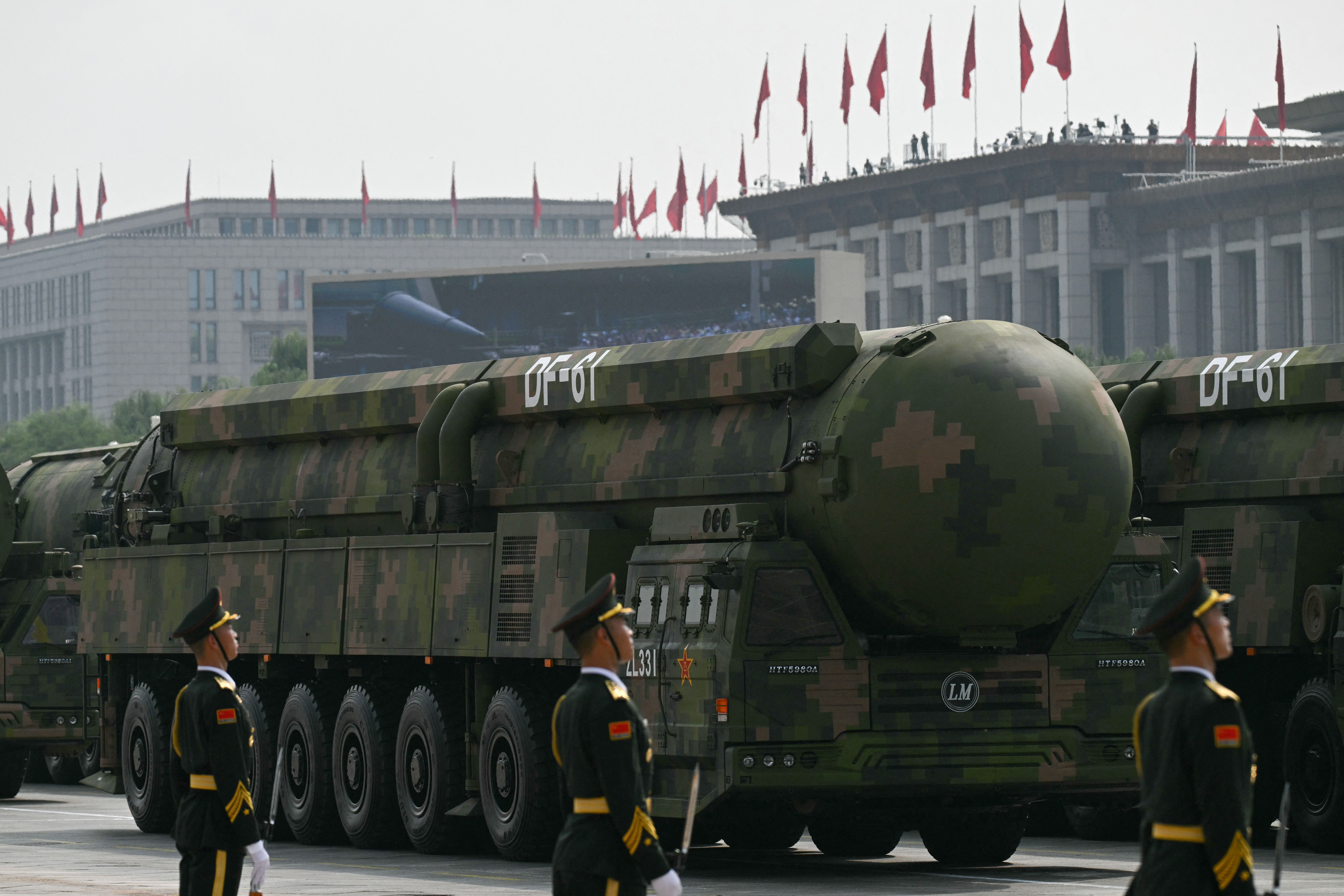 IMAGE: The DF-61 ICBM seen at China’s military parade on 3 September. Credit: Greg Baker/AFP via Getty Images
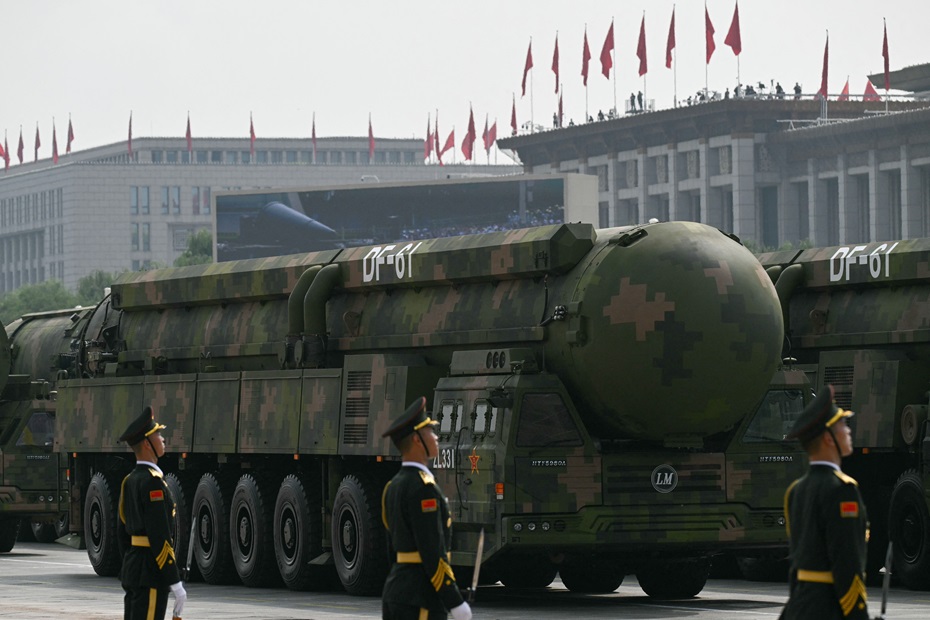
The DF-61 appears to be a successor to the DF-41 intercontinental ballistic missile (ICBM) that was unveiled at the 2019 Victory Day parade. Like the DF-41, the DF-61 is road-mobile and launched from a large transporter-erector-launcher (TEL) platform with 16 wheels, suggesting an intention for mobility and concealment.
Given its size, the DF-61 will likely be able to carry up to 12 nuclear warheads, probably configured as multiple independently targetable re-entry vehicles (MIRVs). This capability would enable the DF-61 to strike multiple targets across vast distances, enhancing its deterrence value and strategic flexibility.
The range of the DF-61 is estimated to be about 18,000 km, which would make it one of the longest-range ICBMs in the world, capable of striking at targets on the continental US.
Strategically, the DF-61 fits into China’s broader effort to modernise and diversify its nuclear arsenal and provides Beijing with a more robust second-strike capability and a wider range of options across the nuclear escalation ladder.
AJX002 Extra Large Unmanned Underwater Vehicle (XLUUV)
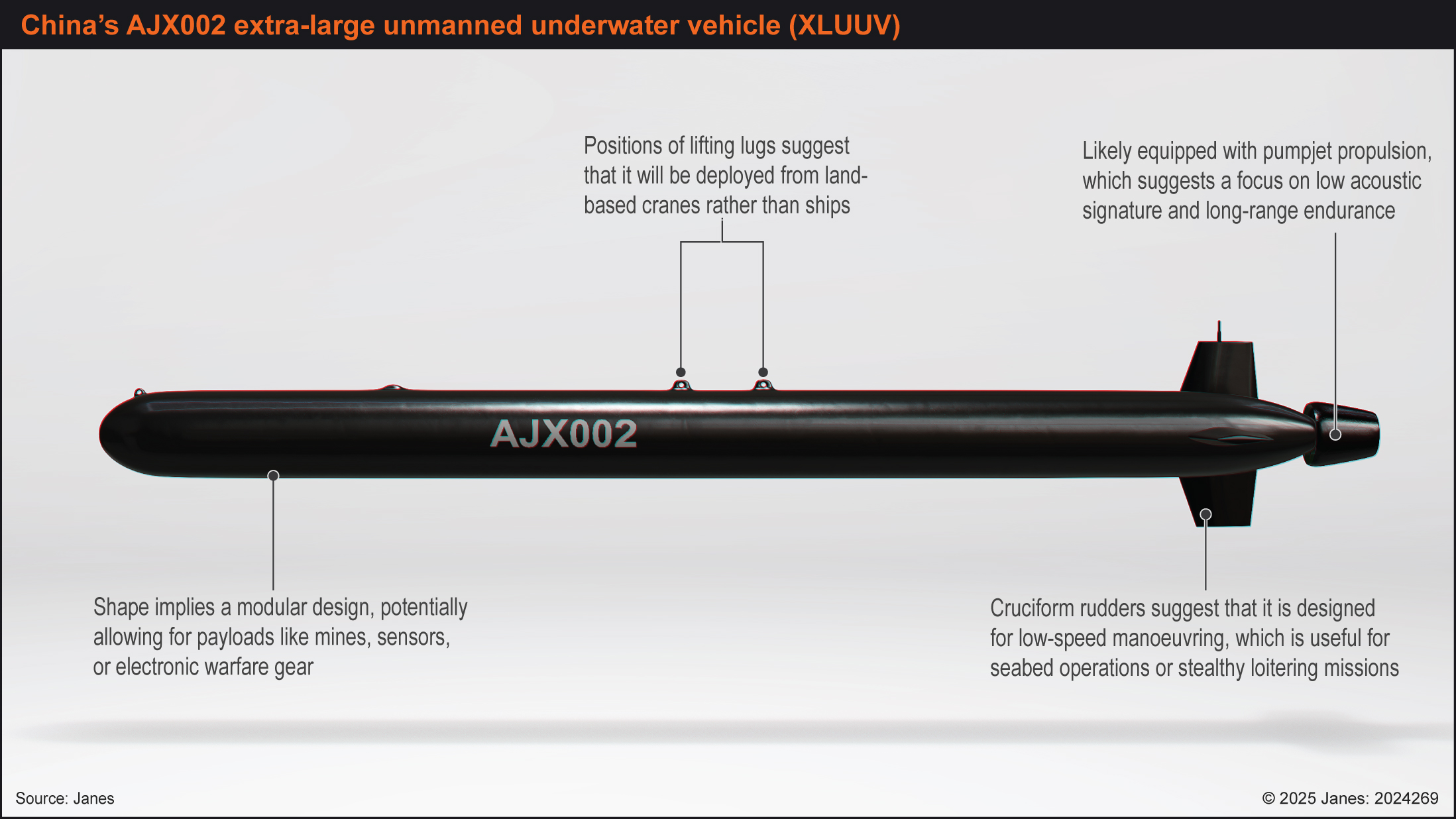 IMAGE: China’s AJX002 XLUUV will likely be deployed for reconnaissance, minelaying, anti-submarine warfare, and potentially even strike missions. Credit: Janes
Also making its debut at the parade was the AJX002 extra-large unmanned underwater vehicle (XLUUV). It is approximately 18–20 m in length and 1–1.5 m in diameter, with a torpedo-like shape and pumpjet propulsion.
Its hull features lifting lugs, indicating that it is designed for land-based crane deployment and possibly modular payloads, suggesting operational flexibility and ease of maintenance.
While its exact mission profile remains unclear, it will likely be deployed by China for a range of roles including reconnaissance, minelaying, anti-submarine warfare, and potentially even strike missions.
Its design bears some resemblance to Russia’s Poseidon nuclear-powered torpedo, although there is no confirmed indication that the AJX002 is similarly powered.
Strategically, the AJX002 adds a new layer to China’s maritime deterrence posture. By deploying autonomous underwater systems capable of long-endurance missions, Beijing could complicate US and allied naval planning in the Indo-Pacific. These XLUUVs can operate stealthily in contested waters with reduced risk to personnel, conduct surveillance of critical sea lanes, or threaten high-value naval assets.
Customers can to read the full report here.
Look out for our forthcoming webinar for further details on the equipment at the parade.