Death of CJNG leader very likely to exacerbate violence in several Mexican states in the long term
Event
The leader and founder of the Cártel Jalisco Nueva Generación (CJNG), Rubén Nemesio Oseguera Cervantes (alias El Mencho), was killed on 22 February following an operation to arrest him by Mexican security forces in Tapala municipality, Jalisco state. According to a press release issued by the Secretariat of National Defence (Secretaría de la Defensa Nacional: SEDENA) on the same day, El Mencho died while being transported by air to Mexico City.
According to the press release, the institutions involved in the operation were the National Intelligence Centre (Centro Nacional de Inteligencia: CNI), the Specialised Prosecutor’s Office for Organised Crime of the Attorney General’s Office (FGR-FEMDO), the army special forces, the air force, and the Special Immediate Response Force of the National Guard. The press release also stated that additional intelligence was provided by US authorities, without giving further details.
Significance
The killing of El Mencho will have a significant impact on the levels of violence in Mexico. Janes has high confidence in this assessment based on previous incidents of the leaders of cartels being removed leading to significant violence.
For example, violence increased after the arrests of Culiacán of Ovidio Guzmán Loera (alias El Ratón), the son of Joaquín Guzmán (alias El Chapo Guzmán) and co-founder of the Cártel de Sinaloa (CDS), in 2019 and 2023.
For more, please see Detention of senior cartel leader in Mexico’s Sinaloa represents political success but raises violent risks and underscores indirect threat to aviation.
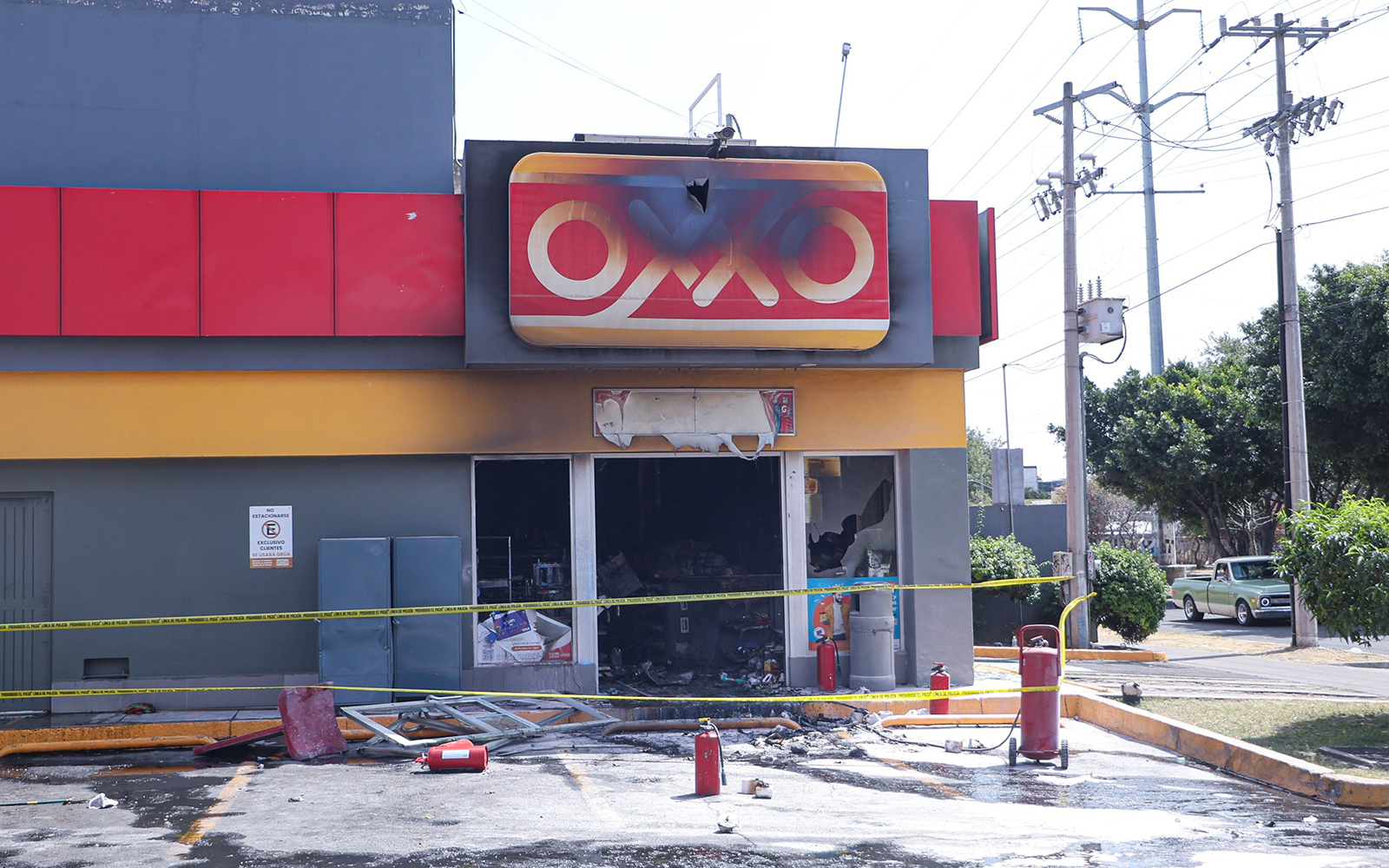 The entrance to a convenience store in Zapopan, Mexico, was burnt down on 22 February 2026 after the leader of the CJNG was killed during a security operation on the same day.
Image credit: Carlos Zepeda via Getty Images
As of 23 February, violence has already occurred. On 22 February, Mexico’s Security Cabinet reported that, following the operation to arrest El Mencho, local authorities had recorded 252 road blockades across 20 of Mexico’s 32 states. On the same day, Mexican news outlets reported attacks on convenience stores, supermarkets, warehouse retail stores, banks, restaurants, and other businesses. While the Mexican press did not report any civilian deaths, the La Jornada newspaper reported 19 deaths on 23 February, including 17 security forces personnel, one alleged CJNG member, and one unidentified individual.
Outlook
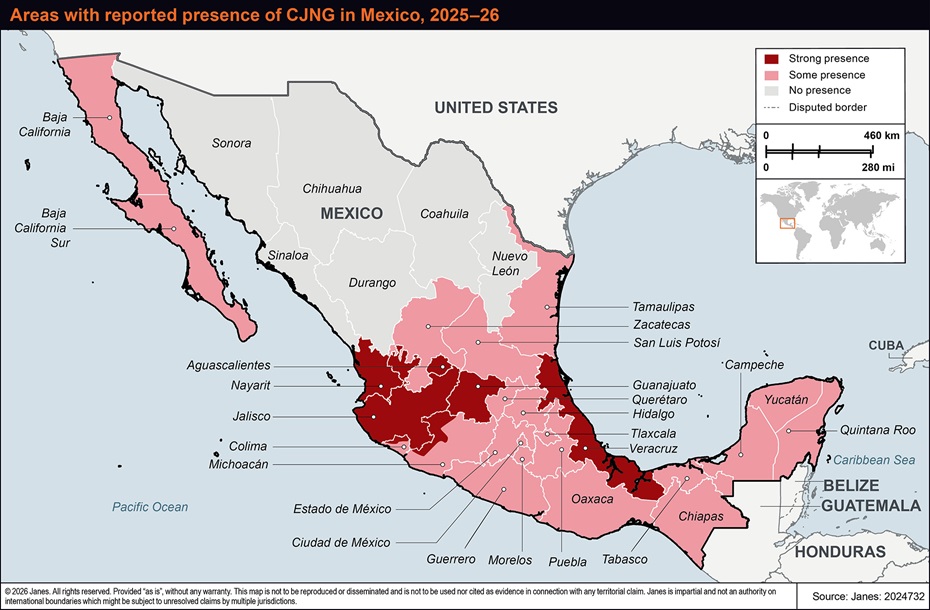
It is very likely that, in the immediate term (next four weeks), members of the CJNG will continue to launch co-ordinated arson attacks in at least 15 states, particularly in areas where the CJNG has a strong presence, such as Jalisco, Michoacán, Guanajuato, and Nayarit. These attacks will include targeting cargo, vehicles, and commercial premises, as well as setting up roadblocks with torched vehicles and scattering caltrops. Some sporadic clashes between CJNG members and Mexican security forces are also very likely to continue in the immediate term.
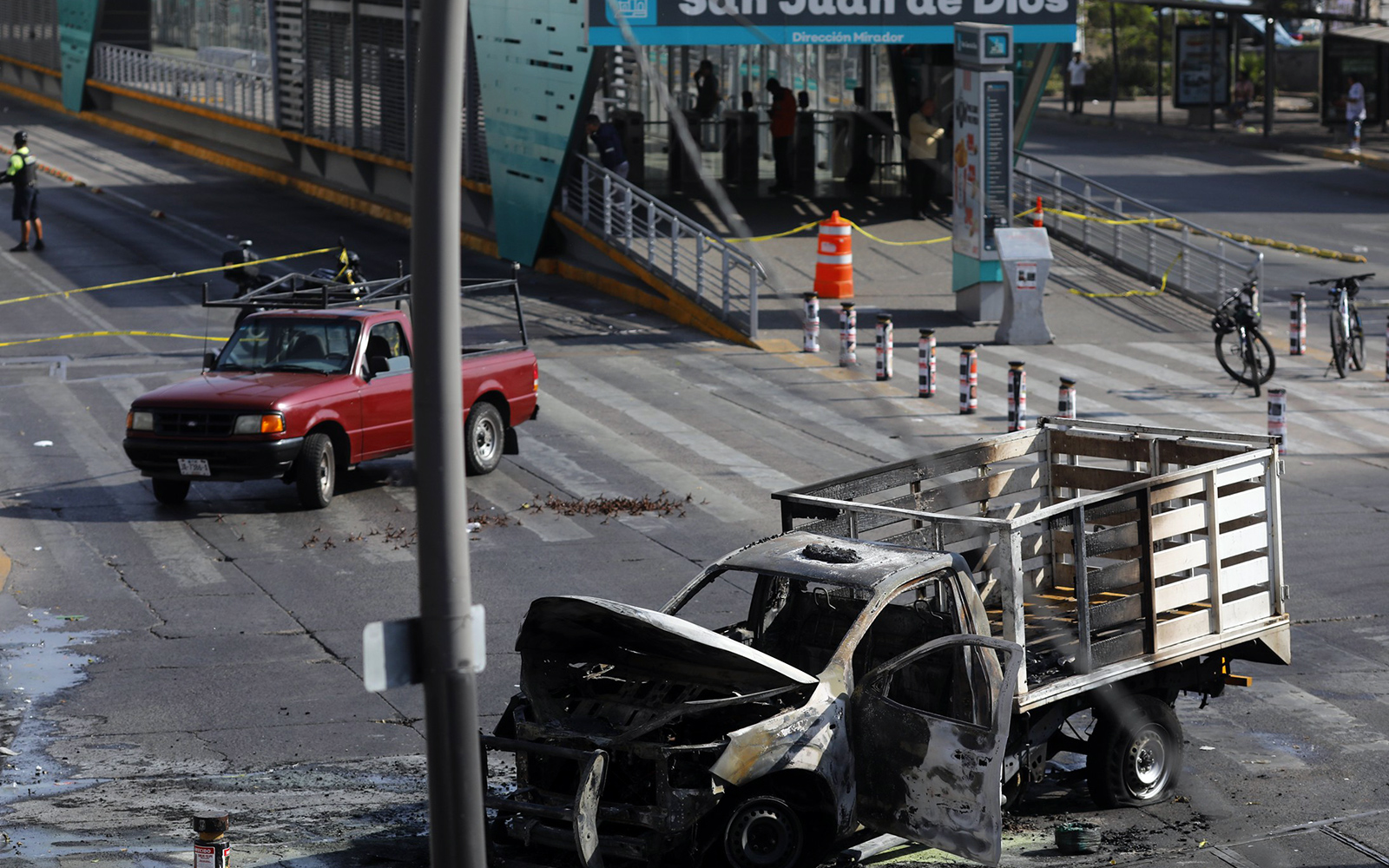 Torched vehicles and abandoned caltrops on a street in Guadalajara, Jalisco, Mexico, following retaliation by CJNG members against the operation to capture their leader, El Mencho.
Image credit: Stringer/Anadolu via Getty Images
It is likely that the violence that erupted in urban areas following El Mencho’s death will migrate to rural areas as the week progresses, and violence is almost certain to evolve from arson attacks on vehicles and businesses to clashes between organised crime groups (OCGs) and security forces, and against civilians. However, his death is likely to have shortened the period for which CJNG members are willing to carry out highly visible and severe acts of violence in retaliation. Such displays of violence tend to occur in urban centres, whereas routine cartel operations and related violence are typically concentrated in rural areas. This is largely because, in this case, CJNG members are not attempting to coerce authorities into releasing their leader.
There is recent precedent for a cartel escalating public violence to force such an outcome. For example, following the arrest of Ovidio Guzmán in 2019, CDS members carried out increasingly extreme attacks against civilians, prompting then-President Andrés Manuel López Obrador to release Guzmán hours later. In contrast, because El Mencho died rather than being arrested, CJNG members are more likely to engage in different forms of protest. However, as time passes, regional CJNG leaders are more likely to prioritise their own interests, particularly any ambitions to assume greater control over the cartel, which may further redirect violent activity towards rural areas.
In the short term (one to six months), Mexican security forces will very likely actively target regional CJNG leaders, leading to an increase in clashes between OCGs and security forces in Nayarit, Jalisco, Zacatecas, Michoacán, and Guerrero states.
It is very likely that El Mencho’s forced removal will increase the risk of CJNG’s fragmentation throughout 2026, including the emergence of independent splinter groups, which are unlikely to accept El Mencho’s successor. The CJNG has no clearly defined single successor who can guarantee cohesion within the organisation and keep levels of all kinds of violence under control. Those most likely to aim to control the group, triggering an intra-cartel dispute, in the medium term are:
- Direct family members: Juan Carlos González (alias R3 or O3), El Mencho’s stepson; and Rosalinda González (alias La Jefa), El Mencho’s wife. La Jefa is the logistics and operations manager of Los Cuinis, the group responsible for the financial activities of the CJNG. Neither of them has enough power within the CJNG to guarantee cohesion within the OCG. The only person who could potentially achieve this is El Mencho’s son, Rubén Oseguera González (alias El Menchito); however, he is currently serving a life sentence in a US prison.
- Regional CJNG leader Audias N (alias El Jardinero): He is a key figure in CJNG operations in Nayarit, Jalisco, Zacatecas, Michoacán, and Guerrero states – which include the strongholds of Jalisco and the Tierra Caliente region in Michoacán –, according to a press release from the US Department of the Treasury’s Office of Foreign Assets Control (OFAC) in April 2021.
- Regional CJNG leader Hugo Gonzalo N (alias El Sapo): Although there is no publicly available open-source information detailing his biography, media reports indicate that he leads multiple armed CJNG factions and oversees drug imports at key seaports such as Manzanillo and Puerto Vallarta. According to the Attorney General’s Office in 2026, he could succeed El Mencho.
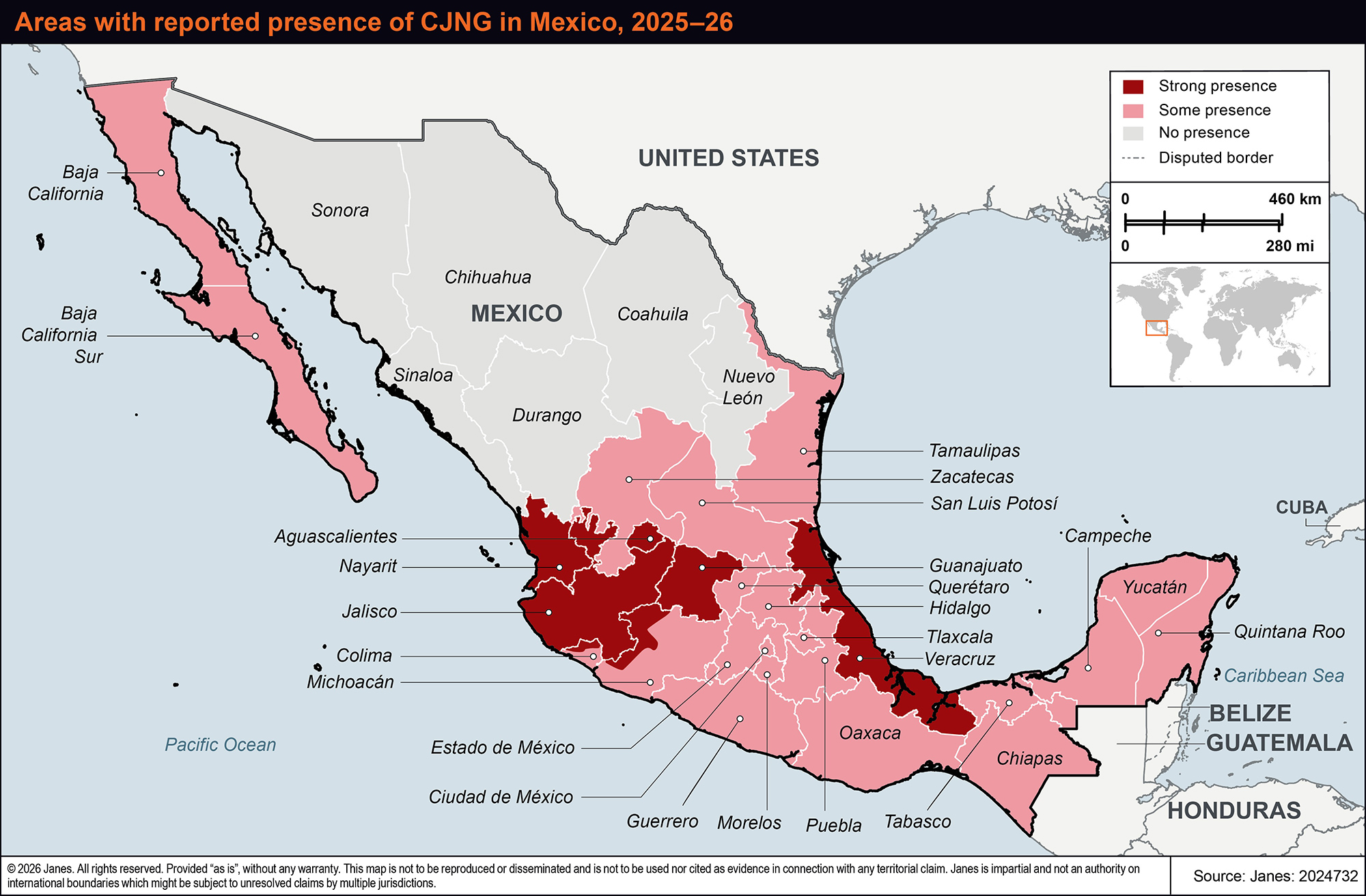 Areas with reported presence of CJNG in Mexico, 2025 - 26.
Image credit: Janes
In the medium term, local criminal organisations are likely to launch offensives against the CJNG to take advantage of the lack of clear leadership. Their offensives are likely to vary across the country, depending on the disputed territories:
- CJNG and CDS (Colima, Michoacán, Chihuahua, Zacatecas, Quintana Roo, Sonora, Baja California, Chiapas): OCGs are engaged in a violent competition for control of the seaports of Colima and Michoacán, and in the rest of the states they compete for territorial control of places crucial for importing cocaine, and chemical precursors for fentanyl and methamphetamine, and exporting them to the US.
- CJNG and Cártel Santa Rosa de Lima (CSRL) (Guanajuato): OCGs are engaged in a violent competition to control key highways in Guajanuato that connect to the states of Jalisco and Zacatecas, to secure methamphetamine trade routes and distribution, as well as fuel theft activities.
- CJNG and Cárteles Unidos (Tierra Caliente region of Michoacán): OCGs are engaged in a violent competition to control the Tierra Caliente region targeting lime and avocado producers with extortion activities, as well as to protect clandestine methamphetamine laboratories in the area.
In the long term, it is very likely that new local criminal organisations will emerge. El Mencho’s death will reconfigure the criminal landscape in Mexico, with several local factions disputing territories.
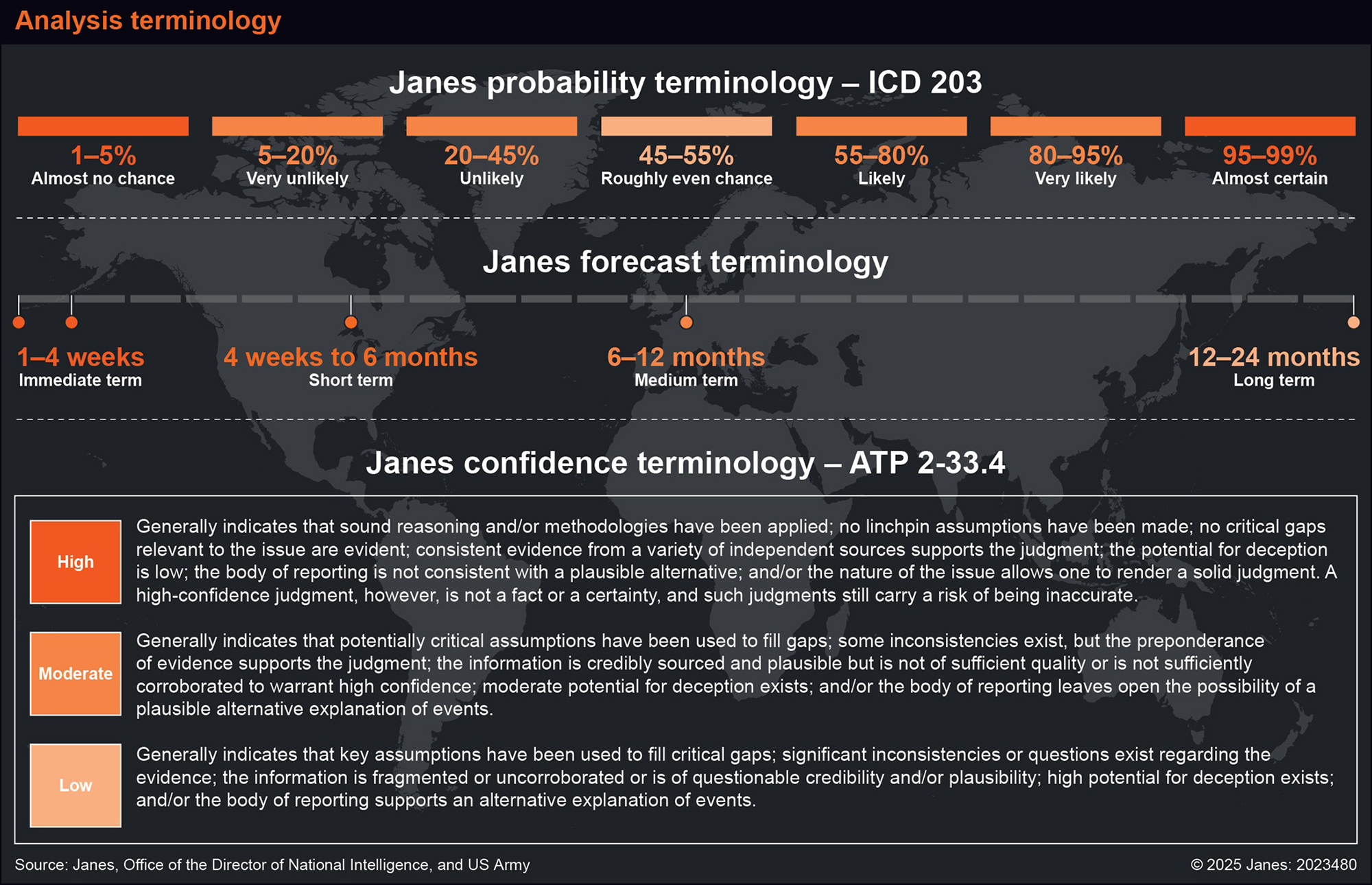 Analysis terminology.
Image credit: Janes