DRC armed forces’ downing of M23’s YIHA-III loitering munition indicates their future use is very likely
Event
The Armed Forces of the Democratic Republic of the Congo (Forces armées de la République démocratique du Congo: FARDC) shot down two loitering munitions near the village of Mikenge, Nord Kivu province, on 10 March 2026, during a FARDC operation to recapture the village from the Mouvement du 23 Mars (M23).
The FARDC announced the downing of the two unnamed UAVs via its official X account on 10 March, including two videos showing wreckage of two YIHA-IIIs. The X post did not specify whether the YIHA-IIIs had caused any damage, and the two videos did not show any damage to FARDC personnel or assets.
The FARDC is usually a reliable source (B) and the information that the UAVs were downed in the 10 March FARDC post on X is probably true (2), as whilst it is logical and consistent with information on a previous YIHA-III attack by the M23 on Kisangani in January, Janes was unable to corroborate it. The videos included in the 10 March X post had not appeared online previously, and the FARDC was the only source of either video or photo regarding the crashed YIHA-IIIs, meaning it was not possible to corroborate it.
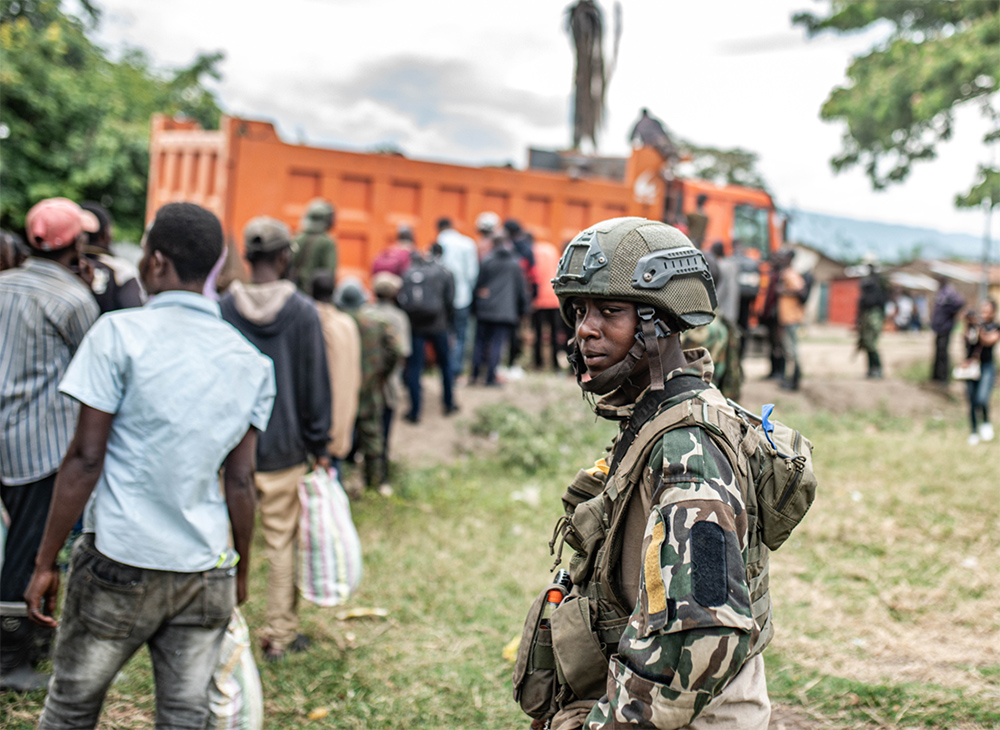 An M23 fighter looks on as Wazalendo militants are transported following their surrender on 15 December 2025 in Uvira, Democratic Republic of the Congo.
Image credit: Daniel Buuma/Getty Images
Significance
The downing of the loitering munitions, which were almost certainly YIHA-IIIs, reinforces evidence that M23 operates the loitering munition. It also indicates that the M23 is likely able to either replenish its stocks or possess a large stock of YIHA-IIIs, given that it is the group’s third recorded use of them since they were first used by the M23 in an attack on Kisangani Bangoka airport on 31 January.
Janes has high confidence in this assessment as the downing of YIHA-IIIs at Mikenge is the third instance of the M23 using the loitering munition in attacks since it was first used in an attack by the M23 on Kisangani Bangoka airport, Tshopo province, on 31 January. A second attack on Kisangani Bangoka by the M23 was attributed by Tshopo provincial governor Paulin Lebabonga on 2 March to multiple M23-operated “kamikaze drones”, which were likely also YIHA-IIIs.
On 6 February, Janes assessed that the use of YIHA-IIIs is a significant development in the M23’s capabilities and is likely to lead the group to conduct more strikes against infrastructure in the FARDC’s deep rear in the short term. The 10 March attacks support this assessment.
For more, please see: M23 loitering munition attack on DRC airport indicates new capability for the group
Outlook
The M23 is very likely to continue using YIHA-IIIs in support of ground assaults in the short term (one to six months) at the operational level, as well as strategically attacking the FARDC’s deep rear areas such as Kisangani Bangoka airport.
This is because of the quick tempo of attacks by the M23 using YIHA-IIIs since they were revealed as part of the group’s equipment inventory with the January attack on Kisangani Bangoka airport.
M23’s multiple uses of YIHA-IIIs indicate the group’s equipment inventory is likely to continue to grow more sophisticated. The number of YIHA-IIIs employed and the sophistication of that system indicate they are supplied to the M23 by the Rwandan Defence Forces (RDF), which supports the group.
The RDF almost certainly supplied other sophisticated equipment to the M23 including GPS-guided mortar rounds and GPS-jamming electronic warfare (EW) equipment. Further supplies from the RDF to the M23 are likely to include other loitering munition types, fibre-optic first person view (FPV) small UAVs, and counter-UAV electronic warfare equipment.
For more, please see: Analysis: Rwanda deploys self-propelled air-defence system into DRC
Update: Democratic Republic of the Congo conflict report: September–November 2025
Risk positive indicator
- No further reports of attacks using YIHA-IIIs in the short term would indicate the M23 no longer has the YIHA-III in its inventory or has very low stocks of them
- No damage reported from further strikes would indicate that the M23 is unable to employ the YIHA-III effectively, which reduces its operational significance and indicates the M23 may not use the system in the long term.
Risk negative indicator
- New reports of damage from attacks by M23-operated YIHA-IIIs would indicate that M23 finds the use of the loitering munitions is effective
- YIHA-IIIs observed in imagery in use by the RDF would indicate the RDF very likely operates the system and that consequently the M23 is able to access more of them.
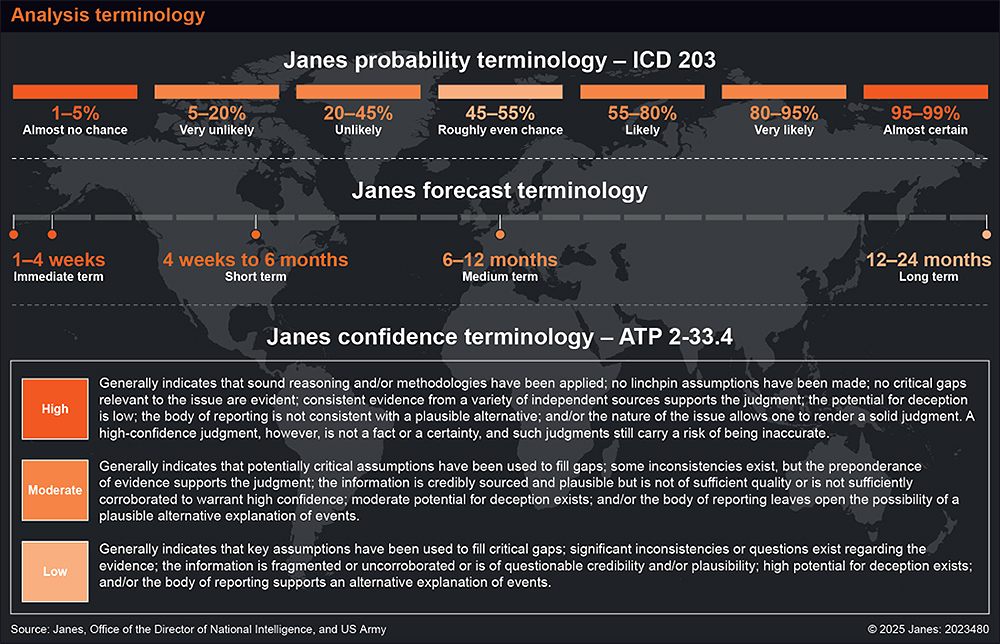 Janes Analysis terminology
Image credit: Janes