Land Warfare Platforms: Firepower, Survivability & Mobility
As the war in Ukraine enters its fourth year, along with the ongoing missile and unmanned aerial vehicle (UAV) exchanges between Iran and Israel, and a recent military outbreak between two nuclear-armed nations, India and Pakistan, this year has brought renewed focus on emerging battlefield challenges.
One such challenge is the growing use of swarm UAVs and loitering munitions during conflicts and the difficulty of countering them using traditional methods. This overview will explore how ground-based systems are being adapted to effectively tackle such threats.
Additionally, the integration of counter-UAV (C-UAV) capabilities into remotely operated weapon systems (ROWS) and unmanned turrets; the role of active protection systems (APS) in neutralising these threats; the use of anti-tank guided missiles (ATGMs) on unmanned platforms and ROWS; and the growing role of artificial intelligence (AI) in modern ROWS for detecting and engaging various threats, will also be covered.
Survivability: layered defence against UAV threats
The rapid evolution of UAVs and their deployment tactics has prompted militaries worldwide to explore both kinetic and non-kinetic solutions. Adversaries increasingly use large numbers of slow, agile first-person view (FPV) drones in swarm tactics to overwhelm a country’s air-defence systems. Engaging such inexpensive drones with high-cost interceptors has proven to be economically unsustainable. As a result, countries have shifted focus toward upgrading their existing systems into more effective C-UAV platforms, integrating advanced sensors, weapon systems, and munitions.
One such solution involves modifying existing unmanned turrets and ROWS to serve in a C-UAV role. These traditional systems are being equipped with advanced sensors that can passively detect incoming threats, enabling operators to engage drones directly using mounted weapons.
The German Bundeswehr showcased a Puma S1 infantry fighting vehicle (IFV) fitted with a Dedrone RF-310 sensor at Eurosatory 2024, to highlight one example. The sensor is designed to passively detect, classify, and locate commercial UAVs and their remote-control signals from distances of up to 5 km. Speaking to Janes, Mathias Kraus, head of sales at Projekt System; Management (PSM) stated that the vehicle was demonstrated to the Bundeswehr in this configuration, where it proved capable of detecting a swarm of nine UAVs before the turret destroyed the threat.
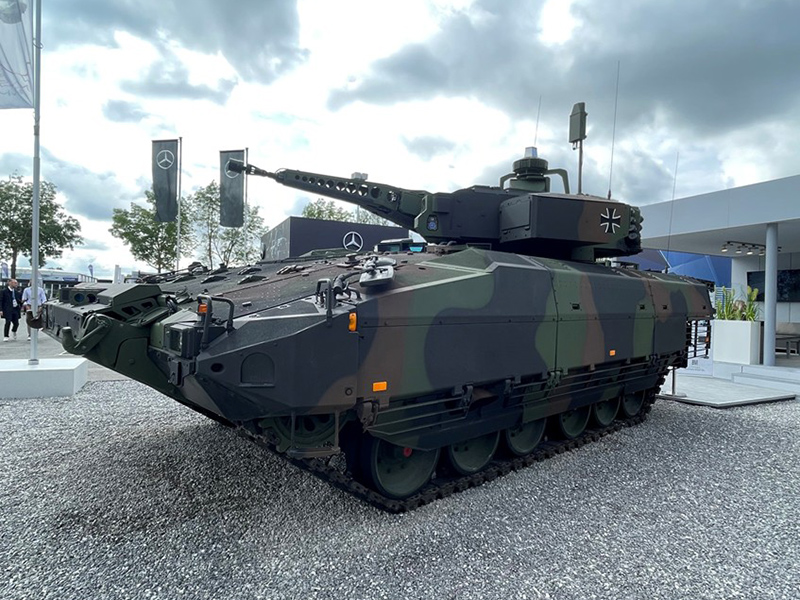
The Bundeswehr's Puma S1 IFV, featuring the Dedrone RF-310 sensor UAV detector, at Eurosatory 2024
Brazilian company Ares Aeroespacial e Defesa has also developed a configuration for the C-UAV role of the company's REMAX 4 lightweight remotely controlled weapon station. The weapon system is reported to be linked with a separate mount equipped with the Elbit Systems Commander Open Architecture Panoramic Sight – Light (COAPS-L) stabilised panoramic sight and an S-band radar system with four antenna panels.
Traditional ammunition is often ineffective against incoming UAVs, especially when small and fast-moving. To address this challenge, manufacturers have introduced air-burst munitions (ABMs). These are rounds that detonate in mid-air and release shrapnel across a pre-defined point-wide area, releasing a cloud of small fragments that when concentrated can often shred a UAV-sized target near the actual target, increasing the chances of successfully hitting and neutralising UAVs. To fire these types of rounds, cannons on unmanned turrets and ROWs are being modified with electromagnetic induction fuse programmers, enabling them to deploy ABMs.
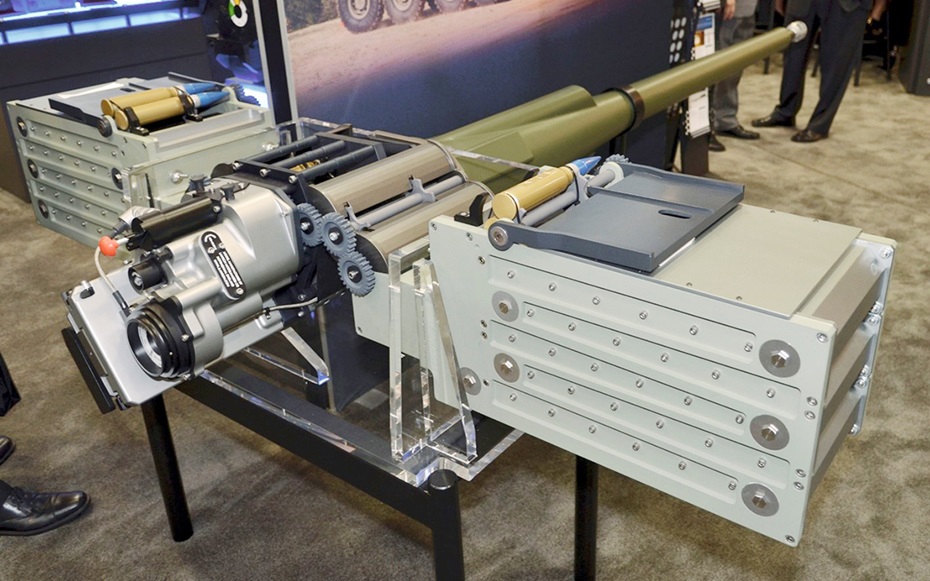
One example of this is the Bushmaster XM813 dual-feed autocannon fitted on the MCT-30 unmanned turret. It fires Northrop Grumman's 30 × 173 mm cartridges along with the MK310 programmable air-burst munition (PABM) as well.
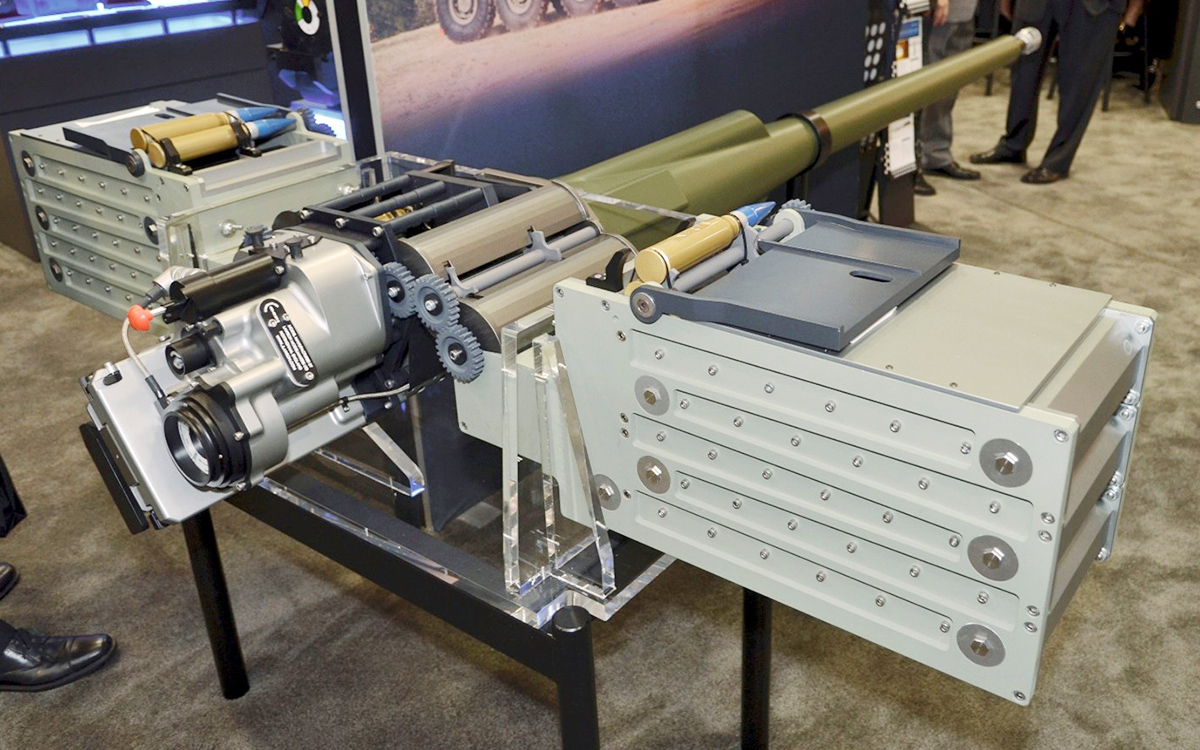 Bushmaster XM813 dual-feed autocannon
In addition to autocannons, some systems now include the option of using 70–80 mm rockets for counter-unmanned aerial systems (C-UASs). For instance, Rosoboronexport showcased the Rapira-3 system during Armiya 2024. It featured a radar dome mounted on a 4×4 AMN-590951 Spartak protected vehicle, with a rocket launcher mounted under the dome. This launcher can fire 10 rounds of 80 mm S-8 high-explosive rockets.
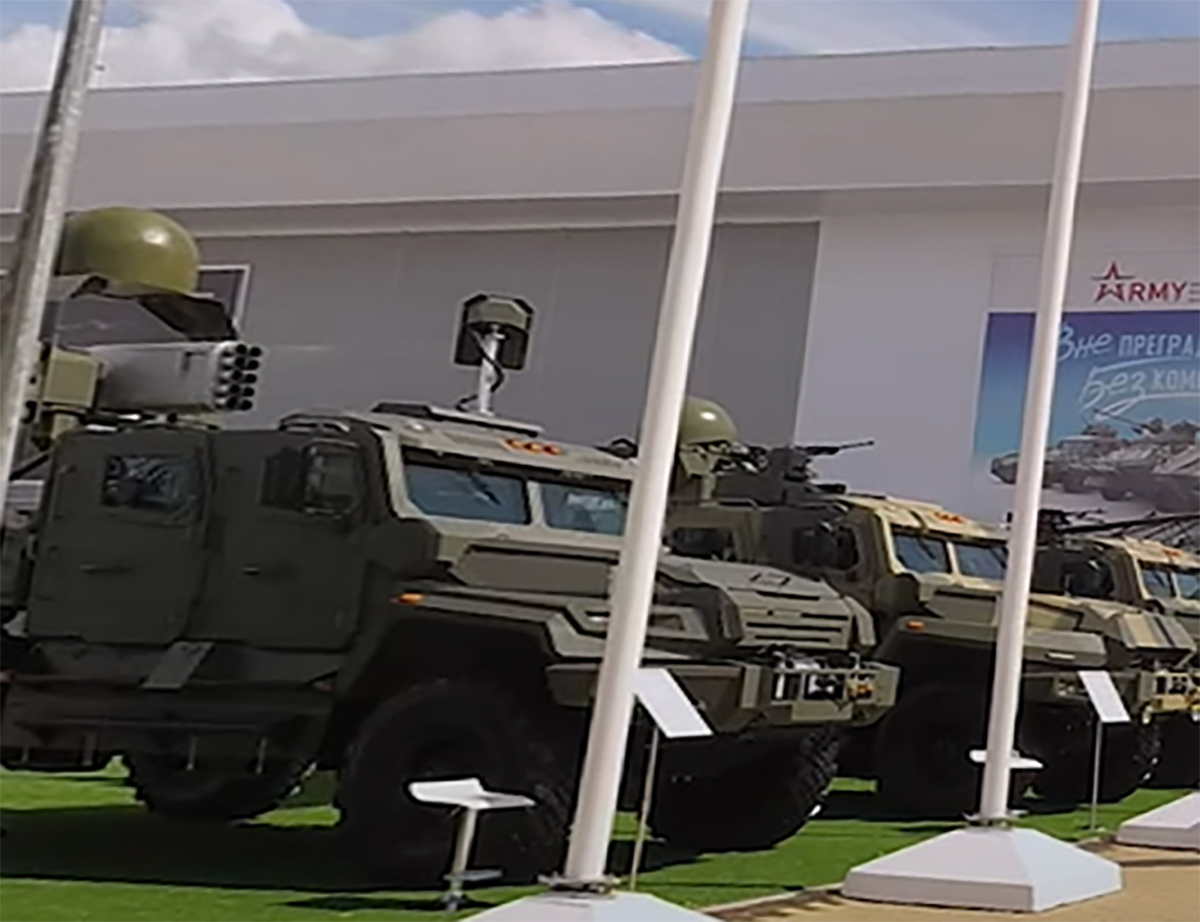 A 4×4 AMN-590951 Spartak protected vehicle equipped with Rapira-3 C-UAV system showcased at Armiya 2024
A similar approach was seen in the Counter-Uncrewed Aerial Systems Directed Energy (C-UAS DE) Stryker prototype presented by Leonardo DRS, which is equipped with 70 mm laser-guided Advanced Precision Kill Weapon System II (APKWS II) rockets with a new proximity-fuzed warhead.
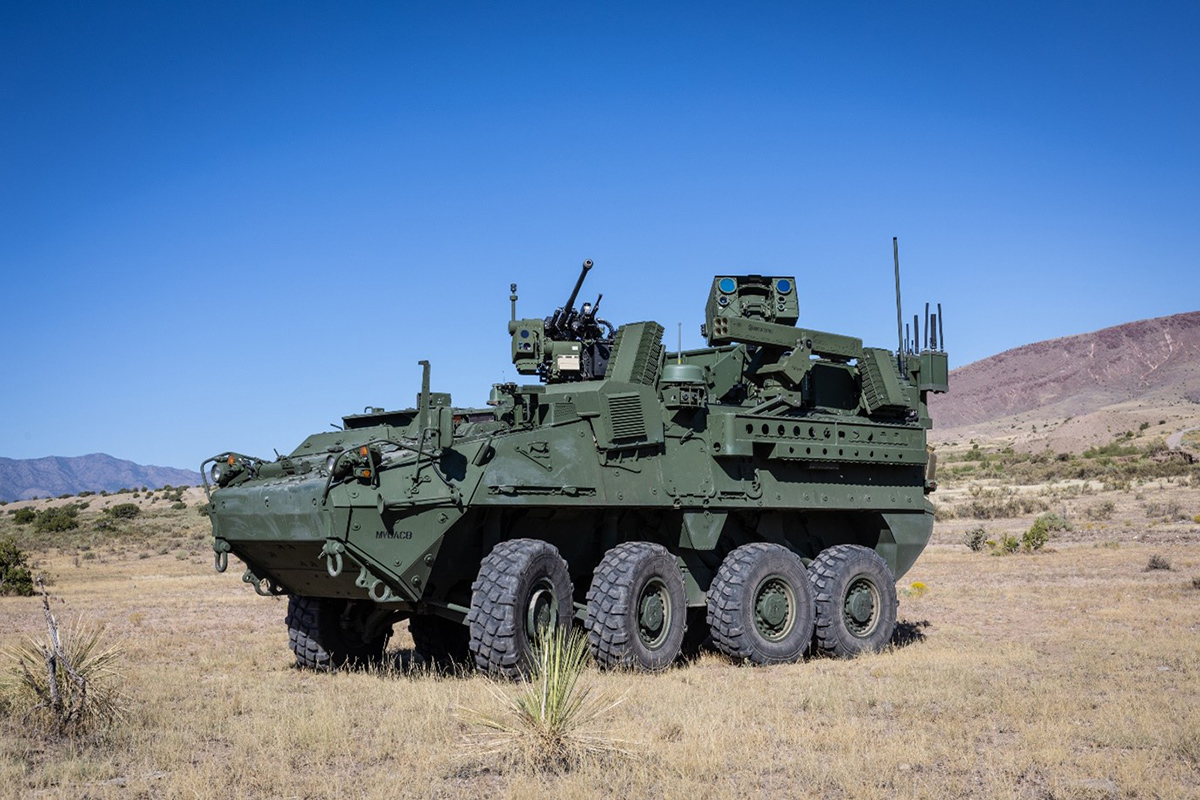 A US Army Stryker outfitted with 70 mm laser-guided Advanced Precision Kill Weapon System II (APKWS II) rockets
Alongside these developments, several countries have also started exploring the integration of AI into C-UAV systems. This is intended to improve the speed and accuracy of identifying and tracking UAVs. Using machine-learning algorithms, these systems can autonomously detect incoming aerial threats and assist in guiding the weapon system toward the target. One such example is the EOS R500 remote weapon system (RWS), which was presented during IDEX 2025. The R500 is integrated with AI-tracking capabilities, facilitating improved target acquisition and engagement accuracy.
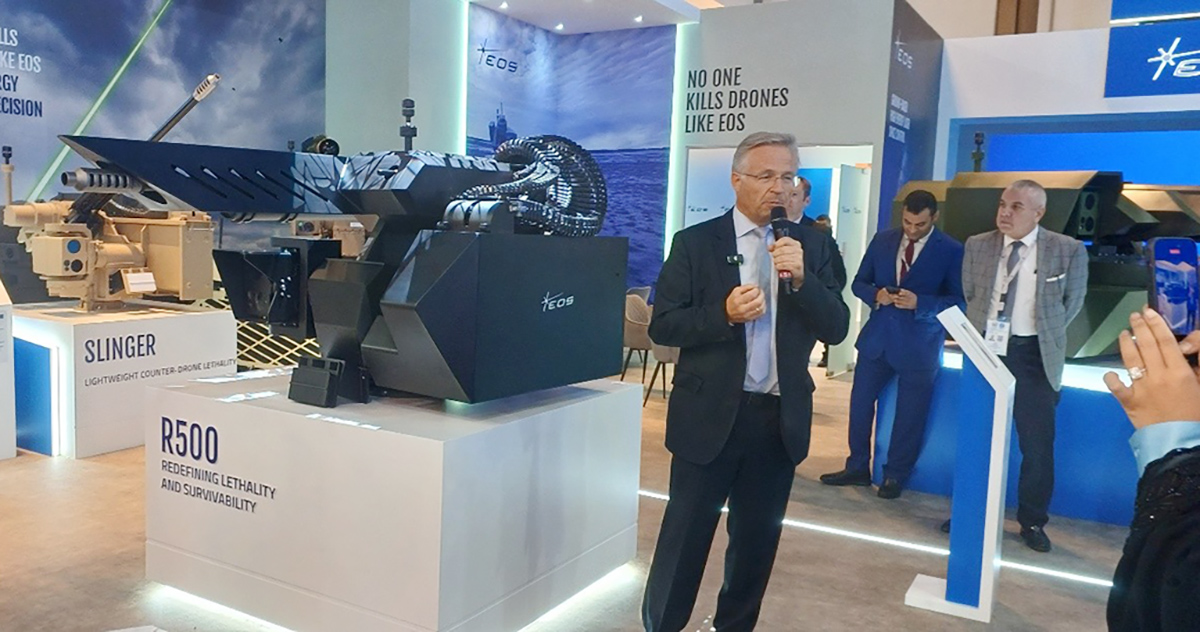 The R500 RWS was unveiled by Andreas Schwer, CEO of EOS, at IDEX 2025
Apart from kinetic solutions, militaries across the globe are investing in directed high-energy weapons (DEWs) because of their lower operational cost compared with traditional interceptors or ammunitions. DEWs use focused electromagnetic energy to degrade and destroy targets. Two main DEW categories are gaining traction:
- High-energy lasers (HELs): Useful against fast moving targets that are within the line-of-sight. Once detected by radar or an onboard electro-optical (EO) system, the HEL emits a focused beam of light to cut through and eliminate the target. The system is generally designed to engage a single threat at a time with high precision.
- High-powered microwaves (HPMWs): While the basic subsystem is broadly the same as the HEL, HPMWs. generate more than 100 MW of power and emit microwaves, which have a longer wavelength than lasers. This gives them the advantage of wider coverage, enabling them to disrupt or disable multiple targets simultaneously.
Although such systems have been in development for years, recent conflicts have highlighted the economic burden of using costly interceptors instead of cheap drones and missiles. This has accelerated efforts to adopt more cost-effective alternatives. For instance, in December 2024 the British Army test-fired Raytheon UK’s High-Energy Laser Weapon System (HELWS) mounted on a Wolfhound 6×6 armoured vehicle at the Radnor Range in Wales. The test was part of the UK Ministry of Defence’s Land Laser Directed Energy Weapon (LDEW) demonstrator programme, led by Defence Equipment & Support (DE&S).
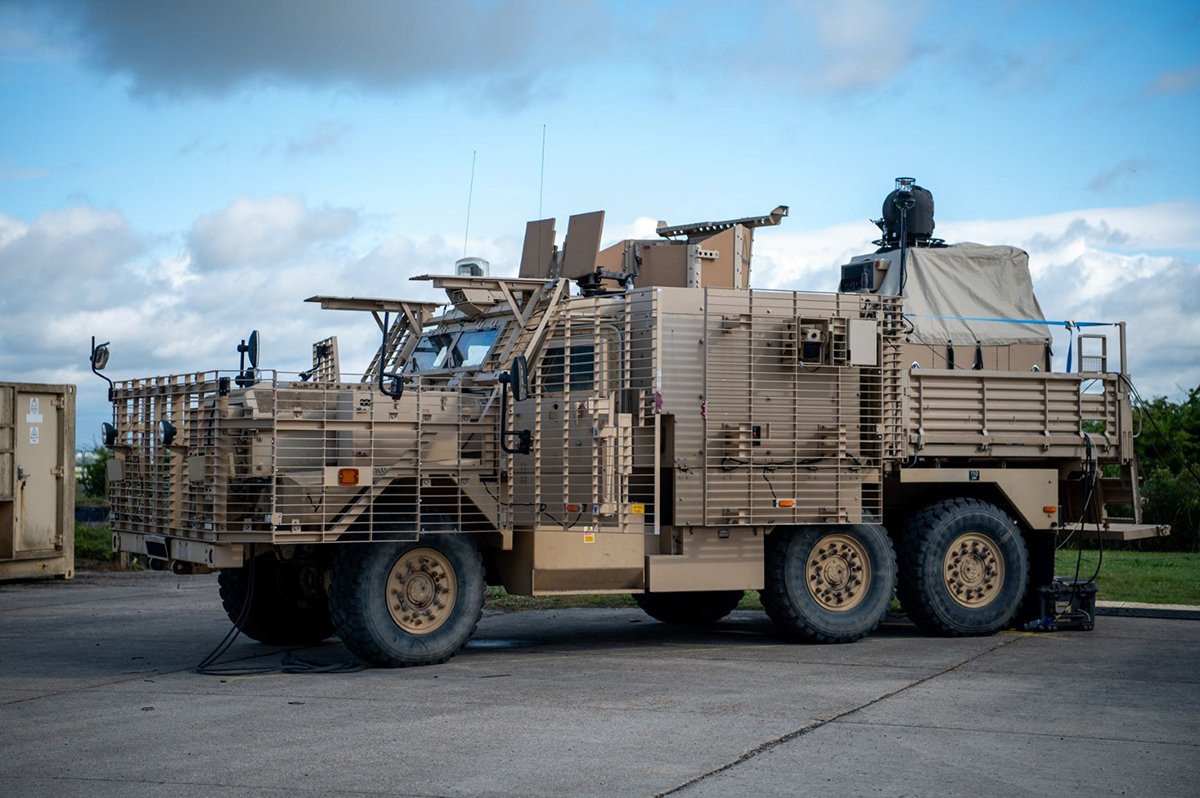 Raytheon's HELWS has been integrated into and test-fired for the first time from a British Army vehicle, the Wolfhound
The United States is also working on a similar prototype, known as the DE M-SHORAD, led by the Army’s Rapid Capabilities and Critical Technologies Office (RCCTO). During the Future Armoured Vehicles Survivability (FAVS) 2024 conference, RCCTO provided an update on its development of directed energy (DE) capabilities. Supporting the Joint Counter-Small Unmanned Aircraft Systems Office (JCO) are 10–20 kW Palletized-High Energy Laser (P-HEL) systems designed to provide force protection against Class 1–2 unmanned aircraft systems (UASs). Manoeuvre/mobile air-defence projects include the 20 kW Army Multi-Purpose High Energy Laser (AMP-HEL), designed to provide protection against Class 1–2 UAS threats, and the 50 kW DE M-SHORAD countering Class 1–3 UASs, helicopters, and rockets, artillery, and mortars (RAMs).
Fixed- and semi-fixed-site protection projects include the Indirect Fire Protection Capability-High Energy Laser (IFPC-HEL) to counter threats from Class 1–3 UASs, cruise missiles, RAMs, and fixed- and rotary-wing aircraft and the Indirect Fire Protection Capability-High Power Microwave (IFPC-HPM) system to counter Class 1–2 UAS threats and swarms.
In the Middle East, Israel has been at the forefront of developing and fielding such systems. At Defence iQ's International Armoured Vehicles 2025 conference, Rafael presented a model of the Lite Beam C-UAS system mounted on a 4×4 vehicle, but it can also be installed on 6×6, 8×8 and tracked armoured fighting vehicles (AFVs) for mobile and stationary protection of ground forces and critical infrastructure such as airports and power stations. The company stated that the 10 kW Lite Beam has a range of 2–3 km and can counter low-flying Class 1 UASs as well as ground targets such as improvised explosive devices and unexploded ordnance.
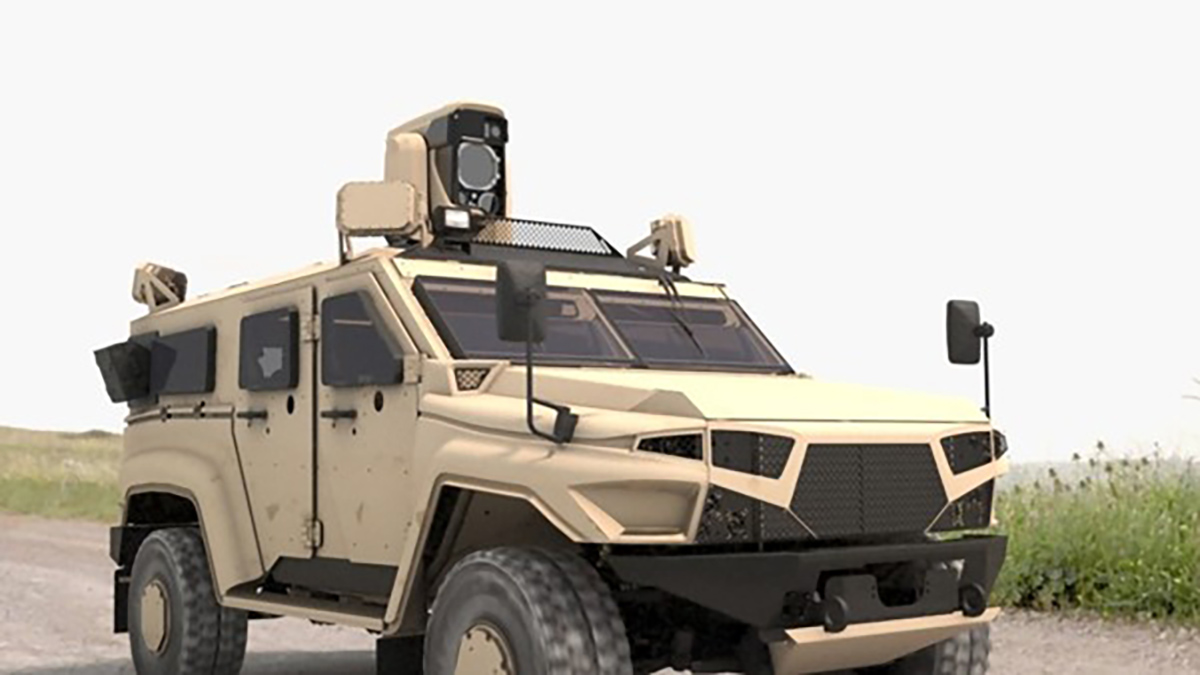 Rafael presented its Lite Beam high-energy laser at IAV 2025
Outside of Europe and the US, the Asia-Pacific region has also seen a sharp rise in the development of DEWs for C-UAS roles. A Janes report from 24 September 2024 mentioned that Australian company Electro Optic Systems (EOS) is in the final stages of negotiating the sale of its 50–100 kW HEL system to two undisclosed international customers. EOS managing director Andreas Schwer said the company expected to receive its first order before the end of 2024 and a second one in the first half of 2025.
The Japanese Ministry of Defense’s Acquisition, Technology and Logistics Agency (ATLA) is developing a mobile laser system in partnership with Mitsubishi Heavy Industries (MHI). During DSEI Japan 2025, ATLA officials revealed that the system features a 10 kW laser designed to counter small hostile UAVs. While specific range details were not disclosed, it was confirmed that the system is mounted on an 8×8 truck with the laser turret fixed on top.
China showcased its LW-30 and LW-60 DEW systems at Zhuhai Airshow in 2024, although there is little public information available regarding their operational deployment.
Meanwhile, in India the Defence Research and Development Organisation (DRDO) and Adani Defence and Aerospace jointly unveiled a mobile C-UAS system. The system features a 3D active electronically scanned array (AESA) radar with a 20 km detection range. According to Adani’s chief executive officer Ashish Rajvanshi, threats can either be jammed using a radio frequency jammer with a 10 km range or neutralised using a laser-based DEW.
Although these systems offer a low-cost and highly effective solution to counter slow-moving UAVs and loitering munitions, many of them are still in the early stages of development and deployment. Full operational capability may take some time to achieve especially since such systems can be significantly affected by adverse weather conditions such as rain and fog.
Another major challenge with such systems is the amount of heat they generate, often requiring a large portion of the platform to be dedicated solely to air-cooling mechanisms.
For more information, please visit: Land Warfare Platforms: Firepower, Survivability & Mobility