MingYang Smart Energy activity in northern Luzon raises security risks for the Philippines and US
On 10 November, Janes recorded that MingYang Smart Energy Group has signed a memorandum of understanding (MOU) with BuhaWind Energy to conduct a joint feasibility study for a 2 GW offshore wind project in Northern Luzon, Philippines. The feasibility study will assess local weather and marine conditions for MingYang Smart Energy’s technology and identify solutions optimised for regional infrastructure.
MingYang Smart Energy, a private Chinese wind turbine manufacturer, finds business opportunities in overseas markets. Prior to its recent co-operation with BuhaWind Energy, the company was developing wind projects in countries such as Germany and the United Kingdom. However, private Chinese companies carry an inherent risk of state influence regardless of affiliation with the Chinese government. China’s Data Security Law, for instance, compels all domestic companies – state-owned enterprises and private firms alike – to store data in China and allow government access to that data for national security purposes.
Due to the sensitivity of energy projects, many governments hesitate to allow foreign enterprises to develop this type of national critical infrastructure. MingYang has come under scrutiny over wind energy projects as this would give the Chinese company access to the power grid. According to Janes IntelTrak, in August 2025, MingYang was removed from Germany’s Waterkant project as the German government identified its wind turbines as a risk to cyber and national security. The turbines, which could be controlled remotely by MingYang, would also be able to provide data to the manufacturer. Since data collected by Chinese companies must be stored in China, the Chinese government could access critical insights into German energy infrastructure. While the feasibility study in Northern Luzon is the first step in MingYang’s potential long-term involvement in the wind farm project, it may lead to outstanding national security implications in the medium to long term.
Northern Luzon, located approximately 200 km across the Luzon Strait from Taiwan, holds strategic significance not just for the Philippines to assert its claims in the South China Sea, but also for its ally, the United States. It is a designated area for military exercises by the Armed Forces of the Philippines (AFP), including the recent interoperability test conducted by the AFP from 4 to 14 November. The Philippines maintains a forward operating base on Mahatao Island, which is nearby.
Northern Luzon is also a key staging location for US-deployed missile systems. The Typhon mid-range system, installed in an undisclosed position, not only addresses Filipino concerns about Chinese activity in the South China Sea but also acts as a deterrent in the event of a potential conflict over Taiwan. MingYang Smart Energy’s presence and activities in Northern Luzon could potentially provide China insight into Filipino and US strategic vulnerabilities.
MingYang’s activities, although nascent and unassuming in the Philippines, are under scrutiny in other parts of the globe. Over the last few years, the United Kingdom has scrutinised MingYang’s investment plans, concerned that its projects hold an unacceptable national security risk. In December 2021, MingYang signed an MOU with the UK’s Department for International Trade, outlining co-operation and investment plans for a blade manufacturing facility, a service centre, and a turbine assembly factory. The UK government asserts that Chinese-manufactured turbines could spy on its territorial waters, submarine programmes, and energy infrastructure, putting its national security at risk and making the country reliant on Chinese equipment, software, updates, and maintenance. The project is unlikely to proceed until MingYang’s activities in the UK are reasonably justified and the country’s concerns are addressed.
Chinese companies have a history of scrutiny for installing suspicious equipment on critical infrastructure. Shanghai Zhenhua Heavy Industries (ZPMC), a Chinese state-owned enterprise (SOE) and the world’s largest manufacturer of cranes, was found to have installed telecommunication equipment on its port cranes based in the US that served no clear purpose. The modems found on the cranes had no installation records and enabled remote communication, raising concerns about Chinese surveillance or sabotage at US ports.
Wind energy infrastructure may hold potential for a similar situation. Wind turbines can reach 100 m or more, making them ideal hosts for surveillance equipment to monitor critical infrastructure and movement. MingYang Smart Energy’s short and long-term plans in Northern Luzon may pose a similar level of risk to the Philippines’ national security. Geographic surveying of the area in question is a critical component of any feasibility study. This access would give MingYang familiarity with the subsea topography and nearby shoreline. Identifying ports around Northern Luzon where MingYang can service the wind farm will also be important for optimising future logistics and transportation in the area.
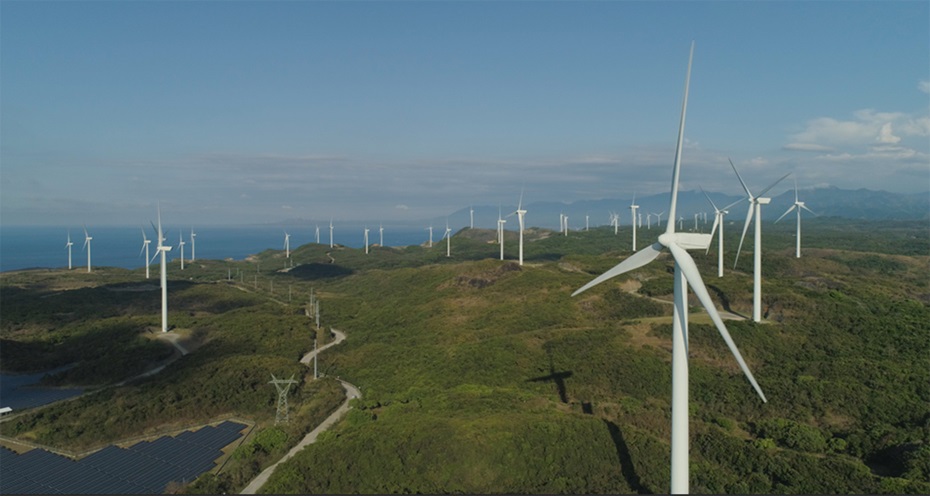
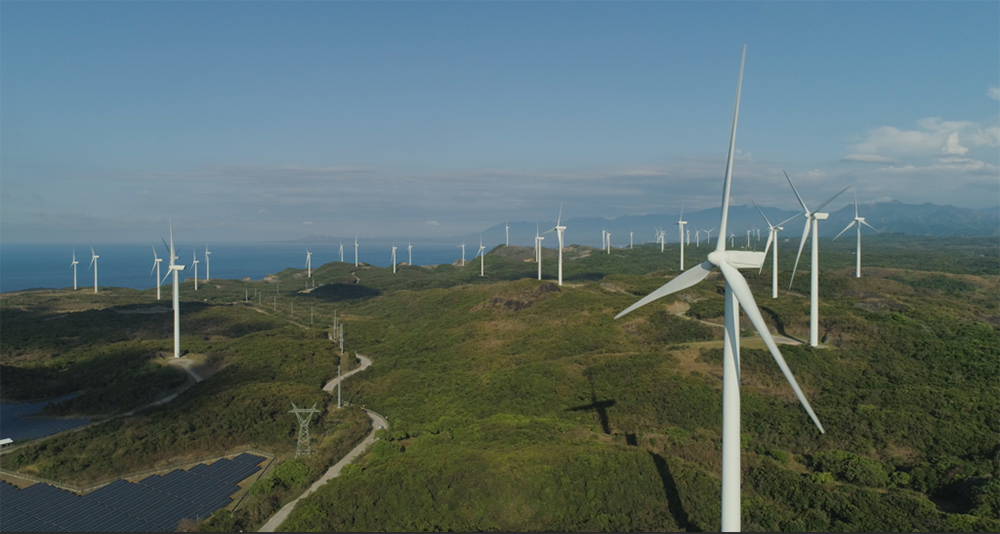 Image caption: Aerial view of Bangui windmills for electric power production in Ilocos Norte, Philippines
Image credit: Getty Images/iStockphoto