Feature: Operation ‘Pacer Goose’ highlights need for joint Arctic logistics
As the Pentagon seeks to establish a greater foothold in the High North, Operation ‘Pacer Goose’ is providing the Department of Defense (DoD) with a training stage for contested logistics in a competitive realm through an allied joint force effort, according to those who plan and conduct the mission.
‘Pacer Goose’ is the annual mission to resupply US Space Base Pituffik in northwestern Greenland that integrates ships from US Military Sealift Command (MSC), a Canadian icebreaker, and a network of logistics services in a harsh Arctic environment.
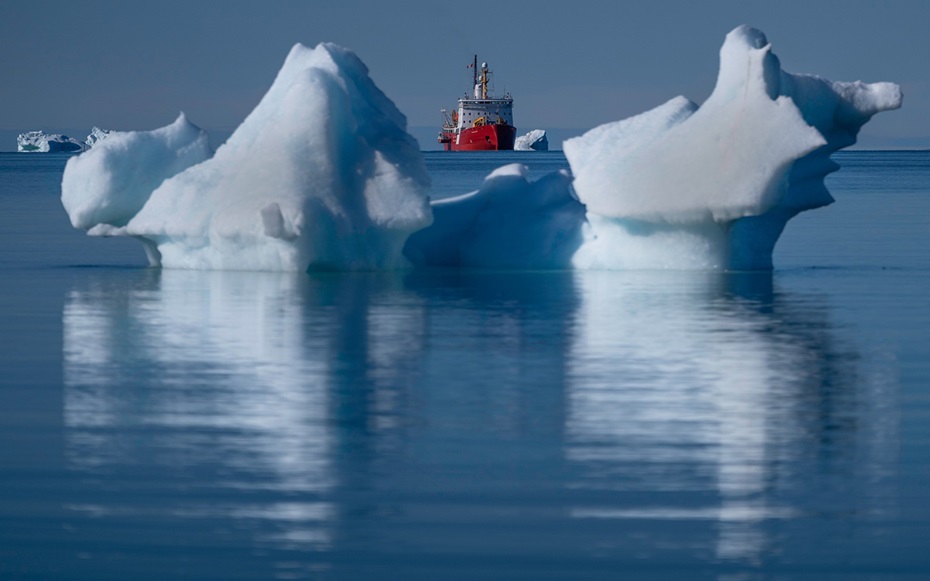
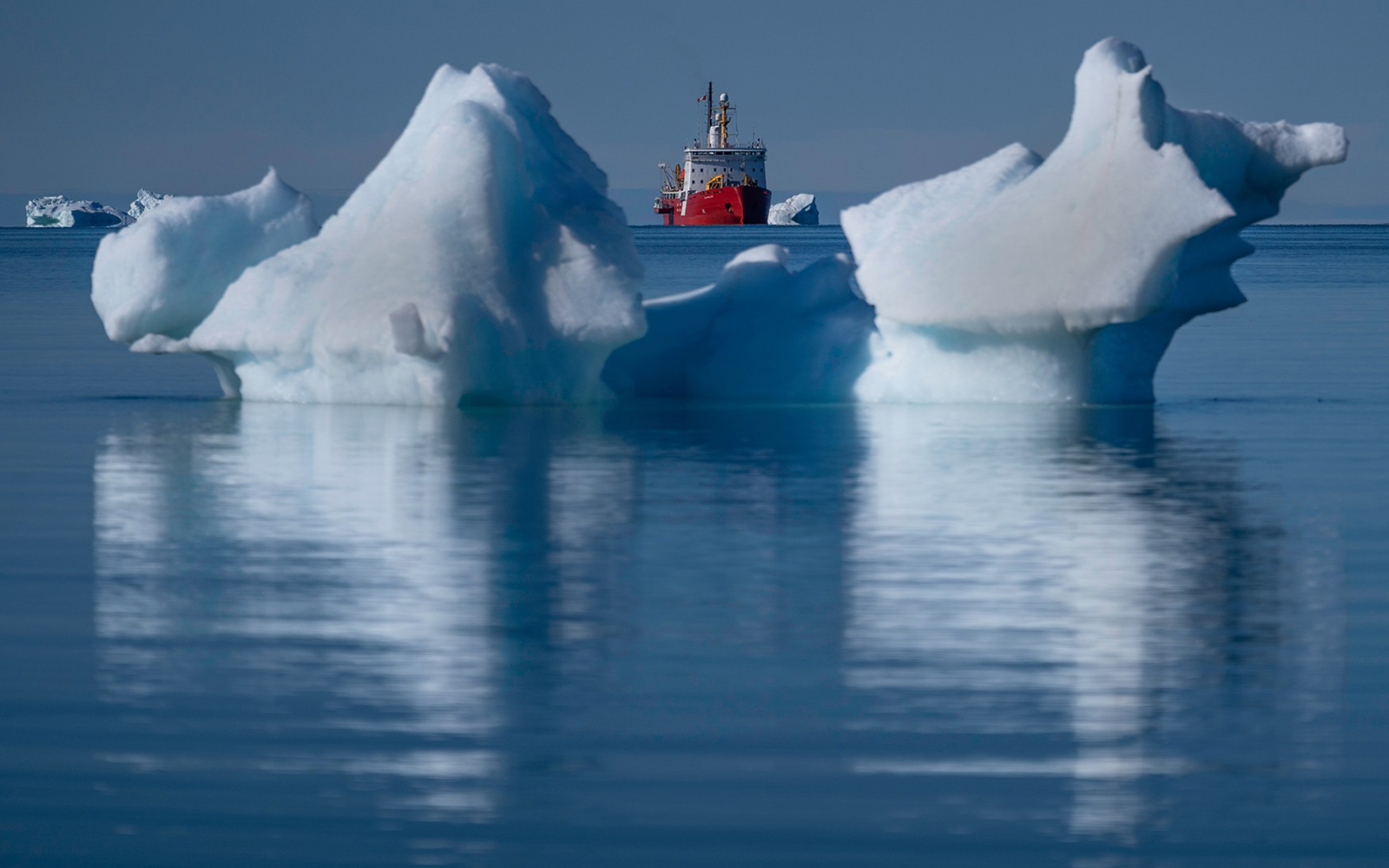 A Canadian icebreaker is pictured here during Operation ‘Pacer Goose’ in 2022. Image credit: US Space Force
Pituffik Space Base provides a strategic location for missile warning, missile defence, and space surveillance missions using a solid-state phased-array radar operated by the 12th Space Warning Squadron, according to US Space Base Delta 1. The base also provides satellite command-and-control through its tracking station, one of seven stations around the world that form the Space Force’s Satellite Control Network.
The 21st Logistics Readiness Squadron and 21st Contracting Squadron, located at Peterson Space Force Base, serve as programme managers for ‘Pacer Goose’, overseeing co-ordination and planning.
“Operation ‘Pacer Goose’ is a vital resupply mission, enabling continued mission success at Pituffik Space Base by fuel, supplies, and other resources,” a Space Base Delta 1 spokesperson told Janes on 5 August. “The operation supports the installation’s ability to maintain space operations, force projection, and scientific research in a uniquely challenging Arctic environment. It also provides delivery of supplies that support quality of life for personnel operating in remote, extreme conditions.”
The mission relies on co-operation. “Everybody is eager to work together,” Captain Cory Harnett, commanding officer of Canadian icebreaker CCGS Henry Larsen, told Janes on 31 July in a ship-to-shore interview from off the Greenland coast as the ships prepared to convoy into the space force base there.
US officials echoed those sentiments. “This is the joint force in action,” Captain James Murdock, MSC Atlantic commander, told Janes during a 27 June interview. “This is well into normal operations in the logistics world, and we do this all over the world,” Capt Murdock said. “This austere condition [in Greenland] is what makes [‘Pacer Goose’] different.”
On one hand, Capt Murdock noted the operation calls for two ships to complete a cargo mission. However, the co-ordination of those vessels and their subsequent journey into the Arctic requires detailed choreography.
“The remote and extreme Arctic environment necessitates detailed logistical co-ordination well in advance,” the Space Base Delta 1 spokesperson said. “The base must align personnel, resources, and equipment for efficient offloading during the short seasonal window when sea access is possible.”
The spokesperson added, “Planning for this resupply mission begins up to a year in advance. Deliveries are co-ordinated with DLA [US Defense Logistics Agency] Norfolk for container loading and delivery. Timelines for requesting goods can vary depending on the scope of individual projects. Mission partner organisations procure their own materials and containers and work directly with DLA for delivery. Early planning remains critical to ensure seamless logistical execution.”
Breakbulk, containerised, and other speciality cargo was transported to Norfolk, Virginia, to be loaded on the cargo ship Ocean Freedom during early July. At about the same time, aviation fuel was loaded on the tanker Stena Polaris in the Mediterranean, where the ship was working for the US Sixth Fleet.
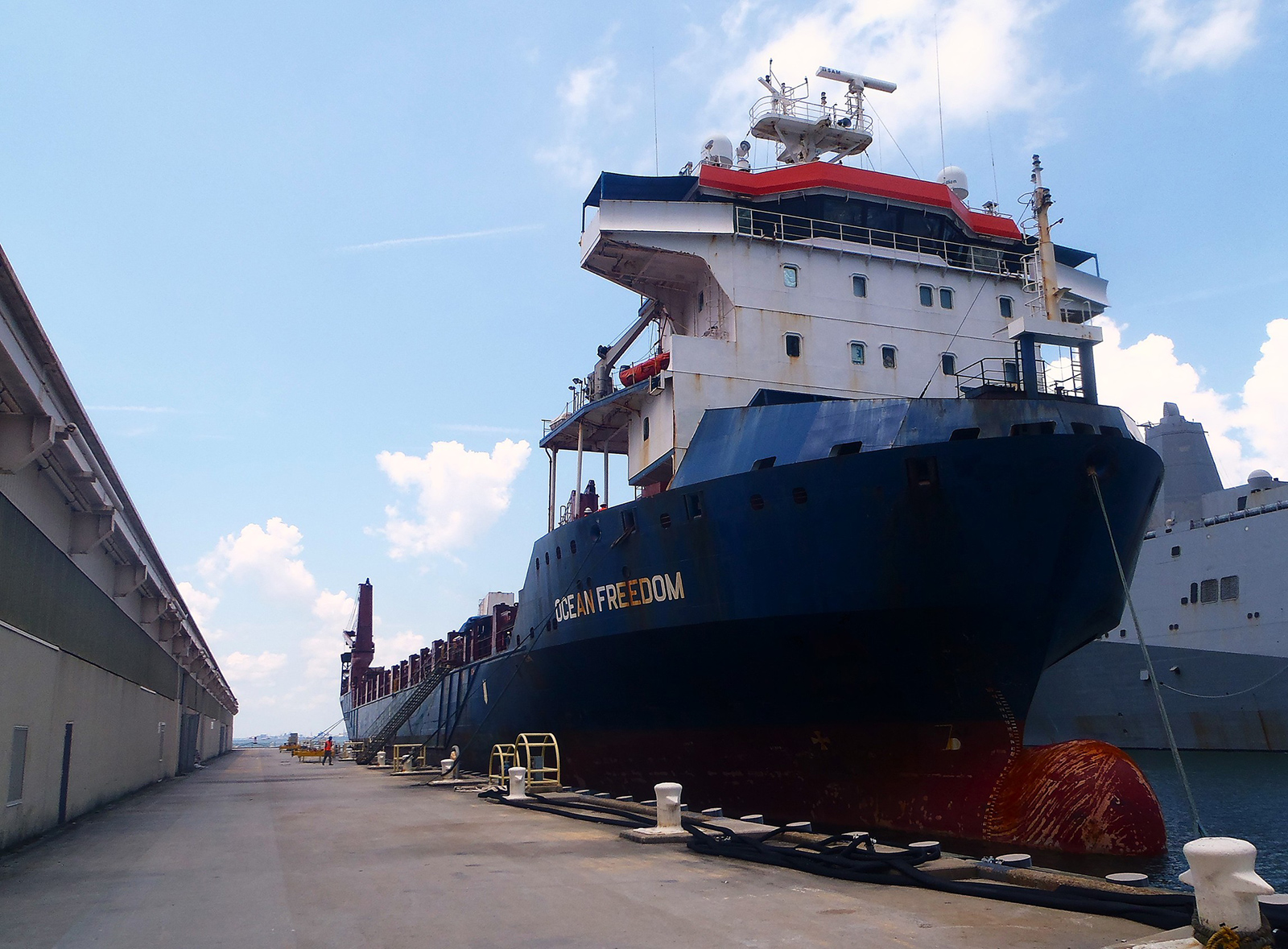 Ocean Freedom, pictured here, is the Military Sealift Command cargo ship being used for the 2025 Operation ‘Pacer Goose’. Image credit: Janes/Michael Fabey
Ocean Freedom travelled north and Polaris headed west for a rendezvous at Greenland’s Disko Island in mid-July, where they were joined by a Canadian icebreaker, contracted by the US Coast Guard (USCG) to lead the convoy of ships to the Pituffik base.
The US lacks sufficient icebreaking capability to conduct the annual operation. “We’ve got two fleets working this and a Canadian ship in a foreign county,” Capt Murdock said. “There are a lot of handshakes and agreements going on.”
Capt Murdock said, “Choreography is a good word. There’s a lot of alignment between the space force and MSC for this cargo mission. We need to be patient. They’re constantly figuring out what they need. We need to wait and see how all that stuff works. Maybe patience is the biggest challenge. This mission needs to be very responsive to the needs of space force, instead of the typical gung-ho navy folks that we are. [The movement] of ships and ship cargo is not something that happens with [the] snap of [a] finger anyway.”
As he also pointed out there is a time constraint because the Greenland base is above the Arctic Circle. “We have a limited window, in the month of July, where the ice is loose enough – ‘bergy’ water – loose ice-filled water with small ice chunks,” he said.
The biggest concern is for the safety of the tanker – making sure the integrity of the ship’s hull remains intact and averting any kind of environmental disaster, Capt Murdock said, noting “Polaris is a double-hulled tanker”.
Ice concerns
There is a great deal of planning to make sure the time is just right, when the ice is minimal, he said, relying, for example, on data and predictions from the US National Ice Center.
“Arctic conditions near Pituffik Space Base can be severe and unpredictable,” the Space Base Delta 1 spokesperson said. “Sea ice restricts access to a narrow seasonal window and hurricane-force winds or sudden storms can delay offloading operations.”
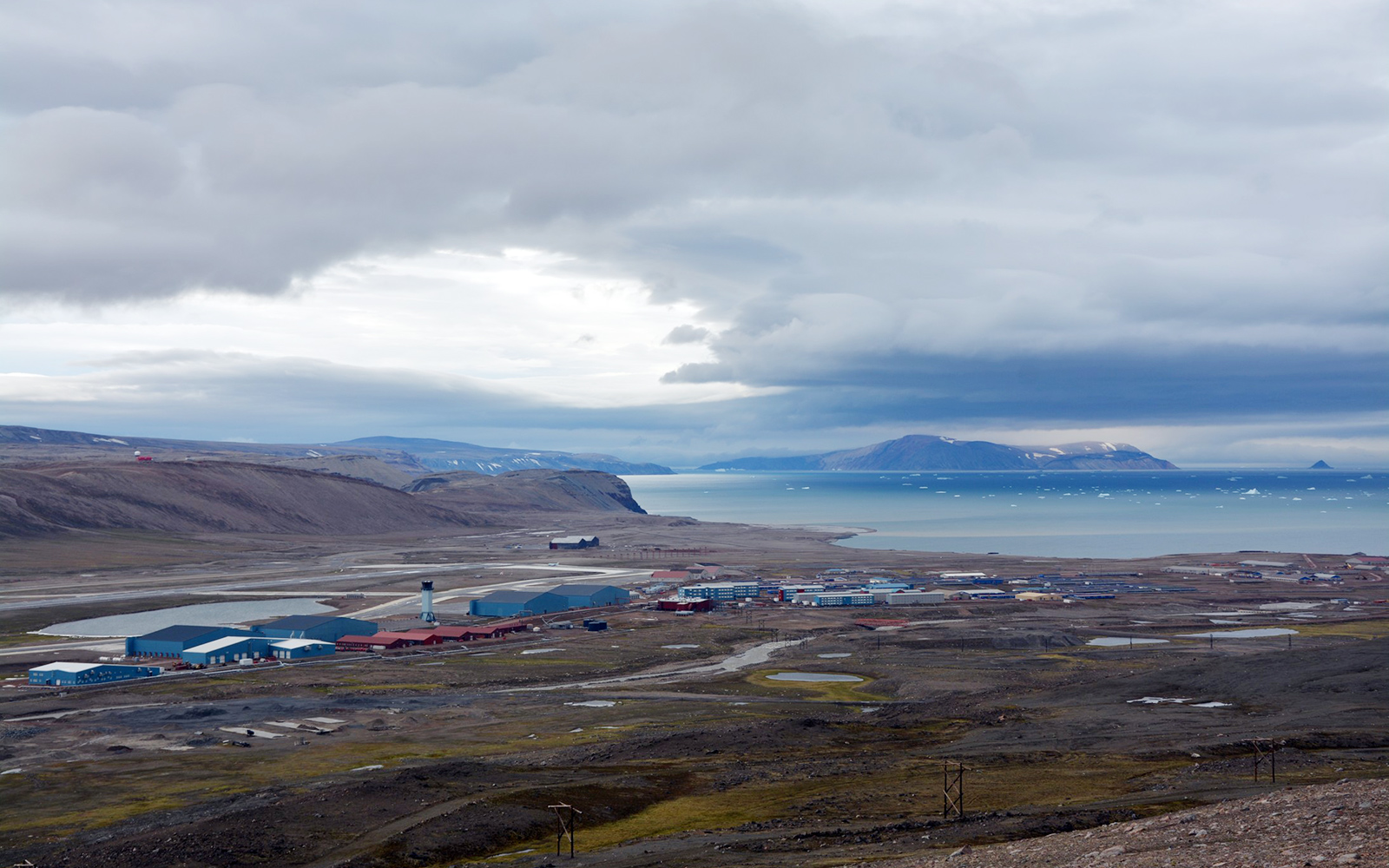 Weather conditions can be unpredictable at the Pituffik Space Force Base, pictured here. Image credit: US Army Corps of Engineers
Planning for specific dates for arrival at Pituffik begins in March, as the National Ice Center tracks ice coverage into that region of the Arctic as thick as 4 m, looking for when the waters near the base should be mostly free of ice.
“They’ve been pretty spot on,” Capt Murdock said. “We go the same time every year, plus or minus a week... Sometimes conditions have changed, and they recommend a move to the right a little bit.”
The timing is not just related to ice coverage, he said. The base also must be able to “absorb” the cargo being unloaded and discharged. “It’s not a very robust base,” he said. “These are austere conditions. The base has to be ready to accept the cargo. Anything you can imagine you need in an austere environment, we help deliver that and they have to have place to store it. They do not have warehouses and warehouses of climate-controlled spaces.”
It’s all about “timing and sequence”, he said. The icebreaker leads, followed by the tanker, which discharges and then is escorted out again by the icebreaker. The cargo ship then goes into port to unload.
“The Canadians show up and I tell my guys what frequency to talk them,” Capt Murdock said.
Polaris Captain Alan Azzoma underscored the need for the icebreaker and the importance of avoiding that ice. “It can do damage to the vessel,” he said during a 15 July interview with Janes while the tanker was in transit from the Mediterranean.
Operating in the Mediterranean, where the focus was on avoiding other ships and small boats, Polaris also embarks an ice pilot for the Greenland mission, Azzoma said. The ship uses an ice radar, but “the ice radar won’t get a good return ... unless it’s pretty calm. Last year, it was pretty calm, but when it’s really calm it’s also pretty foggy”, he said.
Fog proved to be a fact of life for the 2025 ‘Pacer Goose’ mission, too, Capt Harnett noted. “Late in the day it burns off,” he said, “and then it’s built up by the next morning”. Otherwise, the weather has been co-operative and it’s been a “good” sea for the operation, he said.
For more information, please see Feature: Operation Pacer-Goose highlights need for joint Arctic logistics