Russia very unlikely to escalate after Ukraine uses NATO airspace for UAV attacks on Russian Baltics energy infrastructure
Event
Ukraine struck two Russian Baltic ports in Ust-Luga and Primorsk, Leningrad region, with waves of one-way-attack unmanned aerial vehicles (UAVs) in five consecutive attacks on 22, 25, 27, 29 and 31 March. Russian Ministry of Defence (MoD) on 25 March claimed that Russian air defence shot down 389 UAVs nationwide and 56 over Leningrad region. On 29 March the MoD further claimed that air defence destroyed 203 UAVs nationwide, and 31 on the approach to Baltic ports.
According to Russian authorities and Leningrad region’s governor Aleksandr Drozdenko, oil loading operations at the two ports were temporarily halted following the strikes. Multiple Ukrainian UAVs crashed in Estonia, Finland, Latvia, and Lithuania, according to respective authorities. Finnish Air Force stated on 29 March that their F/A-18 Hornet observed “several small, slow-flying objects in Finnish airspace” and confirmed on the day that one UAV fell north of Kouvola and another UAV east of Kouvola, Kymenlaakso region.
Significance
On 31 March Presidential spokesperson Dmitry Peskov stated, during an official briefing, that the Kremlin was assessing the possibility that Ukrainian UAVs attacked Russia’s Leningrad region via NATO airspace. Peskov said “if airspace was granted for hostile activity ... this will oblige us to draw appropriate conclusions and take appropriate measures”. He added that “all critical infrastructure facilities in Russia are being protected, though facilities cannot always be made one hundred percent secure”. Russian President Vladimir Putin and Minister of Defence Andrey Belousov had not commented at the time of publication. Janes assesses that Kremlin’s official statements were passive, focused on defensive measures, and non-escalatory.
Ust-Luga and Primorsk ports represent the core of Russia’s Baltic oil export route, together handling around 40% of seaborne oil exports. Halting port exports further causes refineries to suffer storage bottlenecks, which can force cuts in crude oil processing and fuel production, exacerbating economic impact beyond ports themselves.
The non-escalatory statements by Kremlin’s official spokesperson Peskov contrast with the strong rhetoric from Russian state television channels. During the 30 March programme ‘Evening with Solovyev’, the host, Vladimir Solovyev, claimed the Baltic states were “allowing use [of] their airspace by Ukraine’s strike assets for attacks against Russia’s gas infrastructure”. Solovyev alleged “Zelensky government’s key objective is to drag NATO into war”. Vladislav Shurygyn, Russian war correspondent, claimed Ukrainian UAVs were likely launched directly from territories of their alleged production plants in Finland, Poland, and Romania.
Estonian Ministry of Defence on 31 March confirmed Ukrainian UAVs had “entered Estonian airspace without authorisation” adding that this “is linked to Ukraine’s self-defence against Russia’s aggression”. Finland’s Minister of Defence Antti Häkkänen on 1 April 2026 stated that he and Ukrainian Minister of Defence Mykhailo Fedorov discussed the situation of Russia’s war of aggression against Ukraine, including the UAVs that strayed into Finnish territory. Häkkänen stated that his message to Fedorov was that “drones should not enter the territory of Finland or other NATO countries” and added that “the Ukrainians understand this and are trying to do their best to do so”.
Ukrainian joint UAV production
Zelensky and Finnish President Alexander Stubb discussed joint UAV production and the exchange of UAV manufacturing expertise in New York , US, on 24 September 2024. Following this, on 26 February 2026 Zelensky announced defence agreements with Finland under the “Build with Ukraine” co‑production initiative, including UAV production.
On 5 February, Zelensky and Polish Prime Minister Donald Tusk signed a letter of intent on joint defence‑industrial cooperation, including UAV production, confirming that production will take place both in Poland and Ukraine.
On 12 March, Zelensky and Romanian President Nicușor Dan announced that Ukraine and Romania signed a declaration of intent and strategic partnership documents for joint UAV production in Romania, with Dan confirming drone production facilities would be located in Romania.
On 30 March, Bulgarian Prime Minister Andrey Gyurov and Zelensky signed a 10‑year Ukraine–Bulgaria security and defence agreement, formalising long‑term bilateral military cooperation committing Bulgaria to support for Ukraine, with a key provision covering joint production, including UAVs, on the territories of both countries.
Outlook
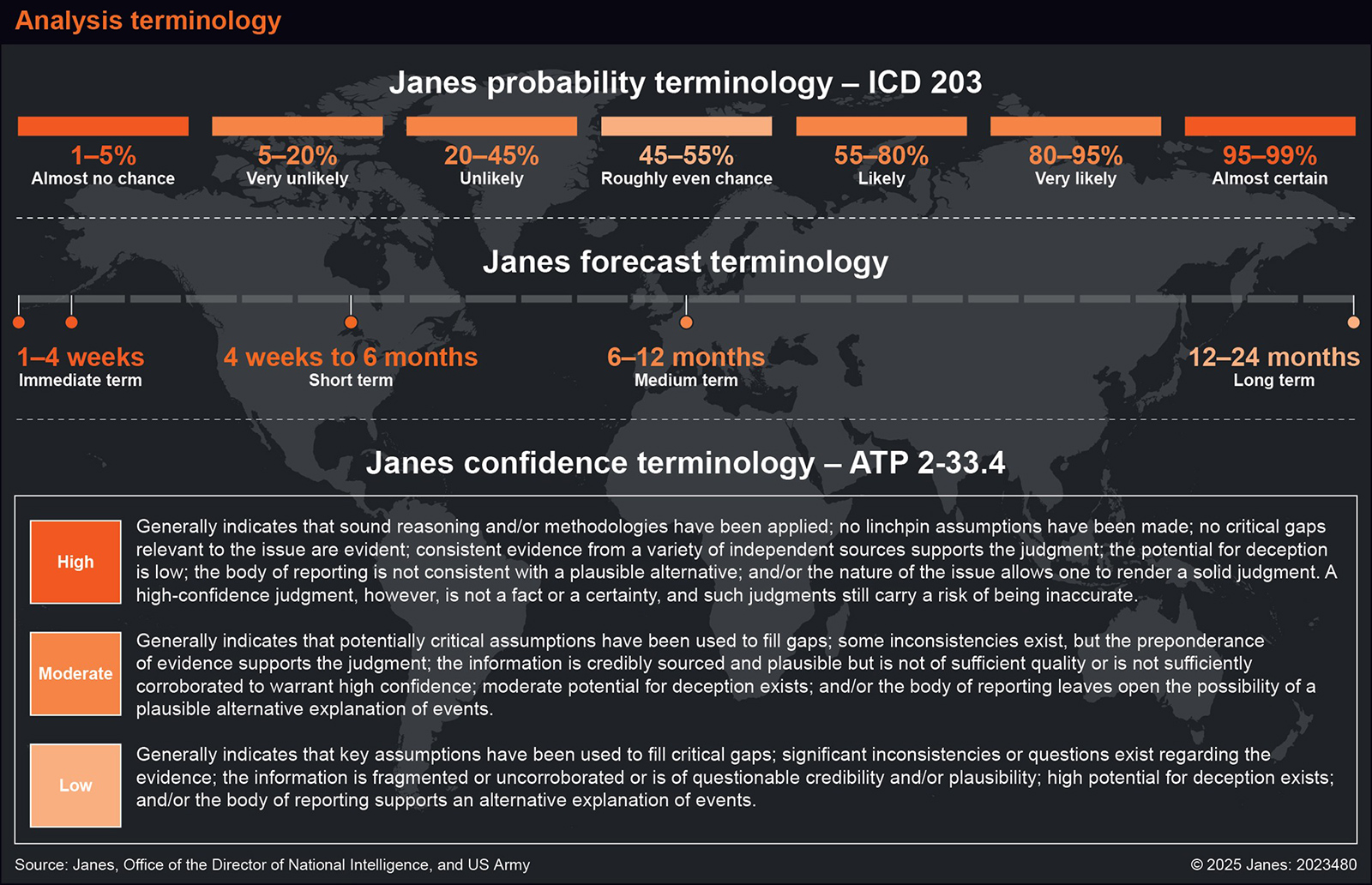
Janes assesses that Russia is very unlikely to escalate against Baltic NATO member-states (Estonia, Finland, Latvia, or Lithuania) in the short-to-medium term (one week to six months) following Ukraine’s 22–31 March attacks, beyond a continuation of regular air strikes against Ukrainian territory. However, Russia will almost certainly focus on preventive measures, such as mobile fire squads and short-range air defence, shifting some workload away from the Ministry of Defence toward privately owned energy and port companies by allowing them to equip personnel of their subordinate private protection companies with military‑grade weapons.
In addition, the robust debate on Russian state television channels on deficiencies, costs, and limitations of the country’s existing air defence is another indicator that Russia is primarily focused on improving preventive measures. One domestically touted example of “successful” air defence are the protective measures defending the city of Moscow and the surrounding region, developed through co-operation between the Russian Ministry of Defence and Moscow city authorities.
On 11 March, the Russian State Duma adopted a legislation, signed into law by Putin on 23 March, allowing specialised private protection companies to use military weapons to protect critical national infrastructure. The law enables private security companies to cooperate with the Russian National Guard (Rosgvardia) and regional departments of the Federal Security Service (FSB).
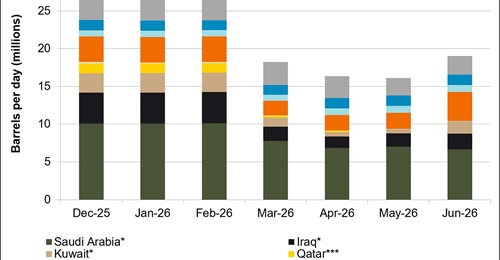
A further indicator that the Kremlin is very unlikely to escalate with kinetic action against Baltic NATO member states is that increased oil and gas scarcity on international markets is driving up prices for remaining Russian energy exports, partially offsetting losses from attacks on Baltic port infrastructure.
Risk positive indicator
- Russia successfully improves the capabilities of its air defence in the short-to-medium term
Risk negative indicator
- Ukrainian UAV attacks cause a mass civilian casualties
 Analysis terminology
Image credit: Janes