Russia very likely to pre-emptively terminate gas sales to European Union ahead of Brussels ban, exploiting energy crisis caused by Iran conflict
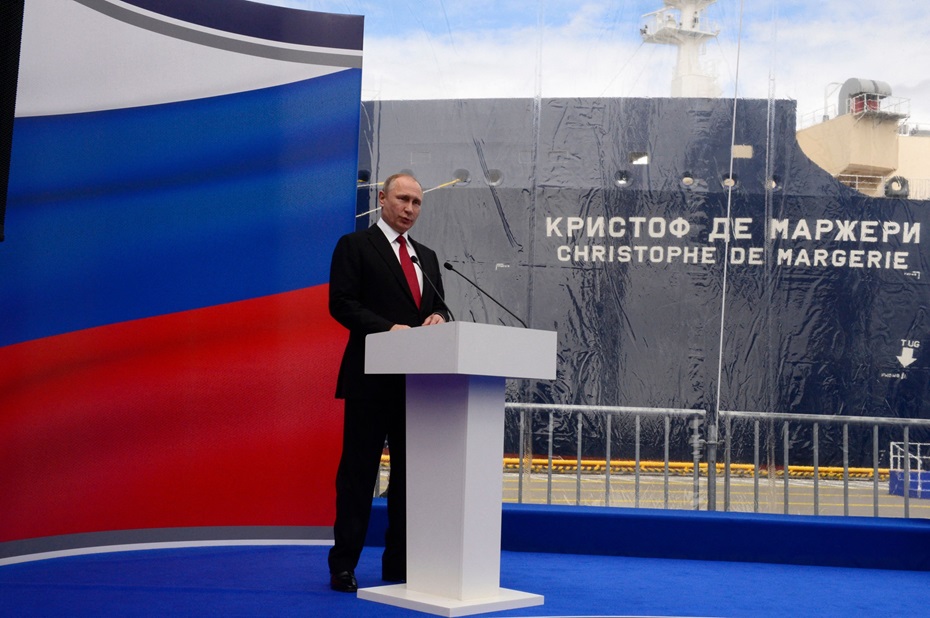
Russian President Vladimir Putin, during an in-house Kremlin interview on 4 March, hinted that Russia may cease gas shipments to European Union (EU), ahead of the EU’s own permanent bans for short-term gas imports from 25 April 2026 for liquefied natural gas (LNG) and 17 June 2026 for pipeline gas, and for long-term contracts from 1 January 2027. Alluding to the Iran crisis and the EU’s energy phase-out, Putin said “now other markets are opening up … perhaps it’s more advantageous to stop supplying the European market right now”.
Janes assesses that the interview was intentionally staged as an impromptu engagement.
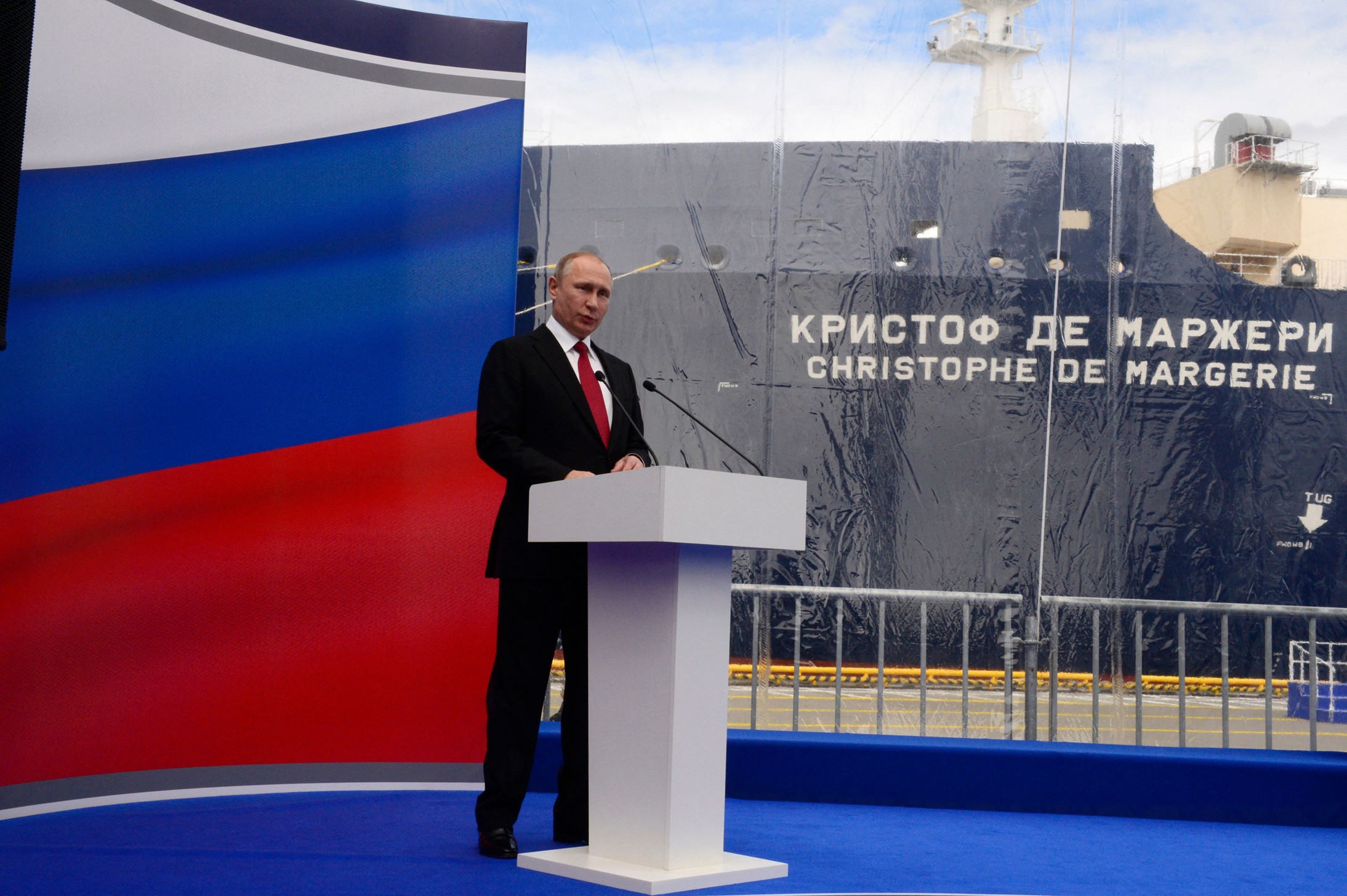
Image caption: Putin speaks during the naming ceremony of the Russian Christophe de Margerie Arctic LNG tanker, June 2017, St Petersburg, Russia. Image credit: Olga Maltseva/Pool/AFP via Getty Images
Significance
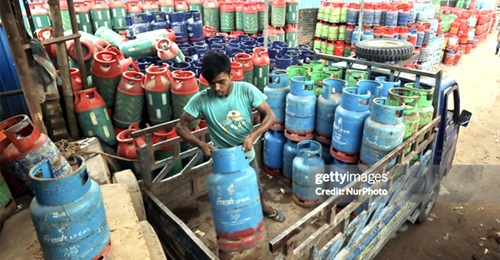
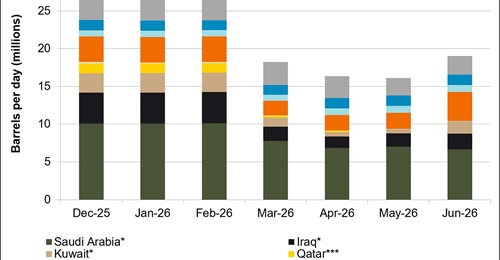
Janes assesses that Russia is willing to fully forego its natural gas exports to the EU as Moscow very likely aims to exacerbate the EU’s energy security concerns throughout 2026. Energy concerns in Europe have increased following the 28 February US-Israel strikes on Iran that triggered Tehran’s retaliation against oil and gas infrastructure of Bahrain, Kuwait, Qatar, United Arab Emirates, and Saudi Arabia. These events coincide with the months critical for the EU to replenish gas reserves depleted during winter.
A Russian pre-emptive pivot of energy exports away from the EU is almost certain as the Kremlin attempts to use the Iran crisis for its own goals in counteracting the EU’s phase-out of Russian energy. On 3 December 2025, the European Council reached an agreement to phase out imports of pipelined and liquefied gas from Russia with a full ban from the end of 2026 and 2027 respectively. However Moscow will almost certainly continue supplying Slovakia, Hungary, and Serbia in Europe – with whom Russia maintains commercial relations, while increasing maritime shipments to Asia, particularly China and India. As of 2025, Russia supplied China with 20% of its oil imports or 2.2 million barrels per day (bpd). China is also increasingly reliant on Russian gas – in September 2025 Russia’s Gazprom and China National Petroleum Corporation signed a memorandum to build the second gas pipeline, Power of Siberia 2, for an additional 50 billion cubic metres (bcm) of gas annually. They also signed an agreement mandating Gazprom to increase capacity of the existing Power of Siberia 1 pipeline from 30 bcm in 2024 to 44 bcm annually. Russia’s pipelined gas shipments to China outpaced Qatar’s liquefied gas shipments already prior to the March 2026 crisis, with Russian supplies exceeding Qatari supplies since early 2024. As of 2024, Russia supplied 20% of China’s total imports of natural gas, up from 8% in 2021.
Janes assesses, for Russia to successfully increase maritime energy exports, Moscow almost certainly understands it needs to ensure maritime safety for its fleet. On 3 March, a Russian LNG carrier Arctic Metagaz was attacked and severely damaged in the Mediterranean. On 4 March, Putin stated that this “was a terrorist attack”. In the 18 months since September 2024, Janes recorded at least 16 large incidents – eight maritime interdictions with Russia-linked vessels seized, or seized and later released, as well as another eight attacks with vessels sunk or heavily damaged.
| Date | Vessel | Type | Action | Location | Authority/actor | Outcome |
|---|---|---|---|---|---|---|
| 25 December 2024 | Eagle S | Oil tanker | Detained | Gulf of Finland | Finland | Finnish authorities seized the tanker after the Estlink 2 cable outage; investigation suspected of damaging undersea cables |
| 11 April 2025 | Kiwala | Oil tanker | Detained | Gulf of Finland | Estonia | Estonian coastguard detained the tanker, reporting seaworthiness issues |
| 13 May 2025 | Jaguar | Oil tanker | Attempted interdiction/inspection unsuccessful | Gulf of Finland | Estonia | Estonia attempted to compel course change/inspection; vessel continued toward Russian waters |
| 1 October 2025 | Boracay | Oil tanker | Detained | France, off Saint-Nazaire | France | France detained crew members over documentation/non-cooperation |
| 7 January 2026 | Marinera (ex Bella 1) | Oil tanker | Seized | North Atlantic | US | US seized the tanker |
| 7 January 2026 | Sophia | Oil tanker | Seized | Caribbean, international waters | US | US seized the tanker |
| 22 January 2026 | Grinch | Oil tanker | Detained | Western Mediterranean, Alboran Sea | France | French navy boarded and diverted vessel; judicial process opened on flag/document validity |
| 28 February 2026 | Ethera | Oil tanker | Detained | North Sea, Belgian exclusive economic zone | Belgium, support by France | Belgian forces boarded, investigation opened |
| Date | Vessel | Type | Action | Location | Authority/actor | Outcome |
|---|---|---|---|---|---|---|
| 23–24 December 2024 | Ursa Major | Heavy-lift cargo ship. Operated by Russian defence-linked Oboronlogistika | Explosions, causing vessel to sink | Mediterranean Sea, between Spain and Algeria | No reported perpetrator. Russian authorities described "explosion in engine room" | Spanish authorities rescued crew of 14 sailors. Vessel sank in international waters |
| 9 February 2025 | Koala | Oil tanker | Reported explosions in vessel’s engine room | Russia, Port of Ust-Luga | No reported perpetrator | Partially sunk, while moored in port |
| 27 November 2025 | Mersin | Oil tanker | Four external explosions causing engine room flooding | Senegal, anchored off Dakar | No reported perpetrator | Owner Besiktas reported deliberate external explosive placement; vessel remained stable |
| 28 November 2025 | Kairos | Oil tanker | unmanned surface vehicle (USV) attack | Black Sea, near Turkish coast | Ukraine (reported by Ukrainian media) | Explosion/fire reported; Turkish rescue assets responded |
| 28 November 2025 | Virat | Oil tanker | USV attack | Black Sea | Ukraine (reported by Ukrainian media) | Reported damage near engine room |
| 10 December 2025 | Dashan | Oil tanker | USV attack | Black Sea | Ukraine (reported by Ukrainian media) | Reported disabled, with critical damage |
| 19 December 2025 | Qendil | Oil tanker | unmanned aerial vehicle (UAV) attack | Eastern Mediterranean (international waters) | Ukraine (reported by international media) | Reporting states “critical damage” and unusable for intended purpose |
| 3 March 2026 | Arctic Metagaz | LNG carrier | Explosions and subsequent major fire | Mediterranean sea, south of Malta | Russian state blames Ukraine | Vessel drifting as of 9 March |
On numerous occasions, Putin has called attacks on Russian commercial vessels “piracy”. Similarly, Presidential Aide and Chairman of Maritime Collegium Nikolay Patrushev on 17 February 2026 claimed that “attacks against Russian maritime trading vessels are piracy”. Patrushev, a hardliner with over 50 years of experience in security services, added that “if Russia does not respond firmly, the British, French, and Baltic states will block our country’s access to the Atlantic basin”. He claimed that according to Russian intelligence information, such “attacks will increase in frequency”. Patrushev said the Kremlin is preparing responses to “Western attacks” through Maritime Collegium of the Russian Federation, a policy body created on 13 August 2024. Patrushev admitted that the Russian Navy is currently able to protect shipping only “with considerable strain” as Russia needs “far more long-range oceangoing ships”.
Outlook
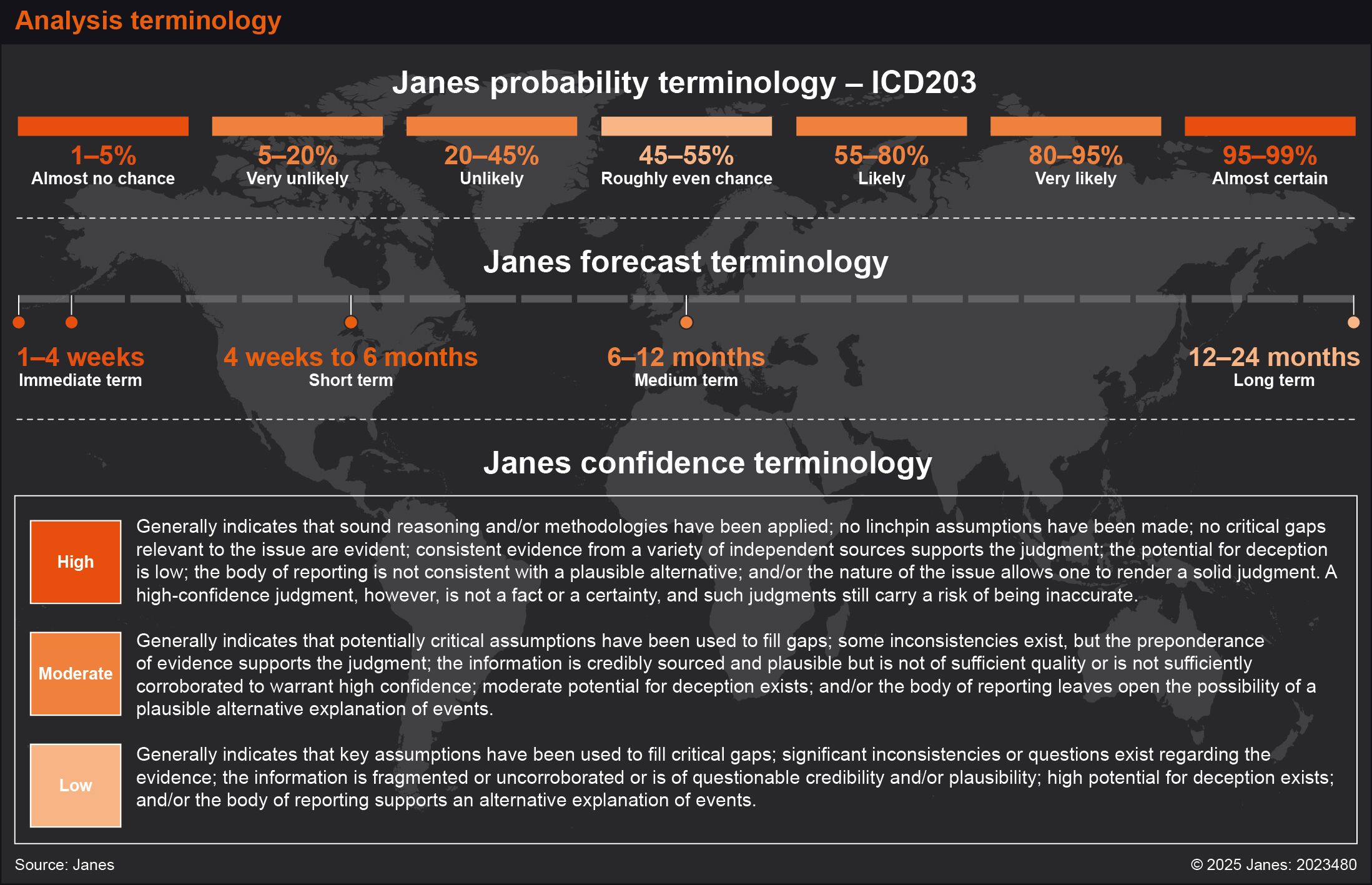
Russia will very likely cease its liquefied and pipelined gas shipments to EU ahead of the EU ban in the short term (one to four weeks), excluding supplies to land-locked Slovakia and Hungary, which retain commercial relations with Russia. The Kremlin will almost certainly demand that any re-institution of gas sales to EU is conditional on concessions regarding Ukraine crisis, while in the meantime capitalising on replacing Qatar as supplier to Asian buyers in the medium term (one to six months).
Based on daily monitoring of political discussions on Russian state TV channels, Janes assesses that it is very likely that the Russian political elite are yet to adopt an effective policy on protecting its maritime fleet. Proposals voiced by TV commentators range from deploying armed private military contractors on vessels, creation of sea convoys protected by the navy, maritime collaboration with BRICS partners, and naval blockade of remaining Ukrainian sea ports, to intentional demonstrative blowing up of interdicted tankers in foreign waters with a subsequent environmental pollution incident. Janes assesses that the wide range of views debated among Russian elites very likely indicate that practical solutions for maritime safety have not yet been agreed.
Janes assesses that in the medium (six to 12 months) and long term (12–24 months), Russia will almost certainly attempt to address the safety of maritime energy trade jointly with BRICS partners, particularly China. This was indicated by Patrushev on 17 February invoking the “potential of BRICS”, as well as two of Russia’s naval exercises conducted jointly with China, the ‘Maritime Security Belt 2026’ exercise in Strait of Hormuz in February and ‘Will for Peace 2026’ exercise in South Atlantic in January.
Risk positive indicator
Iran crisis ends quickly, with Middle Eastern gas supplies to the EU restarting soon
Risk negative indicator
Iran crisis remains unresolved for longer, with natural gas production subdued and prices increasing
Image caption: Analysis terminology. Image credit: Janes