Russia very likely to use results of Trump-Putin summit to pursue all or most of its political, security, and territorial demands from Ukraine
Event
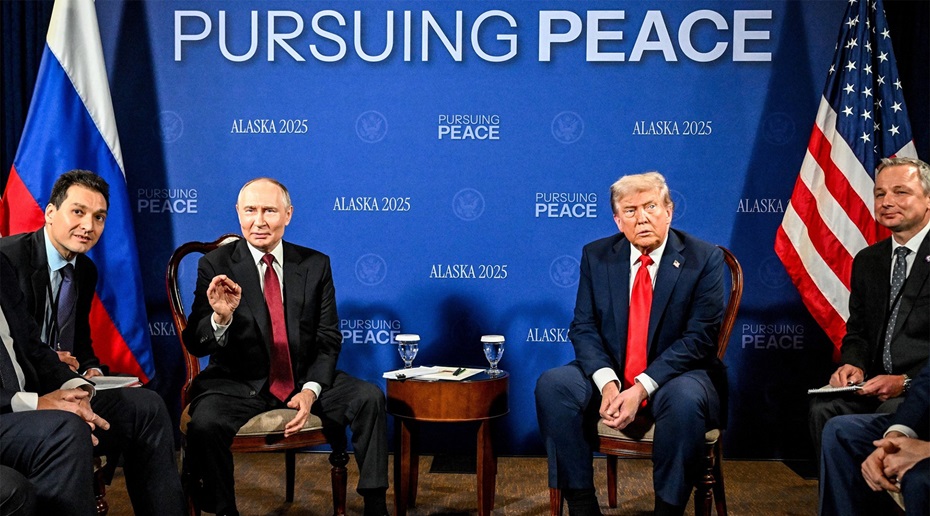
On 15 August 2025, Russian President Vladimir Putin and United States President Donald Trump met in Alaska, US, for talks on Ukraine and broader US-Russia co-operation. At the press conference, Putin tied the Ukrainian conflict with fundamental threats to Russia’s security and alluded that Russia and the US reached an “understanding” regarding security for Ukraine. On 18 August, Ukrainian President Volodymyr Zelensky, joined by a delegation of European leaders, met with Trump in Washington.
In Washington, Zelensky was joined by heads of state of France, Finland, Germany, Italy, and the United Kingdom, as well as the NATO general secretary, and the European Commission president.
Significance
Janes assesses that Russia’s goal for diplomacy is averting the secondary tariffs on third countries buying Russian oil. Putin is also very likely constrained in his actions by the demands announced and promised to the Russian population in a formal speech, also called ‘Root Causes’ speech on 14 June 2024, Ukraine’s ceding of Donetsk, Kherson, Luhansk, and Zaporizhzhia regions; limits to Ukrainian military’s size; non-NATO status; and change of Kyiv government with ensuing political reforms safeguarding rights of Russian minorities. To achieve its demands, Russia wants to avoid a comprehensive ceasefire and retain military pressure on Ukraine until the signing of any peace agreement.
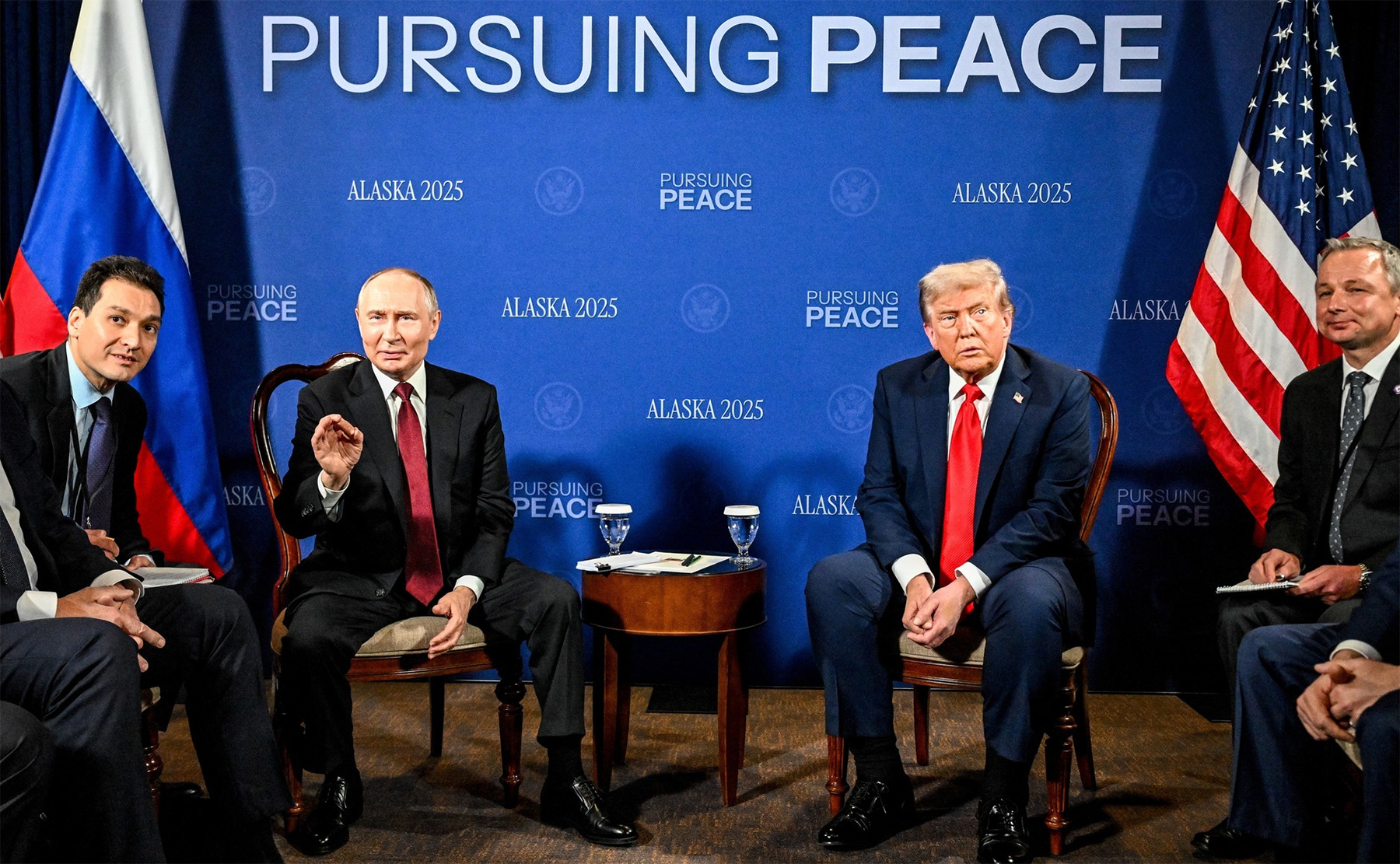 Vladimir Putin and Donald Trump at the Alaska 2025 summit on 15 August in Anchorage, US. Image credit: Sergey Bobylev, RIA Novosti
Russia’s goals
Janes assesses that prior to the negotiations, one of Kremlin’s foreign policy goals was to use diplomacy to avert the secondary tariffs on third countries buying Russian oil.
In the days before and after the summit, Kremlin officials conducted series of consultations with partners, almost certainly to ensure they do not yield to US pressure and continue trading with Russia:
- On 11 August, a State Duma delegation led by Vice-Chairman Aleksandr Babakov visited China
- On 15 August, Prime Minister Mikhail Mishustin met with First Vice-President of Iran Mohammad Alireza Aref, while State Duma Chairman Vyacheslav Volodin met with North Korean leader Kim Jong-un
- On 18 August, Putin conducted phone calls with South African President Cyril Ramaphosa, Indian Prime Minister Narendra Modi, and Brazilian President Luiz Inácio Lula da Silva
- On 19 August, Putin conducted a phone call with Crown Prince of Saudi Arabia Mohammed bin Salman
Russia’s elevated interest in improving both its economic situation and diplomatic standing manifested itself also through several business figures picked for the delegation at negotiations – Minister of Finance Anton Siluanov; CEO of Russian Direct Investment Fund Kirill Dmitriev; and Minister of Defence Andrey Belousov, who previously served as minister of economy.
Kremlin’s domestic challenges
Janes assesses that Putin is very likely constrained in his actions by the demands announced and promised to the Russian population in a formal speech, also called ‘Root Causes’ speech on 14 June 2024, Ukraine’s ceding of Donetsk, Kherson, Luhansk, and Zaporizhzhia regions; limits to Ukrainian military’s size; non-NATO status; and change of Kyiv government with ensuing political reforms safeguarding rights of Russian minorities.
Putin needed to appease the two crucial domestic constituencies to avoid social or elite instability and calm fears of any unwarranted concessions.
- The moderates comprise the country’s politically less active majority, including the business elites. Their view is that Russia must not be seen to lose, a position that requires securing at least the majority of Ukraine’s four southeast regions and its non-NATO status.
- The hardliners and patriotic supporters of the war, many with family members in the military, insist Russia must be seen to win, a view requiring the fulfilment of all of Kremlin’s June 2024 demands, with further demands such as questioning the status of Odesa.
- The third group, the anti-war liberal opposition, would like to see a quick end to the war in exchange for sanctions relief. This group, however, has since 2022 been sidelined.
To retain support of the moderates and hardliners, the Kremlin has kept its rhetoric steady while increasing the transparency of its foreign policy. On 14 and 16 August, immediately before and after the Alaska summit, Putin called two high-level meetings, attended by 25 senior government officials, to brief them on the negotiations. Janes assesses that the Kremlin needs to use such meetings to ensure support by key domestic decision makers. Putin also used the Alaska summit to reiterate the position that the conflict in Ukraine is connected with the fundamental threats to Russia’s own national security.
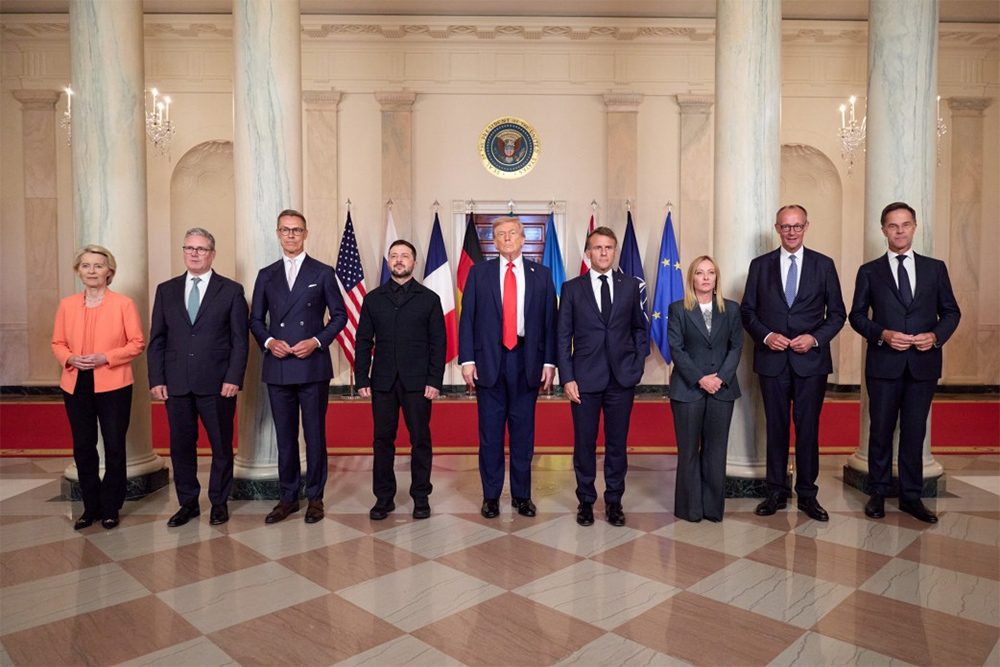 European Commission President Ursula von der Leyen, British Prime Minister Keir Starmer, Finnish President Alexander Stubb, Ukrainian President Volodymyr Zelensky, US President Donald Trump, French President Emmanuel Macron, Italian Prime Minister Giorgia Meloni, German Chancellor Friedrich Merz, and NATO Secretary General Mark Rutte on 18 August 2025 in Washington, US. Image credit: Office of the President of Ukraine, Kyiv
Outlook
Janes assesses that Russia – feeling emboldened by its diplomatic efforts and perceived favourable results of its attritional war – will very likely pursue all or most of its June 2024 political, security, and territorial demands in the short term (one to six months). This is a high-confidence assessment based on a series of political statements by Moscow and Russia’s current diplomatic and military position. Russia will very likely attempt achieving its demands through staged negotiations, pressuring Ukraine to successive concessions. In exchange, it will very likely offer modest counter-concessions, including undefined ‘security guarantees’ for Ukraine (tied to guarantees for Russia’s own security), economic co-operation with the US, and raising the negotiations to a higher level, likely appointing as chief negotiator Minister of Foreign Affairs Sergey Lavrov or Minister of Defence Andrey Belousov, and agreeing to a Putin-Zelensky meeting.
Russia will in the medium term (six to 12 months) almost certainly boycott initiatives for military deployments in Ukraine of any European NATO countries, either as ‘Coalition of the Willingʼ or otherwise. This is corroborated by series of statements over 2024–25, including latest rejection on 18 August 2025 by Spokesperson of Ministry of Foreign Affairs Maria Zakharova.
The Kremlin very likely continues to see Ukraine’s “security” as a derivative of Russia’s own security and will only agree to such security guarantees for Ukraine over which Russia retains a veto and which do not interfere with Russia’s June 2024 demands. This assessment is corroborated by Putin’s Alaska statements – he reiterated that for Ukrainian settlement to be sustainable, the ‘root causes’ must be eliminated, and all of Russia’s legitimate concerns addressed.
Russia will likely go even further in the medium term and attempt reviving its decade-old demands on federalisation of Ukraine, voiced at the 30 March 2014 meeting of Lavrov and then US Secretary of State John Kerry. The Kremlin likely sees federalisation as a way of achieving one of its June 2024 demands on ensuring the rights of Russian minorities in Ukraine’s remaining territories. This is indicated by a series of statements by Lavrov in an interview on 19 August given to Russian state TV and published on the Ministry of Foreign Affairs official website in seven languages.
Risk positive indicator
- Trump reverts to old position of continued military support to Ukraine and threatening further sanctions and secondary tariffs unless Russia agrees to a ceasefire.
Risk negative indicator
- Russian military achieves notable breakthroughs on front lines of Pokrovsk or Kostyantynivka.
For more information, please see Russia very likely to use results of Trump-Putin summit to pursue all or most of its political, security, and territorial demands from Ukraine