Special Report: US PACAF sharpens response to Indo-Pacific threats
Date Posted: 23-Apr-2025
Author: Akhil Kadidal, Bangalore
Key points
- The commander of US PACAF speaks to Janes about how the command is responding to Indo-Pacific security challenges
- Priorities include a focus on new technologies, collaboration with regional allies, and enhancing infrastructure
The US Pacific Air Forces (PACAF) is using three “asymmetric advantages daily” to tackle the increasingly complicated security situation in the Indo-Pacific region, the head of the command, General Kevin B Schneider, has said.
The advantages include leveraging the strength of joint force through the integration of new technologies (including artificial intelligence [AI]-enabled agile data systems), closer co-operation with a network of allies and regional partners, and the “discipline” of PACAF airmen, Gen Schneider said.
In its 2022 National Military Strategy, the US government identified China and “its increasingly capable military” as the “top pacing challenge” for US national security. Such security complexities have made PACAF increasingly important in the Indo-Pacific, according to US Air Force (USAF) Chief of Staff General David W Allvin.
On 9 February 2024 when Gen Schneider assumed command of PACAF, Gen Allvin said the command was facing a “contrasting strategic approach” in the Indo-Pacific – Washington DC's vision of a “free, open, and prosperous Indo-Pacific” versus that of “our pacing challenge, [which] consistently threatens regional interests, negatively impacting security, sovereignty, and prosperity”.
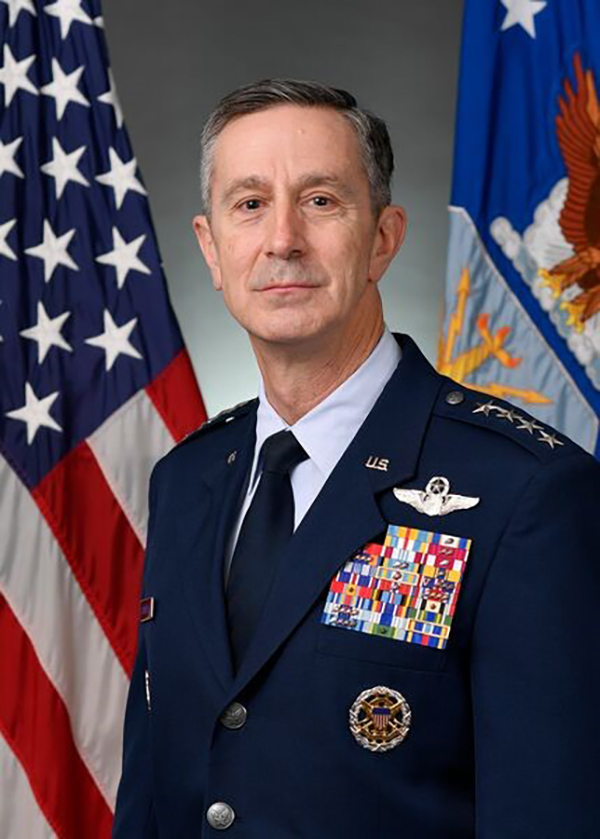
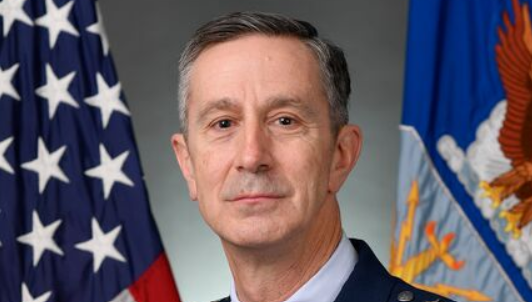
General Kevin B Schneider, Commander, PACAF. (US DoD)
Gen Schneider told Janes that Chinese military modernisation, which includes “advancements in fifth-generation air power, long-range missiles, and anti-access/area denial (A2/AD) systems like ballistic missiles”, is an “attempt to reshape the operational landscape in the Indo-Pacific”.
This has prompted the “USAF, as well as the rest of the joint force, to continue to stay ahead by fielding advanced capabilities, refining our tactical skills, and advancing our operational command-and-control (C2) to stay ahead of potential aggressors”, he said.
PACAF comprises three numbered air forces (5th, 7th, and 11th), which are spread across nine major airbases in the Indo-Pacific. The service commands 46,000 personnel across the Indo-Pacific, serving primarily in Alaska, Guam, Hawaii, Japan, and South Korea. For Gen Schneider, the command's “warrior ethos, which rests upon the professionalism, discipline, and strength” of personnel in PACAF is a critical advantage.
“That is seen in the skill, capability, and innovation of our non-commissioned officer corps,” he said.
According to the command, the Indo-Pacific region accounts for nearly 60% of the global GDP, two-thirds of global economic growth, five of the world's nuclear powers, and seven of the 10 largest militaries. PACAF's central mission is to support US Indo-Pacific Command (INDOPACOM) and co-ordinate with allied partners “to ensure regional stability and security”.
In 2024 Gen Schneider said his priorities for the command included force readiness and driving modernisation, in keeping with the PACAF Strategy 2030. Since then, and “during the past 15 months, HQ PACAF and the operational units have focused on advancing our warfighting capabilities” and “evolving command, control, and battle management capabilities”, he told Janes .
The command is “prioritising distributed, federated battle management C2 systems to push data to decision makers at the forward edge of the [battlespace]”, he said. “We are doing this by moving to more agile data systems enhanced by AI tools.”
He added that “these technologies will enhance our ability to detect, deter, and defeat threats across multiple domains so that we remain adaptable in a dynamic environment”.
The USAF is also working to address the People's Liberation Army Air Force's (PLAAF's) fifth-generation air power. “These efforts include advancements to our existing advanced fighter platforms; the development of our sixth-generation fighter; expansion of integrated intelligence, surveillance, and reconnaissance (ISR) systems; and resilient C2,” he said. “Additionally, we are increasing interoperability with our allies by advancing the scope, scale, and complexity of our air exercises.”
Gen Schneider describes PACAF's interoperability with allies and partners as a key asymmetric advantage. “We continue to integrate and operate … with our network of allies and partners … more deeply than ever before. We also continue modernising our capabilities and working with allies and partners as they modernise to ensure interoperability and agility to address the full spectrum of challenges – whether from China, North Korea, or other threats in the Indo-Pacific,” he said.
He added that PACAF is also using a combination of deliberate rotations of aircraft and continuous training with allies and joint partners to maintain “warfighting readiness”.
“The advanced aircraft rotations ensure we maintain air superiority capabilities as we transition to newer capabilities,” Gen Schneider said. “The groundwork to prepare for the fielding of [Boeing] F-15EXs and E-7s is happening, and we are deliberately building them into theatre exercise plans so that they are immediately contributing to deterrence activities when fielded.”
The F-15EX aircraft is scheduled to replace the obsolete F-15C/D capability at Kadena Air Base on Okinawa. According to Gen Schneider, this will happen in the “coming years”. Janes previously reported that Boeing completed Lot 1 deliveries in July 2024, that Lot 2 is currently being prepared for delivery, and that Lots 3–6 are on contract.
“The F-15EX's radar, open architecture, and hypersonic weapon capabilities will significantly enhance our combat air power and operational flexibility, particularly in contested environments, ensuring we maintain air superiority in the Indo-Pacific,” he said.
PACAF is also preparing to operate the new E-7 Wedgetail airborne early warning and control (AEW&C) aircraft. While Gen Schneider did not specify when PACAF will receive its first E-7, he said that the platform will improve “situational awareness and operational effectiveness by enabling real-time, integrated decision making in complex and contested environments”.
To read more, please visit - Special Report: US PACAF sharpens response to Indo-Pacific threats