STANAG 4817 completes NATO’s MUS jigsaw
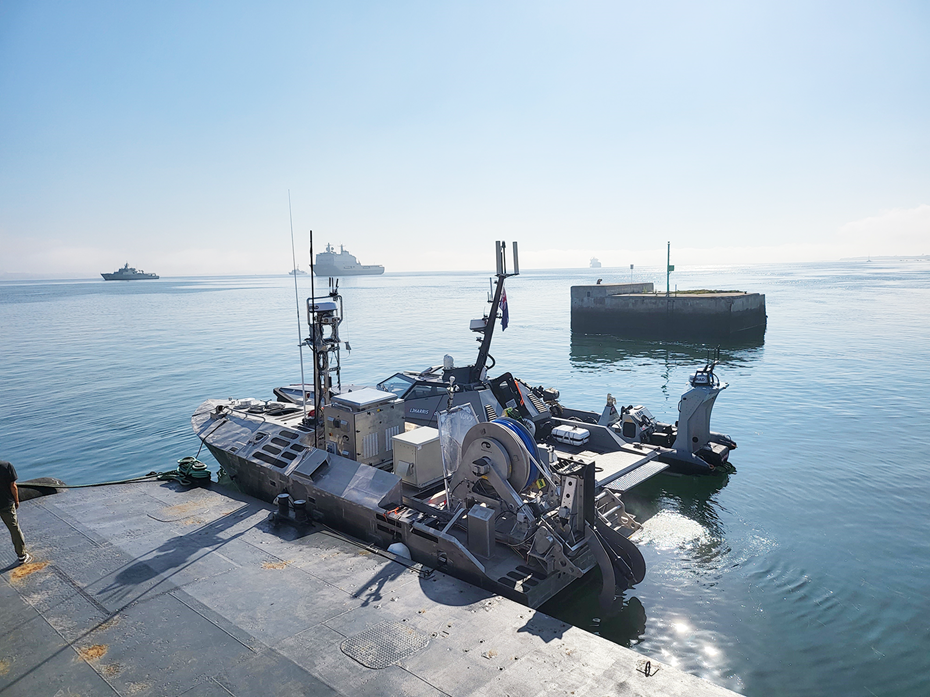
In June NATO’s Task Force X Baltic was established in the Baltic Sea as a pilot operational experimentation (OPEX) activity delivering the first at-sea application of NATO Allied Command Transformation’s (ACT’s) Task Force X concept, which uses maritime unmanned systems (MUSs) to counter underwater threats. Several firsts were achieved in MUS command-and-control (C2). These included pushing data collected from unmanned surface vehicles (USVs) and other MUSs through the NATO-wide Coalition Warrior Interoperability Exercise (CWIX) C2 framework and into what NATO Allied Maritime Command (MARCOM) calls its ‘Mainsail’ data integration and analysis tool. This was done using protocols from NATO Standardization Agreement (STANAG) 4817.
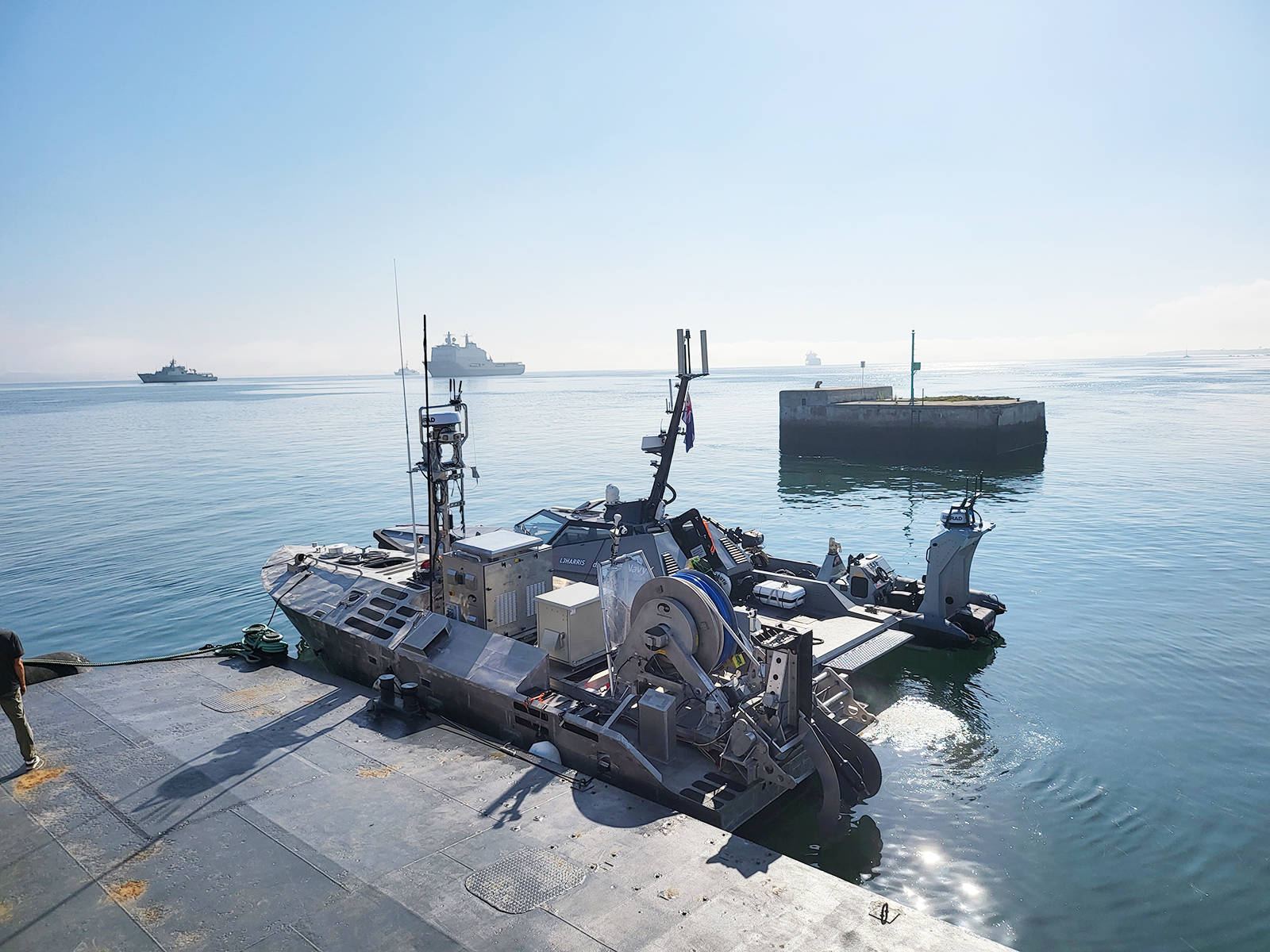 Unmanned and manned maritime platforms assemble for serials during ‘REPMUS’. Developing C2 networks to integrate manned and unmanned systems was a central element of ‘REPMUS’ and ‘Dynamic Messenger’. Image credit: Dr Lee Willett
Mainsail was developed by NATO’s Centre for Maritime Research and Experimentation (CMRE), under ACT sponsorship – to enable early detection, using artificial intelligence (AI), of anomalous behaviours on and below the surface around critical undersea infrastructure (CUI) nodes, integrating data into a common operational picture (COP) and supporting maritime situational awareness (MSA). Mainsail was delivered to MARCOM to support NATO’s ‘Baltic Sentry’ maritime surveillance activity, established in January following several CUI incidents in the Baltic between October 2023 and December 2024.
Task Force X Baltic was not part of ‘Baltic Sentry’, an operational activity in the real-world operational environment of the Baltic, using two Standing NATO Maritime Groups (SNMGs). In this context, Mainsail is a real-world operational tool.
STANAG 4817 is in its final developmental stages, prior to prospective ratification. These stages require test and evaluation in OPEX as close to real-world contexts as possible. Task Force X Baltic provided one such opportunity.
STANAG 4817 is designed to support interoperability, integration, and interchangeability for unmanned underwater vehicles (UUVs). Developed originally to provide architecture standards to enable high-level C2 interoperability for MUS, it evolved to incorporate lower-level C2 including MUS vehicle reporting and tasking. Overall, it provides a standards ‘blueprint’ for platforms, their sensors, and the C2 and other software architectures underpinning their use. During Task Force X Baltic, these standards were used to apply, for example, commonality in format and language for C2 messages relating to positioning and contacts being passed from UUVs and USVs into the CWIX and Mainsail frameworks, contributing to the COP, which was then distributed to different operational nodes, enhancing MSA.
Standards requirement
While anti-submarine warfare (ASW), mine countermeasures (MCM), and CUI security increasingly demand the surveillance presence of massed UUVs, they are a challenge to operate in large numbers in the bandwidth-limited underwater environment.
Many NATO member states are developing UUVs – some are developing national C2 architectures to support their operational use. More industry stakeholders are also producing UUVs, plus their sensors and other payloads. The need for NATO standardisation in this field has become more apparent.
Defining standards
NATO describes a STANAG as “a ... document that specifies the agreement of member countries to implement a standard, in whole or in part, with or without reservation, in order to meet an interoperability requirement”.
STANAG 4817 may prove the final piece of the puzzle in operating MUSs at scale and within wider multidomain operations (MDO). “STANAG 4817 provides a common reference architecture and standardised interfaces at multiple C2 layers, enabling operational integration of unmanned systems with greater agility and increased interchangeability,” Brett Steadman, NATO STANAG 4817 Custodian Support Team (CST) chair, told Janes in a 15 August interview.
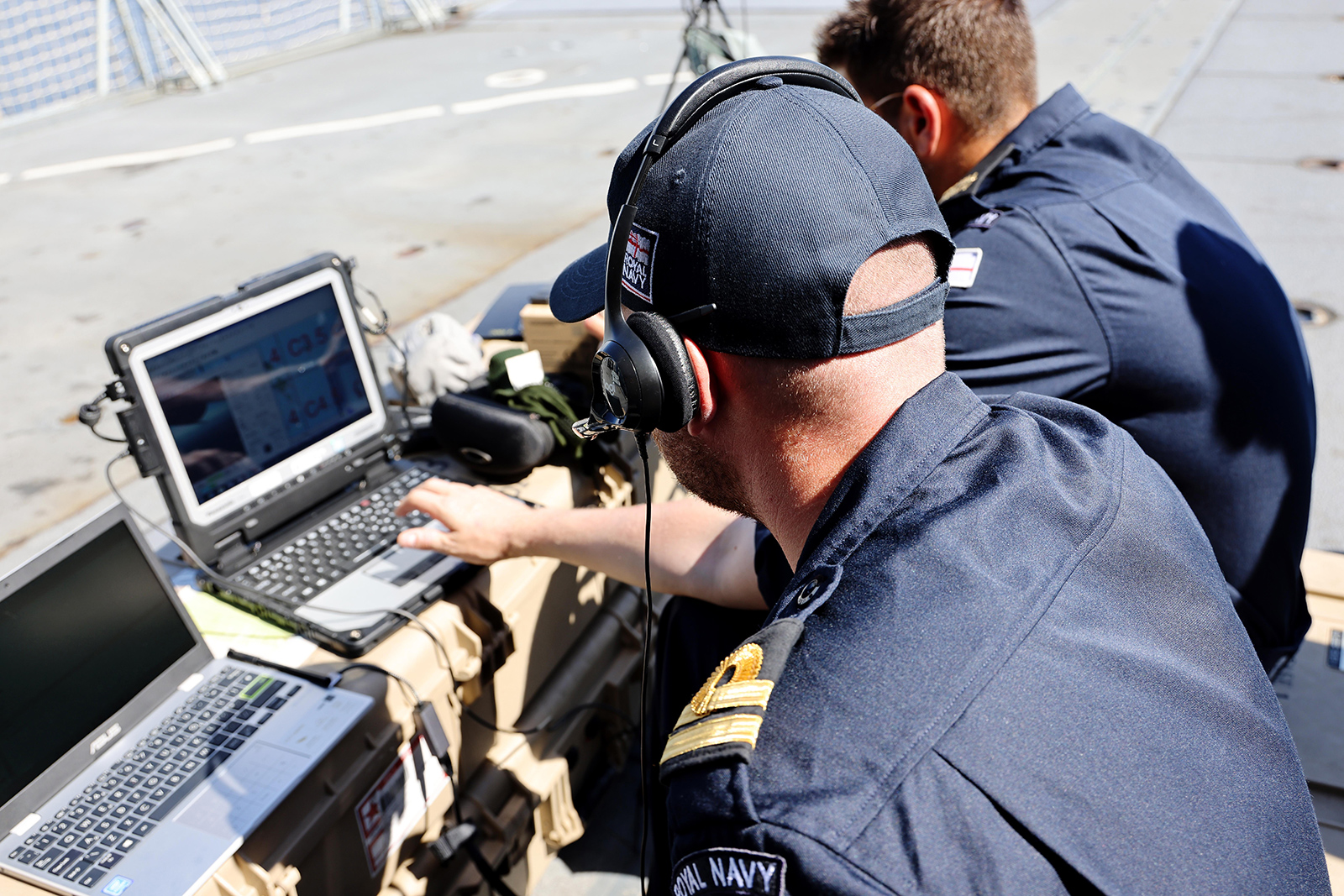 Royal Navy operators prepare a UAV mission onboard a frigate during ‘REPMUS 2022’. STANAG 4817 is designed to underpin delivery of interoperability, integration, and interchangeability in unmanned system operations across all domains, from NATO’s high-level command structures down to vehicle ground control stations. Image credit: Crown copyright/UK Royal Navy, 2022
For more information. please refer to Feature: STANAG 4817 completes NATO’s maritime unmanned systems jigsaw