Uganda's withdrawal of biometric voting undermines election legitimacy and poses moderate risk to the government’s stability
Event
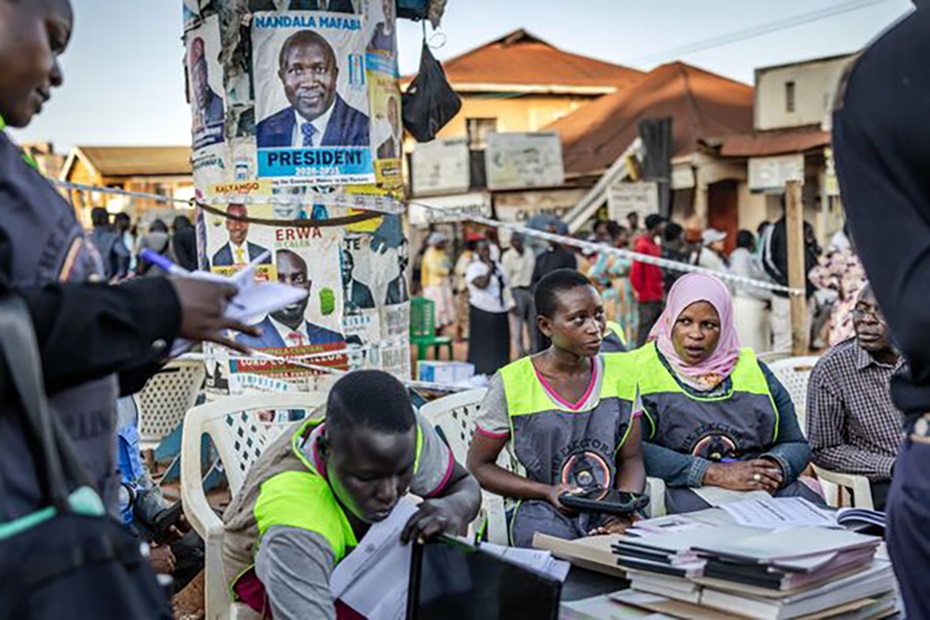
President of Uganda Yoweri Museveni ordered the withdrawal of biometric voting as part of Uganda’s presidential election at the start of voting on 15 January, following failures of biometric voter verification kits (BVVKs) in an unknown number of constituencies reported by Uganda’s Electoral Commission (EC) on 14 January.
An article published by Uganda based The Daily Monitor on 15 January, a usually reliable news outlet, quoted Museveni saying “They [the EC] told me the machines are working in some places and not in others by 10.a.m. The EC proposed that we vote manually and I accepted because people could not just walk home”. The direct quote of Museveni by a usually reliable outlet means it is probably true that biometric voting has been withdrawn.
The leader of the most prominent opposition party, the Nation Unity Platform (NUP), Robert Kyagulanyi (known as Bobi Wine) alleged in a 15 January post to X (formerly Twitter) that the withdrawal is intended to facilitate election fraud by the Ugandan government.
Significance
Janes assesses with high confidence that cancelling biometric voting significantly undermines the legitimacy of the presidential election. This is because of the important role of biometric voting regionally, and because of criticism by leader of the most prominent opposition party, the Nation Unity Platform (NUP), Robert Kyagulanyi (known as Bobi Wine).
Biometric voting has been used in Uganda since 2016 and is common in East Africa, with Uganda’s neighbours Kenya and Tanzania using similar systems to conduct their most recent elections in 2022 and 2025 respectively. The systems are intended to reduce fraud by verifying voter identity, preventing voter roll inflation, and ensuring individuals cannot vote multiple times. A reversion to manual voting after the use of biometric voting in two previous elections is likely to compound perceptions among opposition supporters of election fraud.
Museveni’s claim that there were problems with some biometric voting machines is corroborated with a 14 January article by New Vision, a usually reliable Uganda-based news outlet, that published an interview with EC Commissioner Stephen Tashobya, saying that the EC would be conducting voting manually on a local basis after the failure of biometric voting machines in some areas.
Freedom House characterised Uganda as “not free” in its report for 2024, scoring it 10 out of 40 for political rights while assessing that the credibility of Uganda’s election had deteriorated.
In response to the withdrawal of biometric voting Bobi Wine criticised the decision in a 15 January post to X, accusing the Ugandan government of committing electoral fraud, and urging Ugandan’s to “RISE TO THE OCCASION AND REJECT THE CRIMINAL REGIME [original capitalisation]”.
Outlook
Bobi Wine’s rejection of Museveni’s rationale for the withdrawal of biometric voting means that he will very likely reject the result over the next two days. This is likely to drive anti-government protests and riots by NUP and other opposition party supporters, which would pose a moderate risk to Uganda’s stability in the immediate term (one to four weeks).
Bobi Wine’s implication of the EC in election fraud means it is unlikely he will wait to formally challenge the outcome following the announcement of the result. Therefore, he is very likely to reject the result of the election between the end of voting on 15 January and the constitutionally mandated date for the announcement of the election result on 17 January.
The rejection of the result by Bobi Wine would likely prompt anti-government protests and riots by NUP and other opposition party supporters in the immediate term (one to four weeks), which is likely to pose a moderate risk to the Ugandan government’s stability.
The risk to the Ugandan government’s stability is not high, however, due to the high strength of the Ugandan Police Force (UPF) and Ugandan People’s Defence Forces (UPDF); as well as the loyalty of both services to Museveni and Uganda’s incumbent government. Anti-government protests in the run up to Uganda’s 2021 presidential election were met with police beatings, arrests, and the use of live ammunition – with 54 protesters killed by security forces.
Risk positive indicator
- No reports of protests and riots over 16 and 17 January would indicate that protests and riots related to the election would be unlikely over the immediate term.
Risk negative indicator
- Reports of deaths of anti-government protesters as a result of UPF and UPDF action would indicate that the threat anti-government protests pose to the Ugandan government’s stability is increasing.
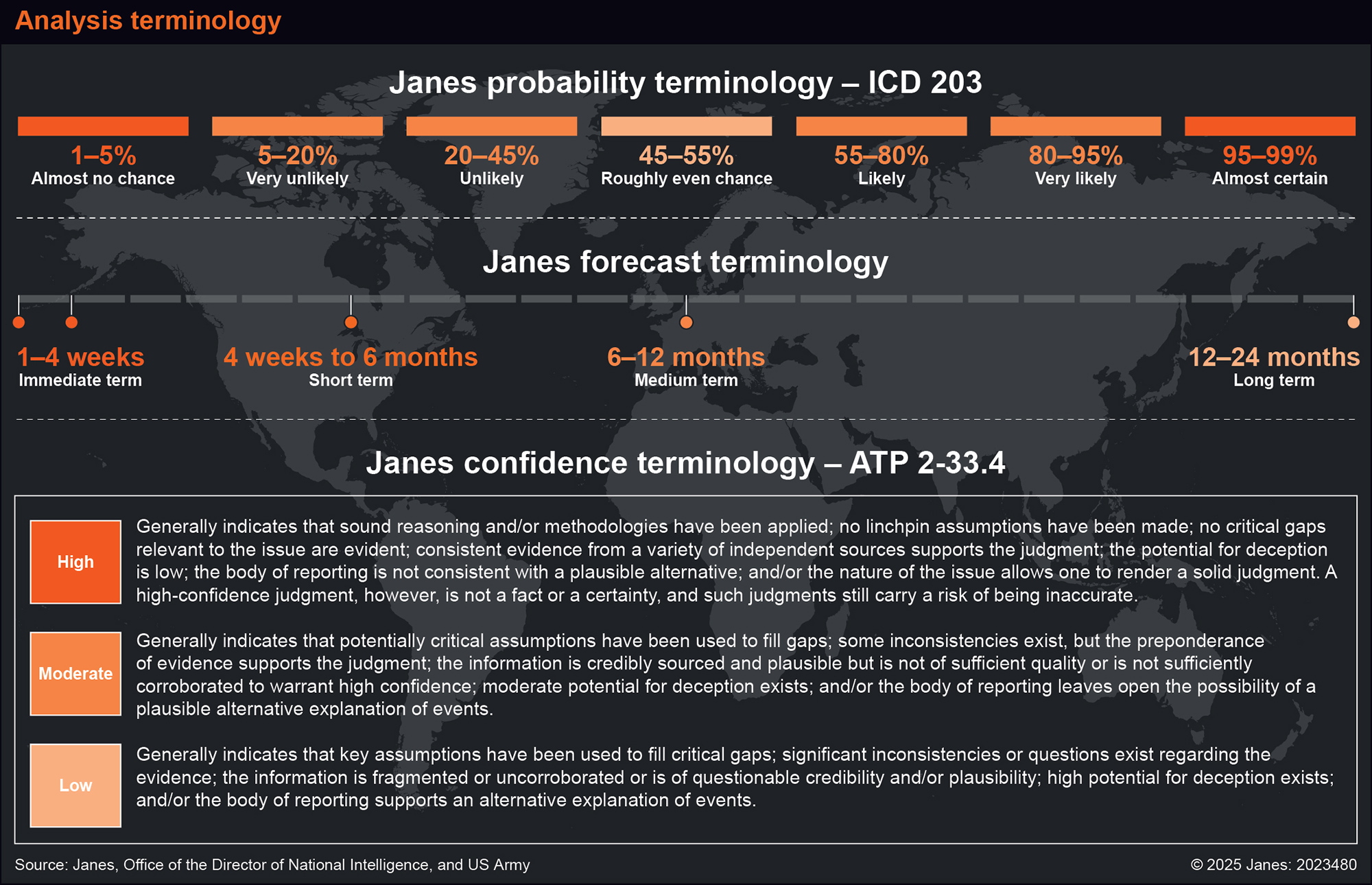 Analysis terminology. Image credit: Janes