US strikes Iranian nuclear infrastructure with GBU-57s and TLAMs
Date Posted: 22-Jun-2025
Author: Daniel Wasserbly, Washington, DC
Key points
- Fordow, Natanz, and Esfahan were attacked by a US strike package meant to ‘destroy or severely degrade' Iran's nuclear programme
- The mission included the first known operational use of the GBU-57 MOP
The United States on 21 June struck key Iranian nuclear facilities – including a fortified mountain facility at Fordow, a larger enrichment plant at Natanz, and the Esfahan uranium conversion facility – via a large aerial and sea-based strike package that included the first use of 30,000 lb GBU-57 Massive Ordnance Penetrator (MOP) guided bombs.
Just after midnight on 21 June, B-2 Spirit bombers departed the continental US for an operation dubbed ‘Midnight Hammer', including a decoy strike package that flew west over the Pacific and the real strike package that flew east to Iran, US officials told reporters at the Pentagon on 22 June.
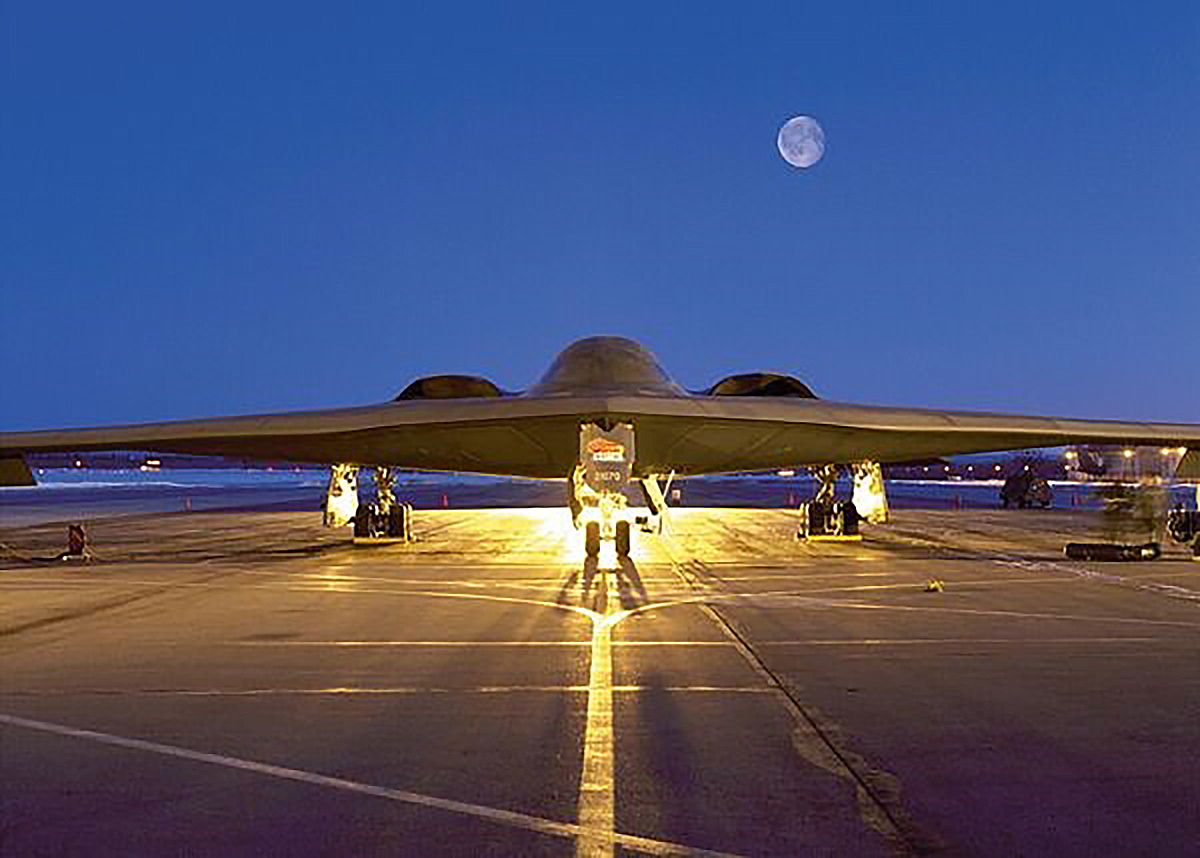
Seven B-2 Spirit bombers, flying east from the US, were the main strike package for Operation ‘Midnight Hammer' to attack Iran's nuclear infrastructure. Another group of B-2s flew west over the Pacific as a feint. (Northrop Grumman)
The platforms ultimately attacked “Fordow, Natanz, and Esfahan in order to destroy or severely degrade Iran's nuclear programme”, US Secretary of Defense Pete Hegseth said during the briefing.
“The operation did not target Iranian troops or the Iranian people,” Hegseth said. “The scope of this was intentionally limited … and we certainly hope they take the path of negotiated peace.”
Iran's Ministry of Foreign Affairs confirmed and condemned the US “military aggression against Iran's peaceful nuclear facilities”.
Chairman of the Joint Chiefs of Staff General Dan Caine told reporters at the Pentagon that a battle damage assessment (BDA) “is still pending, and it would be way too early for me to comment on what may or may not still be there”.
‘Midnight Hammer'
After launching from the US, Gen Caine said, “The main strike package, comprised of seven B-2 Spirit bombers, each with two crew members, proceeded quietly to the east with minimal communications. Throughout the 18-hour flight into the target area, the aircraft completed multiple in-flight refuellings.”
Once over land, the B-2 bombers then connected with escort and support aircraft, Gen Caine said. “At approximately 5:00 pm Eastern Standard Time [on 21 June], and just prior to the strike package entering Iran, a US submarine in the Central Command area of responsibility launched more than two dozen Tomahawk Land Attack Cruise Missiles (TLAMs) against key surface infrastructure targets at Esfahan,” he said.
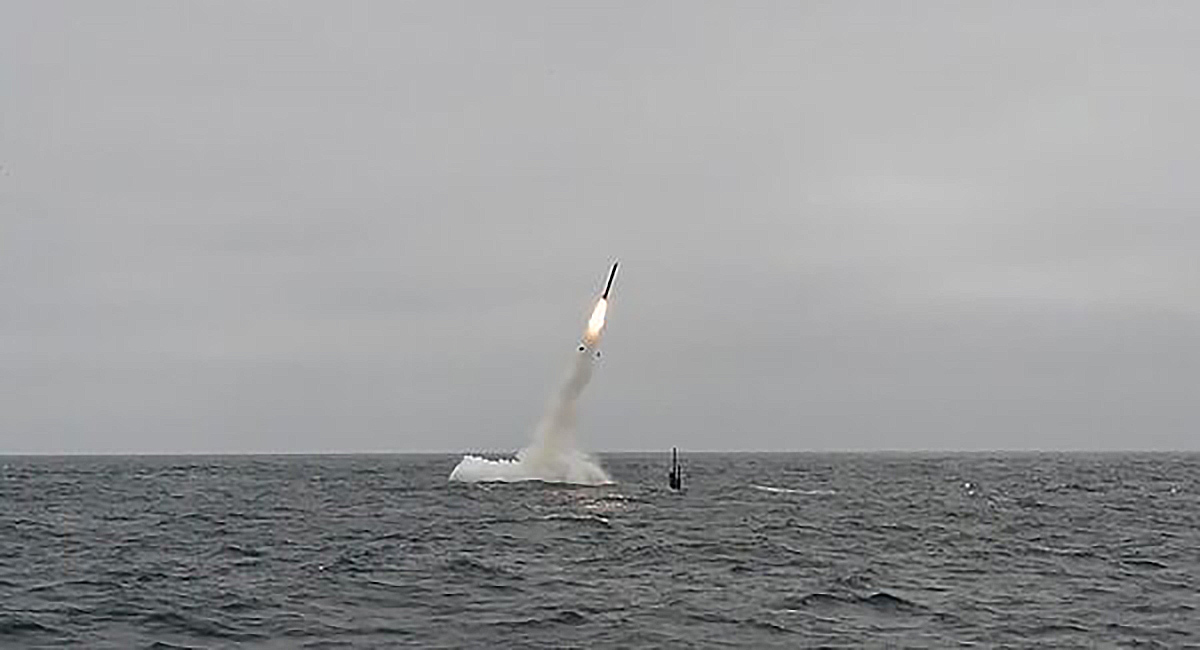 More than two dozen submarine-launched Tomahawk Land Attack Cruise Missiles were used to strike Iran and focused on Esfahan. One is shown here during a test launch from a Los Angeles-class fast-attack submarine. (US Navy)
When the strike package entered Iranian airspace, the US “employed several deception tactics”, Gen Caine said, “including decoys as fourth and fifth generation aircraft pushed out in front of the [B-2] strike package at high altitude and high speed, sweeping in front of the package for enemy fighters and surface-to-air missile threats”.
As the bombers approached Fordow and Natanz, a “protection package employed high-speed suppression weapons to ensure safe passage of the strike package, with fighter assets employing pre-emptive suppressing fires against any potential Iranian surface-to-air threats”, Gen Caine said. He said the Pentagon is not aware of any shots fired at the strike package during the mission, and Iranian aircraft did not try to intercept.
Around 6:40 pm Eastern Standard Time, the lead B-2 released two GBU-57 MOPs “on the first of several aim points at Fordow”, Gen Caine said. “The remaining bombers then hit their targets as well with a total of 14 MOPs dropped against two nuclear target areas. All three Iranian nuclear infrastructure targets were struck between 6:40 pm and 7:05 pm Eastern [Standard] Time.” The TLAMs were the last to hit, striking Esfahan last “to ensure we retain the element of surprise throughout the operation”, Gen Caine said.
GBU-57 MOP
In total, US forces “employed approximately 75 precision guided weapons” including 14 MOPs, Gen Caine said.
The GBU-57 MOP is a large penetrating GPS‐guided bomb. At the time of publication, it was not clear how many MOPs were in US stockpiles but, according to the US Air Force, 20 were originally contracted in 2009 and have been modified since.
The GBU-57 MOP was designed to be delivered by the B-2 bomber. It is composed of the BLU‐127 warhead, KMU‐612 tail kit, BRU‐72 bomb rack systems, MOP loading adapters, and MXU‐1012/B separation nuts. The bomb's warhead case is made from a “special high‐performance steel alloy”, and its design hosts a “large explosive payload while maintaining the integrity of the penetrator case during impact”, according to the Pentagon's Director Operational Test and Evaluation. The bomb is intended to penetrate up to 18.3 m of concrete or 60.96 m of earth before exploding, according to estimates by Janes Weapons: Air-Launched.
| Comment |
|---|
| Iran's response to the US strike will be of enormous consequence. On 22 June Iranian Foreign Minister Abbas Araghchi, in Türkiye for diplomatic talks, said that “Iran reserves all options to defend its security, interest, and people”. Most republican lawmakers appeared to support the strike as necessary, while most democrats were censorious and concerned it could create yet another major war for the US in the region. Representative Adam Smith, ranking member of the House Armed Services Committee, criticised the strike because it could “further escalate tensions, destabilize the region, and drag the United States into an avoidable war”. Jack Reed, ranking member of the Senate Armed Services Committee, took a more reserved tone but urged the White House to “immediately pursue restraint, diplomacy, and international engagement to prevent further bloodshed”. |