Venezuela's PSUV likely to retain de facto control as repression increases and US pursues negotiations
Event
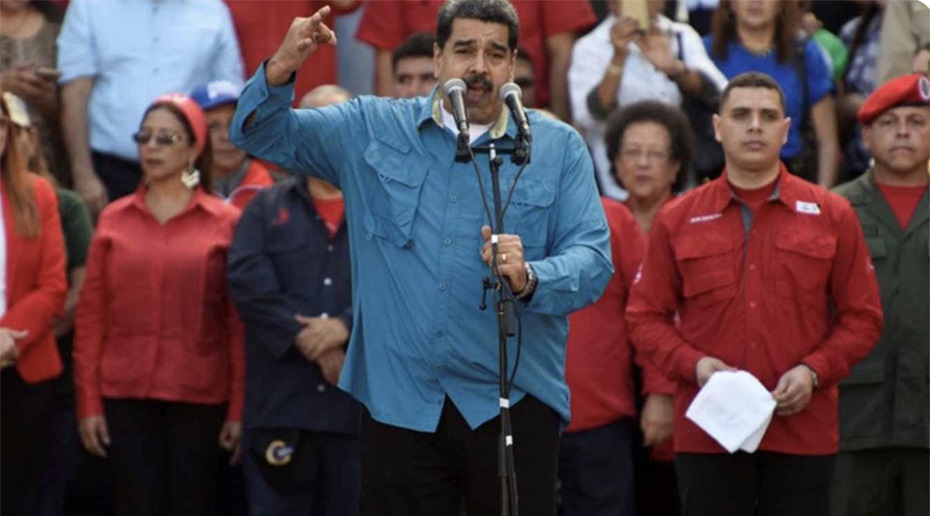
The President of the United States on 3 January 2026, announced on the social network Truth Social that the US had carried out a “large-scale strike against Venezuela” and “captured” Venezuelan President Nicolás Maduro and First Lady Cilia Flores, flying them out of the country. According to CBS News, citing unnamed officials, members of the US special forces unit Delta Force carried out a targeted operation to capture Maduro. The press also reported strikes and explosions in and around Caracas.
In a phone call with the state-run news outlet Venezuela de Televisión (VTV), Venezuelan Vice President Delcy Rodríguez confirmed that Maduro and Flores's whereabouts are unknown, and “demanded” proof of life from Trump.
In a message to the nation, the Venezuelan Minister of Defence, General Vladimir Padrino, announced the declaration of a nationwide state of emergency. Padrino called for the full deployment of all military resources in the country, urging citizens to remain calm and avoid “acts of anarchy”.
As of 3 January, uncertainty and confusion surrounding the events remain, complicating the verification of reports in the national and international press.
Outlook
President Trump later stated at a press conference that Venezuelan Vice President Delcy Rodríguez had been sworn in as president, and had agreed to cooperate with the US. This suggests that the Political Bureau of the United Socialist Party of Venezuela (Partido Socialista Unido de Venezuela: PSUV) will take de facto control of the government. According to Article 233 of the Venezuelan Constitution, the National Assembly must declare the president to have abandoned his post in order for the vice president to be appointed acting president of Venezuela and to call new elections within 30 consecutive days of the abandonment declaration, provided the president's absence occurs within the first four years of their constitutional term.
If Delcy Rodríguez assumes the role of acting president de jure, it is almost certain that the group closest to Maduro will take de facto control, supported by the rest of the members of the bureau. The closest allies to Maduro are:
- Minister of the Interior Diosdado Cabello
- Vice-president Delcy Rodríguez
- President of the National Assembly Jorge Rodríguez
- Minister of Defence, Vladimir Padrino
All members of this group, except for the Minister of Defence, are members of the PSUV's political bureau. According to the PSUV website, the newest members of the bureau were formally announced on 2 December 2025. It comprises the 12 political associates closest to Maduro, including:
- First Lady Cilia Flores (captured with Maduro)
- Minister of Education Héctor Rodríguez
- Head of the Federal District Government Nahum Fernández
- First Vice-President of the National Assembly Pedro Infante
- President of the Corporation for the Development of the Zuliana Region (Corpozulia) Francisco Ameliach
- Minister of Science and Technology Gabriela Jiménez
- Deputy of the National Assembly Tania Díaz
- Mayor of Caracas Carmen Meléndez
- Deputy of the National Assembly Grecia Colmenares
Unrest among Maduro's allies or opponents is unlikely to occur in the immediate term. The introduction of a state of emergency, combined with the uncertainty and confusion surrounding related events, are likely to discourage political activity, such as demonstrations, for or against the government, in the country during the first few days. Opponents of the government are also likely to remain inactive, particularly due to the threat of government repression. According to a journalist based in Caracas, cited by BBC News on 3 January, Padrino has instructed security forces to repress any social demonstrations expressing support for the US government's actions.
Repression against the political opposition is almost certain to occur in the short to medium term. According to the Venezuelan NGO Foro Penal, reports of the arbitrary arrest of political prisoners increased in frequency to one every 32 hours by the end of 2025, amid heightened tensions between the US and Venezuela. Vente, the political party of leader María Corina Machado, was the main target of attacks during this period. Local press and NGOs are likely to report cases of law enforcement kidnapping or arresting members of the political opposition during this period.
It is likely that Washington will attempt to negotiate with the remainder of the Venezuelan government and influence the political transition to one more favourable to the US. Between November and December 2025, direct and indirect communications occurred between the Trump and Maduro administrations, according to reports from the Wall Street Journal, the Guardian, CNN and other sources. Among the topics discussed were the~ formation of a transitional council and the calling of new elections.
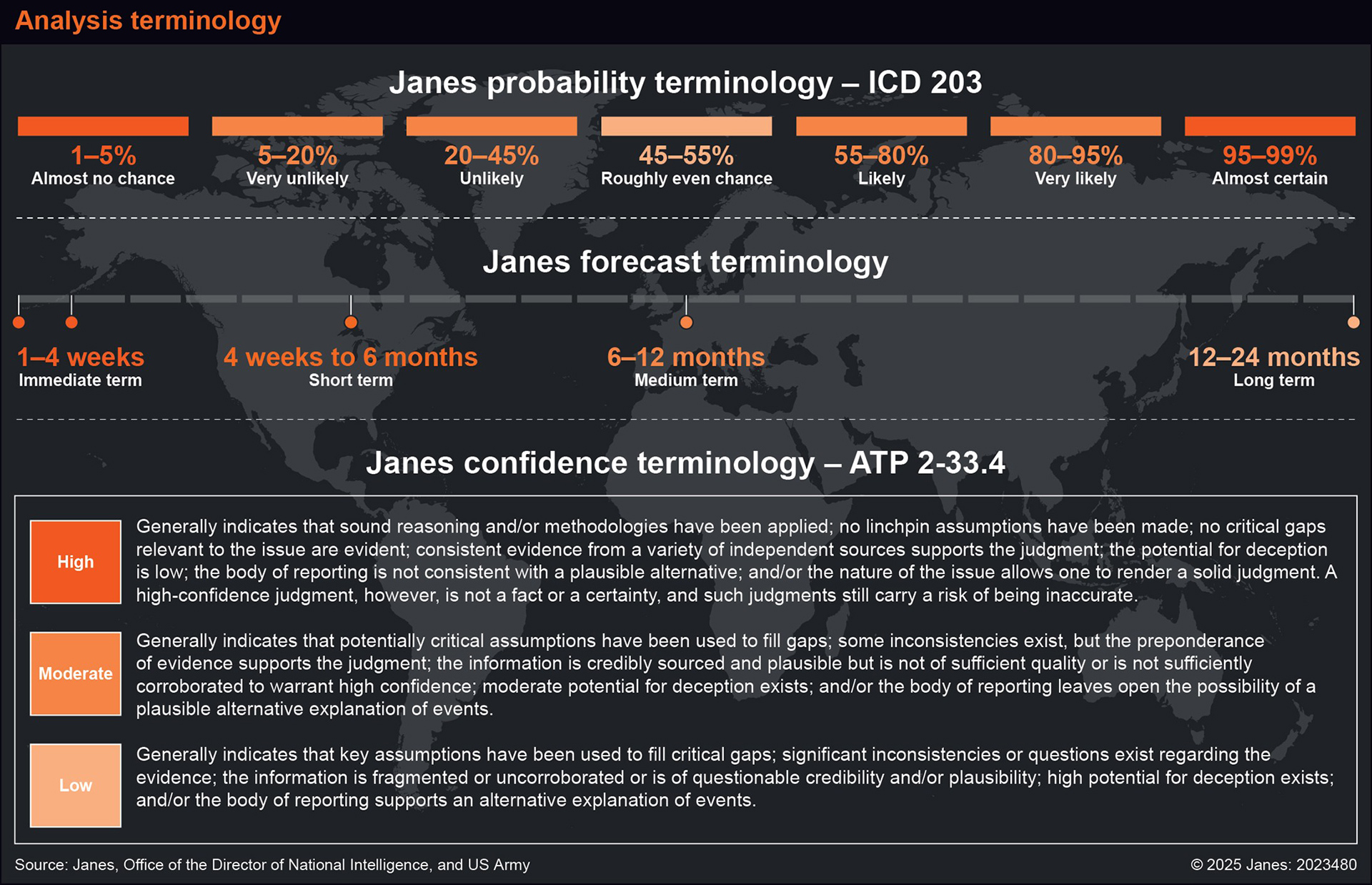 Analysis terminology Image credit: Janes