Special Report: New Zealand assesses future application of emerging technologies
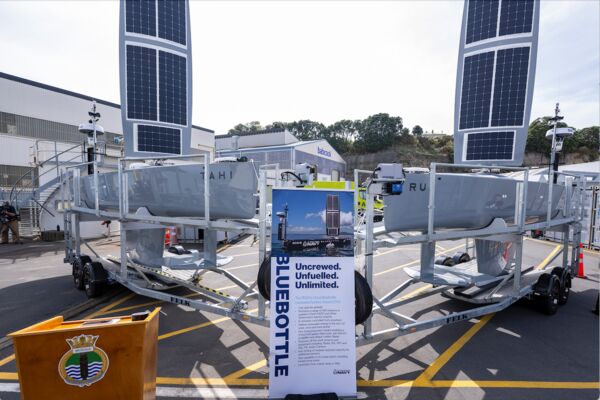

New Zealand acquired two Bluebottle USVs – named Tahi and Rua – from Australian firm Ocius Technologies in March 2025. (NZDF)
The New Zealand Ministry of Defence (MoD) has released a document outlining how emerging and disruptive technologies are likely to influence the country's defence capabilities beyond 2035.
This Long-term Insights Briefing (LTIB), which the MoD is mandated to publish every three years under the New Zealand government's Public Service Act 2020, analyses emerging military threats, medium and long-term technology trends, and indicates potential areas of future investment.
The LTIB is in line with New Zealand's latest Defence Capability Plan (DCP), released in April 2025, which emphasised the urgent need for the New Zealand Defence Force (NZDF) to adopt new technologies that can enhance its strike and deterrent capabilities.
The LTIB said that growing employment of emerging and disruptive technologies such as artificial intelligence (AI), machine learning (ML), and quantum by different militaries has aggravated regional security threats, making it necessary to assess these technologies and consider their accelerated adoption to improve defence.
These technologies have also led to increasing hybrid threats, greater integration of civilian technologies, a diminishing geographical isolation for New Zealand, and intensified military competition in the Asia-Pacific, affecting the NZDF's strategies and procurement priorities, the LTIB added.
The LTIB said that, in particular, New Zealand is concerned about the “rapid and non-transparent growth of China's military capability”. Janes analysis indicates that the Chinese People's Liberation Army (PLA) is leading the integration of emerging and disruptive technologies in the Asia-Pacific. This has prompted other regional militaries including New Zealand to pursue similar efforts.
Go beyond the headlines - with direct links to interconnected entities
Get full access to validated equipment, military capabilities, and market insights.