UK retires Reaper as Protector takes on unmanned ISTAR and strike roles
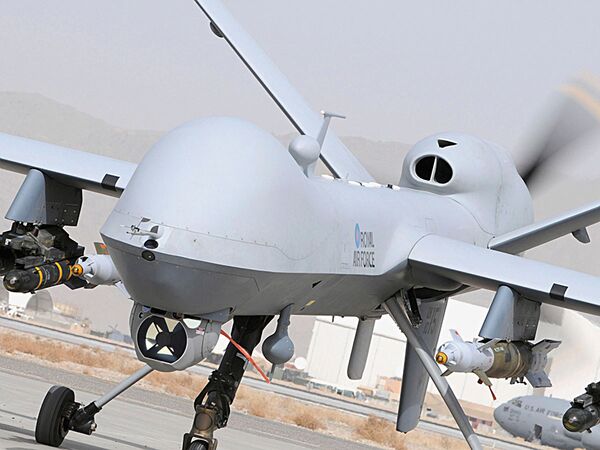

The UK has retired the MQ-9A Reaper after nearly 20 years of operational service. The type is now being replaced by the larger and more capable Protector. (Crown Copyright)
The United Kingdom has officially retired its General Atomics Aeronautical Systems, Inc (GA-ASI) MQ-9A Reaper unmanned aircraft system (UAS) from service, with the larger and more capable GA-ASI MQ-9B Protector RG1 now taking on its roles.
Janes understands from sources that the withdrawal from service happened on 30 September, although the Ministry of Defence (MoD) had not offered official comment at the time of publication.
The retirement of the last of the 10 Reapers that have been in service since 2007 marks the formal transfer of the Royal Air Force's (RAF's) unmanned intelligence, surveillance, target acquisition, and reconnaissance (ISTAR) and strike roles to the 16 Protectors that are now being received into RAF Waddington in England.
The Reaper retirement came weeks after the RAF disclosed earlier in September that it was preparing the Protector platform and its crews to take on the UK's ongoing mission to counter the remnants of the Islamic State group in Iraq and Syria, known as Operation ‘Shader'.
While the Reaper typically carried up to four Lockheed Martin AGM-114 Hellfire air-to-surface low-yield missiles and two RTX GBU-12 Paveway IV 500 lb precision-guided bombs on its five external hardpoints for a Middle East mission, the Protector will be able to carry more of the same on its nine hardpoints. It also carries the MBDA Brimstone 3A air-to-surface missile.
Go beyond the headlines - with direct links to interconnected entities
Get full access to validated equipment, military capabilities, and market insights.