Iran conflict 2026: Gulf militaries claim air-defence success
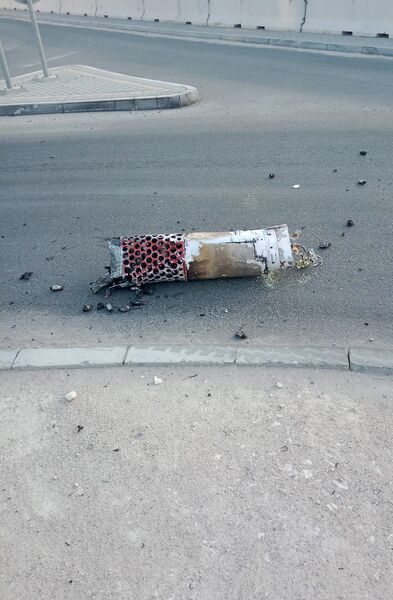

Debris from an Iranian missile intercepted over Doha, Qatar, on 28 February 2026. (Anadolu via Getty Images)
The United Arab Emirates (UAE) Ministry of Defence (MoD) indicated as of 2 March that its air defenders intercepted more Iranian weapons than those in any of the other Arab states hosting US forces.
It announced late on 28 February – the first day of the US-Israel attack on Iran – that 137 ballistic missiles had been detected, all of which were intercepted apart from five that landed in the sea. It added that 209 unmanned aerial vehicles (UAVs) had also been detected, 195 of which were intercepted. Some of the remaining 14 UAVs impacted the sea, but others caused some damage inside Emirati territory, it said.
On 1 March, it reported another 20 ballistic missiles were intercepted and eight impacted the sea, while 311 UAVs were intercepted and 21 hit civilian targets, killing three expatriate workers and causing minor injuries to 58 people.
Later on 1 March, it reported that Al-Salam Naval Base in Abu Dhabi had been hit by two UAVs, setting fire to storage containers but not causing any casualties. This dovetailed with amateur videos posted on social media that appeared to show a UAV hitting Camp de la Paix, the French naval base next to the UAE's Mina Zayed Naval Base.
On 2 March, the UAE MoD said in a post on social media that its air defences had intercepted nine Iranian ballistic missiles, six cruise missiles, and 148 UAVs.
Go beyond the headlines - with direct links to interconnected entities
Get full access to validated equipment, military capabilities, and market insights.