NATO abandons E-7 acquisition as ‘strategic and financial basis has disappeared'
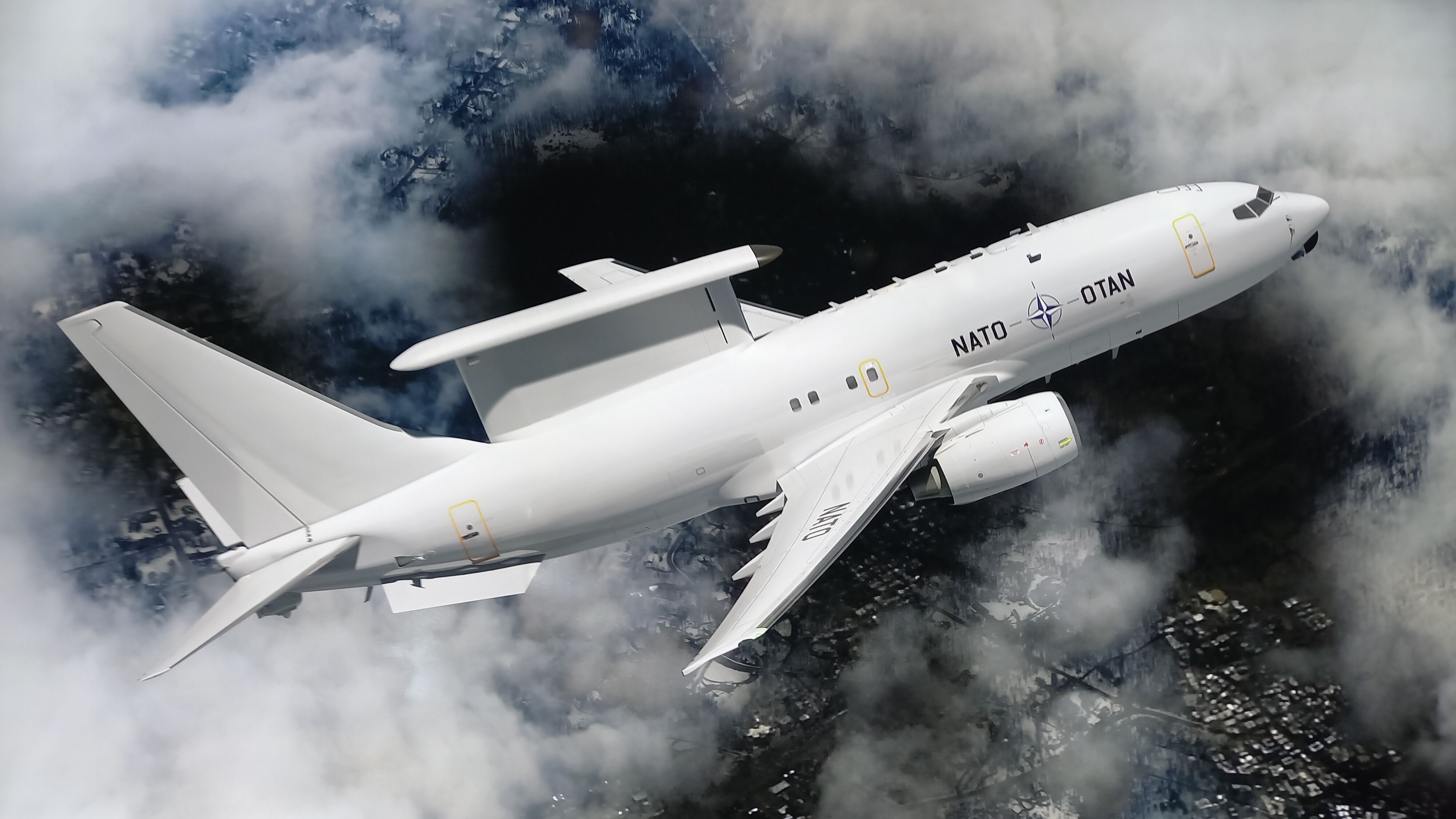

A Boeing promotional image showing the E-7A Wedgetail rendered in NATO markings. The alliance has now cancelled its plan to acquire six such aircraft under its IAFSC requirement to replace the E-3A from 2035. (Boeing via Janes/Gareth Jennings)
NATO has abandoned its plan to acquire the Boeing E-7 Wedgetail to replace its Boeing E-3A Sentry Airborne Warning And Control System (AWACS) aircraft, citing the loss of the ‘strategic and financial basis' that underpinned the selection.
As one of seven national partners participating in the AWACS replacement effort, the Netherlands announced the move on 13 November, two years after the E-7A was chosen in November 2023 to replace the E-3As under the Initial Alliance Future Surveillance and Control (IAFSC) requirement.
“The Netherlands, together with a number of partner countries, is abandoning the acquisition of six Boeing E-7 Wedgetails,” the Dutch Ministry of Defence (MoD) said. “Under the previous [E-7] acquisition programme, both the strategic and financial basis has disappeared. Therefore, the remaining countries, united in the Support Partnership Committee, [have] ceased the acquisition of the E-7. The members are now exploring alternatives for replacing the fleet, and are looking for new partners.”
In its announcement, the Dutch MoD cited the decision by the US Air Force (USAF) in July to leave the acquisition, following its decision the previous month to cancel its own planned procurement of 26 E-7 aircraft over survivability and cost concerns.
“The commitment remains to have other [replacement] aircraft operational by [the time of the E-3A retirement in] 2035,” Dutch State Secretary of Defence Gijs Tuinman said, adding, “The withdrawal of the US also shows the importance of investing as much as possible in European industry.”
Go beyond the headlines - with direct links to interconnected entities
Get full access to validated equipment, military capabilities, and market insights.