New Zealand explores strike role for P-8A fleet
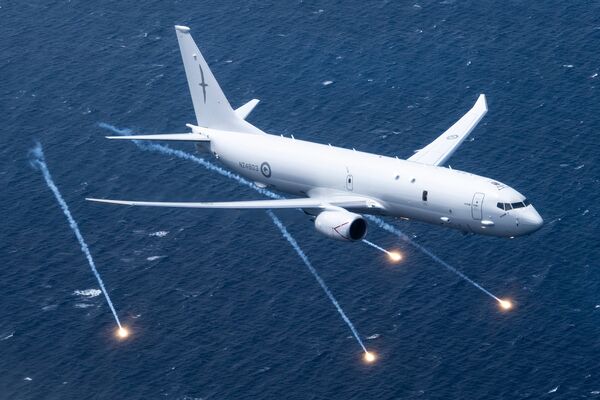

The crew of a Royal New Zealand Air Force P-8A Poseidon test the aircraft's self-protection capability in December 2025. (New Zealand Defence Force)
The New Zealand Defence Force (NZDF) is considering the augmentation of its Boeing P-8 Poseidon fleet as a strike platform, in addition to the aircraft's current role as an intelligence, surveillance, and reconnaissance (ISR) asset, a spokesperson has confirmed.
“The P-8A Poseidon is in scope for future consideration as a candidate integrated ISR-Strike platform, as outlined in the Defence Capability Plan 25 (DCP 25),” an NZDF spokesperson told Janes in late February. The spokesperson continued that the “NZDF will consider a range of air-launched weapons as part of a wider NZDF Enhanced Strike Programme”.
This will almost certainly entail also equipping the platform with supporting equipment such as an acquisition and targeting system, Janes assesses.
The spokesperson added, however, that the “NZDF does not yet have a full range of candidate system and/or flight-testing requirements”.
DCP 25 calls for NZD100–300 million (USD59–178 million) in near-term indicative investments to enhance the NZDF's long-range maritime strike capabilities from 2025 to 2028. When it was published in 2025, the plan proposed the integration of strike missiles on the P-8A and Anzac frigates, as well as a land-based strike capability.
New Zealand has four P-8A Poseidons in service, with the type operating as an anti-submarine warfare (ASW) and maritime patrol platform, in addition to its ISR role. The NZDF completed its acquisition of the four aircraft in 2023.
Persistent ISR
Simultaneously, the NZDF has several DCP 25 initiatives under way to enhance persistent ISR capabilities, including within the aerospace domain, according to the spokesperson.
Go beyond the headlines - with direct links to interconnected entities
Get full access to validated equipment, military capabilities, and market insights.