South Korea air force resumes flight operations after accidental bombing
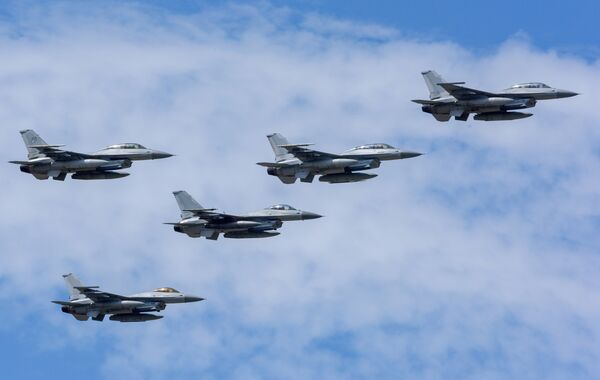

The RoKAF is a sizeable operator of the Lockheed Martin KF-16 Fighting Falcon. The air force has 20 KF-16U and 133 KF-16C/D Block 52 aircraft in service. This is a representative picture of KF-16s from September 2024. (Photo by Kim Jae-Hwan/SOPA Images/LightRocket via Getty Images)
The accidental bombing of civilian areas outside a testing range by Republic of Korea Air Force (RoKAF) Lockheed Martin KF-16s led to the temporary grounding of the air force's combat aircraft fleet, although a government spokesperson said these restrictions are now being lifted.
Seoul introduced restrictions on flight operations after two RoKAF KF-16s, which were participating in a joint RoK-United States live-fire drill on 6 March, dropped eight Mk-82 general purpose bombs at 1004 h local time on civilian areas at Pocheon village in Gyeonggi Province. Pocheon is about 55 km northeast of central Seoul.
According to the Korean Ministry of National Defense (MND), the bombs landed near a cathedral, army barracks, and farmland in the vicinity of the Nogok-ri Nangyu Bridge. The bombing injured “over 10 civilians and soldiers”, the ministry said in its initial statement on 7 March.
In its initial statement, the MND also added that it had “suspended all live-fire training exercises until the exact cause of the incident is determined”. Subsequent to this, the ministry also suspended “air power flights”, an MND spokesperson told Janes on 10 March.
The suspension, however, “excluded aircraft engaged in essential missions”, the spokesperson added. The essential flights involved operations by reconnaissance and logistics aircraft, Janes assesses.
Go beyond the headlines - with direct links to interconnected entities
Get full access to validated equipment, military capabilities, and market insights.