Spaceflux to make SWIR telescope testbed fully operational in Q3 2025
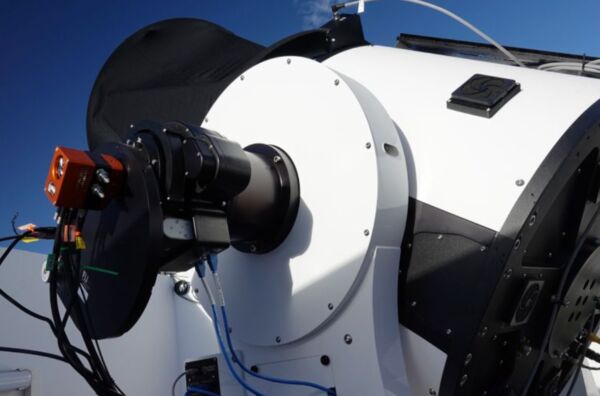

Spaceflux SWIR space surveillance testbed, which allows daytime tracking and monitoring. (Spaceflux)
Spaceflux is looking to make its short-wave infrared (SWIR) telescope testbed fully operational in August or September (third quarter [Q3]) of 2025, after using it to deliver daytime tracking data on orbiting satellites to the UK's Defence Science and Technology Laboratory (Dstl), the co-founder and chief technology officer (CTO) of Spaceflux, Ingo Waldman, told Janes in an interview on 13 May.
Spaceflux announced the delivery of the dual-band optical system on 29 April and provided Dstl with a final report. “Right now, what we're working on is basically verifying and testing the sensor and the data that comes from it,” Marcel Debczynski, co-founder and chief commercial officer (CCO) of Spaceflux, told Janes in an interview on 2 May.
SWIR technology
Dstl's primary use of the telescope includes evaluating and de-risking SWIR technology for space domain awareness applications, a Dstl spokesperson told Janes on 12 May. The focus is on how the SWIR technology “improves our ability to detect, track, and characterise satellites in Earth orbit”. The spokesperson went on to say that the data from the telescope complements other sensing technologies.
It was developed under a contract that was awarded to Spaceflux by Dstl in September 2024.
Go beyond the headlines - with direct links to interconnected entities
Get full access to validated equipment, military capabilities, and market insights.