Special Report: Australia's DSTG readies for future challenges and opportunities
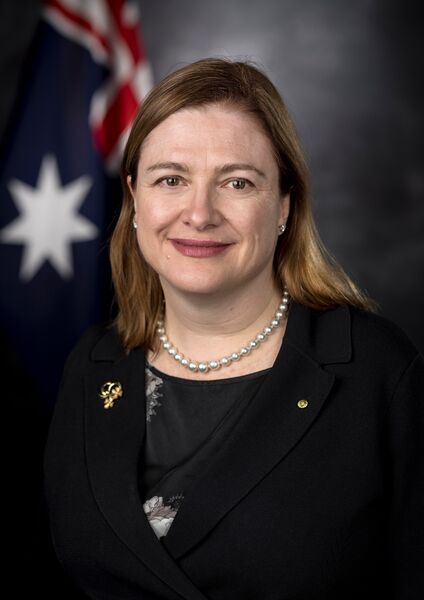

Chief Defence Scientist Tanya Monro, who leads Australia's Defence Science and Technology Group. (Lauren Larking/DSTG)
Australia's Defence Science and Technology Group (DSTG) aims to support technological innovation for a range of military applications, from electronic warfare to space systems. As militaries embrace new advances in artificial intelligence (AI) and other technologies, the scope of DSTG's work is expanding, experts within the organisation have told Janes .
DSTG is headquartered in Canberra, although the group has a presence in most states and territories in Australia. Employing about 2,300 full-time staff – mainly scientists, technicians, IT specialists, and engineers – and approximately 700 contractors, it has research facilities across the country and works closely with the Australian defence industry, universities, and other parts of the scientific community.
The organisation's role within the Australian Department of Defence (DoD) has expanded in recent years, said Chief Defence Scientist Tanya Monro, who leads DSTG. This is reflected in the name of the group, which was previously known as the Defence Science and Technology Organisation (DSTO) until the name was changed in 2015.
“It may seem like a small nomenclature change, but it really signals the group becoming much more a central part of [the DoD] and how [the DoD] operates, rather than a somewhat separate organisation of scientists,” Monro told Janes . “We're increasingly doing the work that is needed to rapidly develop and field technology alongside our warfighters and to make sure that we are generating the data and evidence that underpins good decisions.”
New model
Go beyond the headlines - with direct links to interconnected entities
Get full access to validated equipment, military capabilities, and market insights.