US hypersonic weapon fielding ongoing
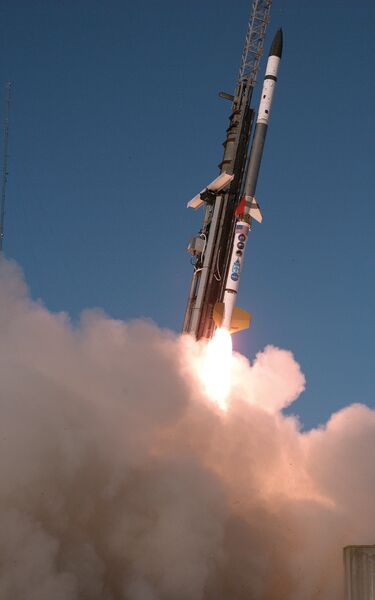

The US Navy's Conventional Prompt Strike was developed alongside the army's LRHW. (US Navy)
The US Army has begun fielding its Long-Range Hypersonic Weapon (LRHW), a spokesperson told Janes on 14 January.
The fielding process began in 2025 and will be completed “by early 2026”, said Darrell Ames, spokesperson for Portfolio Acquisition Executive (PAE) Fires. Previously, army officials had projected fielding of the weapon by the end of 2025.
“Fielding activities include the required integration, safety, and readiness steps to ensure soldiers receive a system that is reliable, sustainable, and effective in operational environments,” Ames said in a statement.
Although he did not specify the reason for the delay, Ames noted the service “remains focused on rigorous testing, training, and system maturity to support successful operational employment”.
The missile can travel as far as 3,500 km, Lieutenant General Frank Lozano, head of PAE Fires, said during a televised tour of Redstone Arsenal, Alabama, in December 2025. Previously, the service has said its range was more than 2,776 km. One battery is made up of a battery operations centre (BOC), four transporter-erector-launchers (TELs), and a BOC support vehicle.
The missile is around 34 ft long and 34.5 inches in diameter, said Major Jeff Mainwaring, an acquisition official at PAE Fires, during the tour. It is made up of an All Up Round plus Canister (AUR+C), which contains the Common-Hypersonic Glide Body (C-HGB). The TELs are equipped with two AUR+Cs each.
Lt Gen Lozano noted that the LRHW could hit China from Guam, Tehran from Qatar, and London from Moscow, which enables the United States “to hold a lot of things at risk”, he said.
Go beyond the headlines - with direct links to interconnected entities
Get full access to validated equipment, military capabilities, and market insights.