Feature: Shifting geopolitics impacts Asia-Pacific defence spending
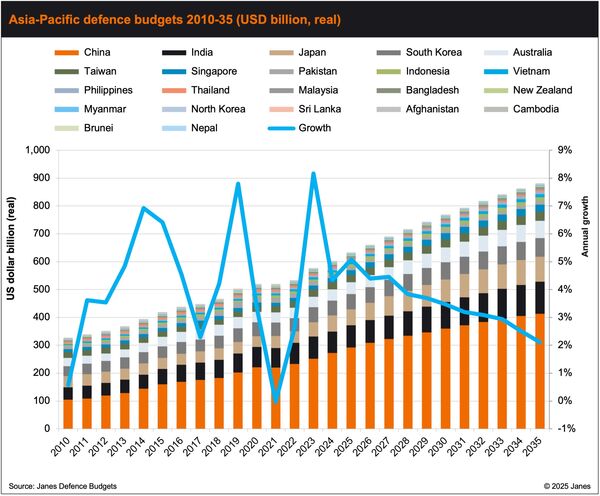

Asia-Pacific defence spending between 2025 and 2035 is forecast by Janes Defence Budgets to increase by nearly 40% and grow to the equivalent of more than USD880 billion. (Janes Defence Budgets)
More than three years after Russia's full-scale invasion of Ukraine plunged Europe's security environment into a period of turbulence, the beginning of Donald Trump's second term as president of the United States has demonstrated the major transformation under way in the Asia-Pacific's security affairs.
While the world's attention remains on the effects the profound shift in US foreign policy is having on its NATO partners, allies elsewhere in the world remain exposed to the potential for similar realignments of long-standing American relationships.
Although the Trump administration's hawkish stance on China stands in contrast with its apparent desire for accommodation with Russia, this is unlikely to provide sufficient reassurance to US treaty allies in Asia concerned by the fraying of the country's commitment to maintain defence partnerships that have formed key pillars of the post-Second World War global order.
In contrast to the recent succession of major policy announcements regarding European defence funding plans though, US-aligned countries in the Asia-Pacific have appeared less eager to endorse Trump administration suggestions that greater investment in defence is required, with some notable instances of relatively robust pushback.
Whether this primarily reflects genuine satisfaction with current defence funding levels, a lower propensity to engage in diplomatic flattery, or confidence that a US less engaged with European concerns will be more likely to honour its stated Asian policy objectives is hard to say, but the region's response to Trump's disruption of the US' previously highly valued network of allies has been notably cooler than Europe's.
Go beyond the headlines - with direct links to interconnected entities
Get full access to validated equipment, military capabilities, and market insights.