NAVSEA widens aperture on non-developmental LSM designs
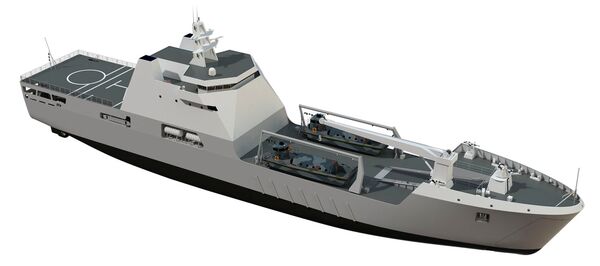

A computer-generated image of the Damen LST-100 design, which is being considered for development of the new class of US medium landing ships. (Damen)
The US Navy (USN) is exploring a multitrack acquisition approach for its new class of medium landing ship (LSM), including options to let shipbuilding contracts for two different non-developmental designs, Naval Sea Systems Command (NAVSEA) confirmed to Janes .
Alongside sole-sourcing Bollinger Shipyards to build the LSM Block 1 first of class using an existing Israeli Logistic Support Vessel (ILSV) blueprint, NAVSEA is planning to acquire the technical design package and associated design rights for both the ILSV and a Damen Naval's LST-100 design. NAVSEA confirmed this approach to Janes on 29 April.
Previously known as the Light Amphibious Warship, the LSM programme is intended to provide the US Marine Corps (USMC) with a new class of mid-size beaching amphibious platform to fill a gap in between large, multi-purpose amphibious warfare ships and smaller surface connectors. USMC leadership sees the LSM providing protected manoeuvre and mobility of Marine Littoral Regiments (MLRs) from shore-to-shore in austere and contested operational environments such as those in the Indo-Pacific theatre. Acquisition of between 18 and 35 ships was projected to support three MLRs.
The ILSV has been confirmed as the baseline for the LSM Block 1 programme. NAVSEA told Janes that, subject to funding, the navy will procure the lead ship – to be named USS McClung (LSM-1) – from Bollinger Shipyards. This will be built to the ILSV design “to provide an initial capability as quickly as possible to support the marine corps' urgent operational needs”.
For more information on the ILSV approach for LSM, please see
Go beyond the headlines - with direct links to interconnected entities
Get full access to validated equipment, military capabilities, and market insights.