UK's Atlantic Bastion programme seeks hybrid answer to submarine threat
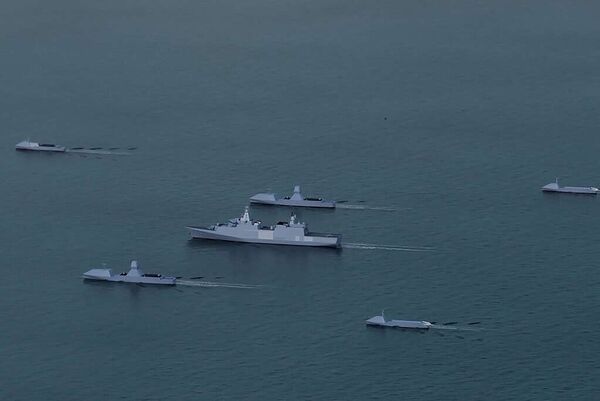

A concept graphic of Babcock's ARMOR Force network of manned-unmanned vessels. (Babcock International Group)
The UK Ministry of Defence (MoD) announced further work on its ‘Atlantic Bastion' anti-submarine warfare (ASW) and critical undersea infrastructure (CUI) protection programme on 8 December.
Specifically mentioning Russian undersea threats in the North Atlantic, the MoD said it was transforming its ASW and CUI protection capabilities by combining manned warships and aircraft with “autonomous vessels and AI [artificial intelligence]” into a “hybrid force”.
UK Secretary of State for Defence John Healey said there has been millions of pounds of investment in development and testing of innovative anti-submarine sensor technology.
Focusing on using a hybrid naval force across what it called “vast areas of ocean” to defend UK and NATO allies, the MoD said there had been combined MoD/industry early stage investment of GBP14 million (USD18.6 million) already committed in 2025 for testing and development of equipment.
Twenty-six firms from the United Kingdom and Europe have submitted proposals to develop anti-submarine sensor technology, and 20 companies from primes to small and medium enterprises (SMEs) are already showcasing technology demonstrators. The MoD added that over the remainder of quarter four (Q4) of 2025 and into Q1 2026, successful companies will take forward development from concept, with proposed capabilities due to be deployed in the water in 2026.
Further investment for the programme was expected at an undisclosed date in 2026.
Hybrid hopes
Go beyond the headlines - with direct links to interconnected entities
Get full access to validated equipment, military capabilities, and market insights.