BAE Systems trials APKWS on TRV-150 UAS for counter-drone and other roles
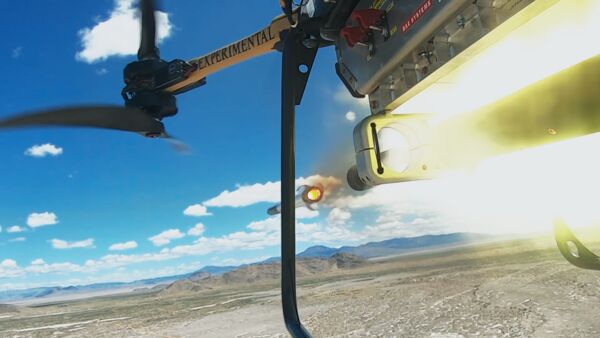

A video still showing the APKWS rocket leaving the TRV-150 launch UAS. (BAE Systems)
BAE Systems has trialled the use of its Advanced Precision Kill Weapon System (APKWS) from a modified version of the T-150 unmanned aircraft system (UAS) it is developing with Malloy Aeronautics.
Announced on 17 July, the trials in the US have seen a TRV-150 UAS engage air and ground targets with the 70 mm laser-guided rocket, which it carried in a specially adapted container.
“The successful trials demonstrate the multirole capability of the platform and are a significant boost to showcasing how advancements in drone technologies can be harnessed to offer militaries highly effective and affordable tactical options to tackle both emerging UAS threats and more traditional targets,” BAE Systems said.
As noted by the company, the trials at the US Army Dugway Proving Ground in Utah saw the first time that APKWS had been fired from a UAS against an airborne target. “This marks a major step forward in the development of a low-cost strike and counter-UAS [C-UAS] option for front-line troops,” the announcement said. “With its integration onto the TRV-150 the tests exceeded expectations in all aspects, including platform performance and target engagements, with zero misses,” the announcement added.
For more information on the use of UAS for precision strike, please see US Army experimental unit to begin testing precision-strike UAS .
Go beyond the headlines - with direct links to interconnected entities
Get full access to validated equipment, military capabilities, and market insights.