Feature: Heavyweight torpedoes muscle up for new threats
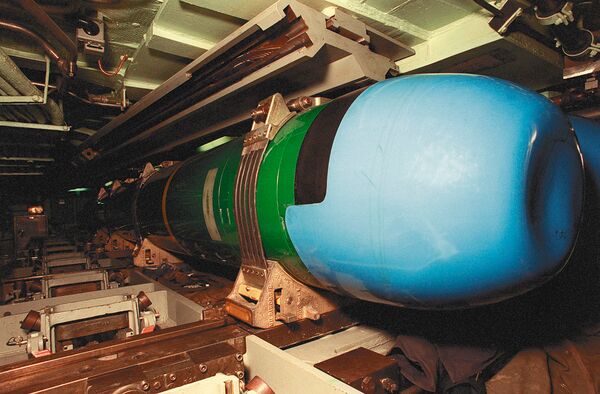

A MK 48 Advanced Capacity (ADCAP) torpedo in a storage rack in the torpedo room of the nuclear-powered attack submarine USS Asheville (SSN-758). A MK 48 ADCAP heavyweight torpedo strapped down in USS Asheville's weapons compartment. (US Department of Defense)
The heavyweight torpedo remains the single most important part of a submarine's armoury. Closely integrated with the sensor, tactical, fire-control, and weapon discharge systems of the host boat, these 533 mm diameter weapons serve as both a primary anti-submarine warfare (ASW) armament and a potent anti-surface warfare (ASuW) effector.
Modern heavyweights are, in form factor at least, not so different to British engineer Robert Whitehead's pioneering 19th- century torpedo designs, or the weapons that took a huge toll of both Allied and Axis shipping during the Second World War. Yet the reality is that technology advances over the last 80 years have seen what was a relatively simple, short-ranged, ‘straight-running' explosive projectile evolve into a highly sophisticated underwater guided weapon capable of prosecuting difficult targets at extended range.
Developments in homing, guidance, navigation, propulsion, and quietening are being spurred by several complex and sometimes competing drivers. These include acoustic discretion, extended range, high maximum speed, sufficient manoeuvrability to overcome target evasive manoeuvres, a wide range of operating depths (maximum and minimum), high lethality, robust target homing against quiet or stopped targets in difficult water conditions, and a high degree of resistance to countermeasures.
Technology developments reflect these demands. These include the widespread adoption of fully digitised active/passive homing heads embodying sophisticated processing algorithms designed to discriminate quiet targets from jammers, decoys, and background clutter; the adoption of propulsion systems, propulsor designs, and quietening technologies that seek to balance speeds and signatures; and the use of wide-bandwidth wire guidance links.
Go beyond the headlines - with direct links to interconnected entities
Get full access to validated equipment, military capabilities, and market insights.