Special Report: Bumblebee V2 UAS incorporates upgrades for air-to-air intercepts
Earlier this year, the Bumblebee unmanned aerial system (UAS) could primarily perform one-way attack and intelligence, surveillance, and reconnaissance (ISR) missions. After a few months, officials from the Pentagon's Joint Interagency Task Force 401 (JIATF 401) are assessing if the platform could be ready to protect bases around the US from small UAS , the officials told Janes on 8 July.
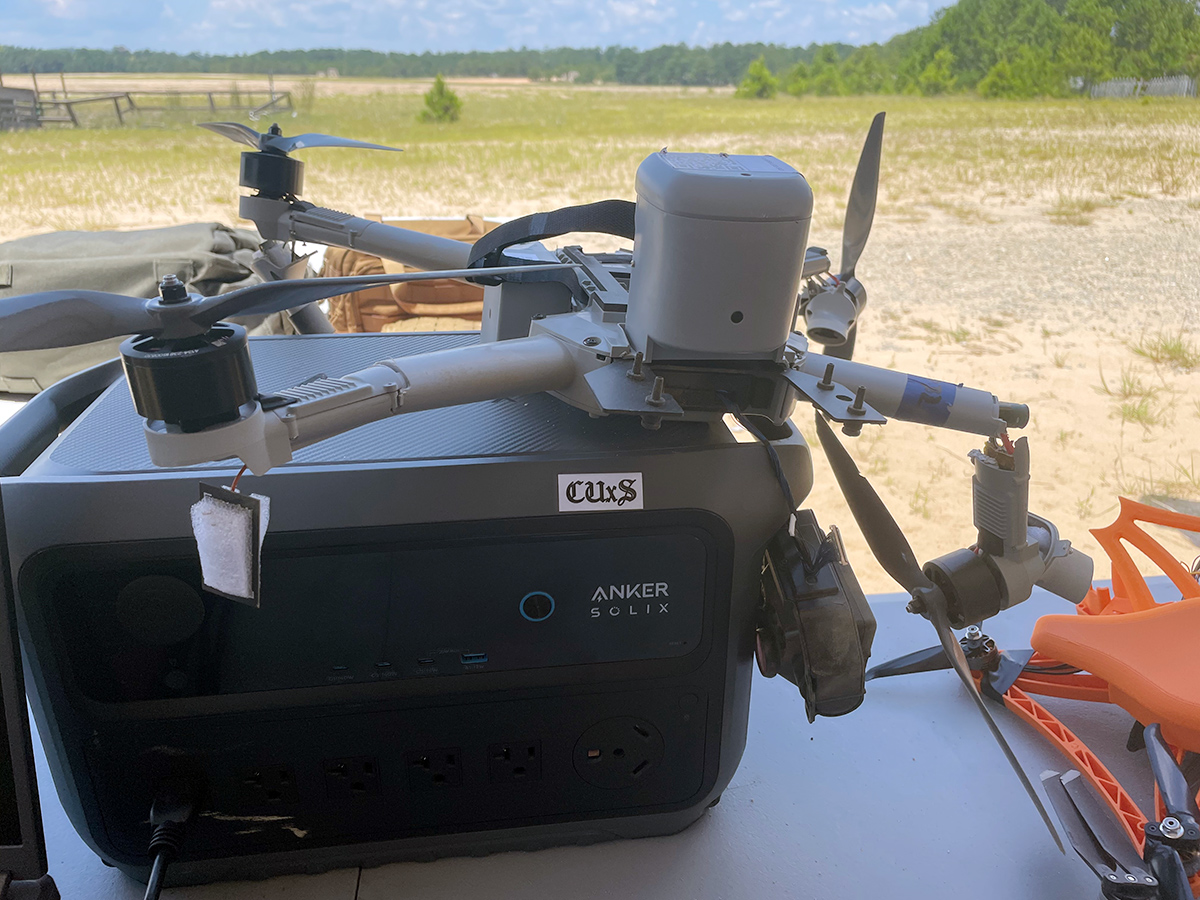 Operators with the US Army 75th Ranger Regiment interdicted a small UAS using a Bumblebee V2.
Image credit: Janes/Meredith Roaten
The most recent evaluation of the Bumblebee V2 at Fort Benning, Georgia, was set up to test how much Perennial Autonomy’s upgrades to the system have improved its performance against Group 1 and 2 UAS, the two smallest UAS categories, said Lieutenant Colonel Alex Morse, an acquisition official with JIATF 401. Soldiers from 82nd Airborne tested the first version of Bumblebee at Fort Bragg, North Carolina, and the company made upgrades to the system software and hardware based on that feedback, he said.
During a demonstration for reporters, 75th Ranger Regiment flew several Bumblebee systems onto the training range, hit the adversary drone, and returned to their launch point.
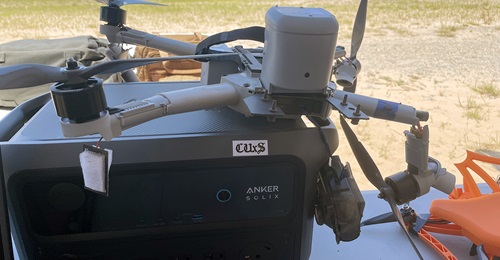
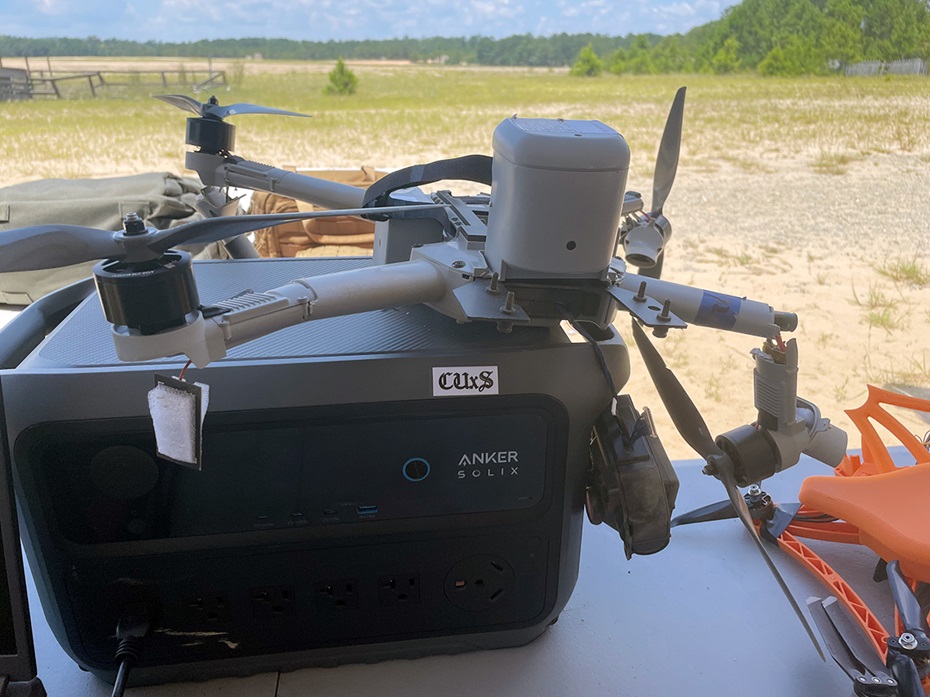
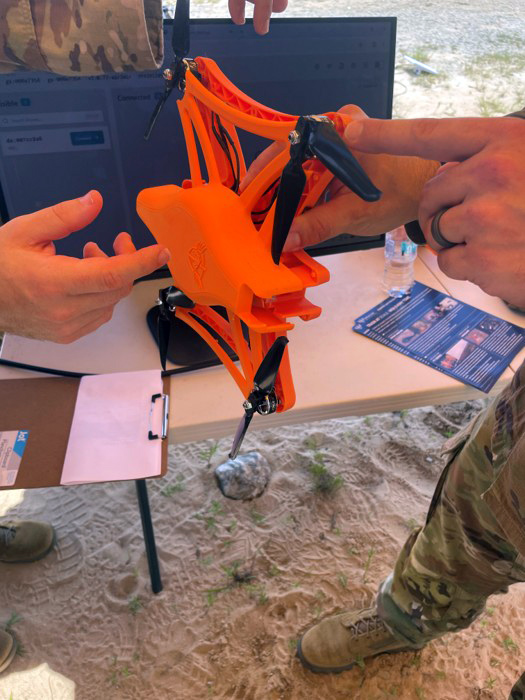
Version one (V1) had a fixed camera that was housed in the interceptor, said Lt Col Morse. Perennial Autonomy “created a gimbal setup and added additional camera capabilities in order to make it more air-to-air capable and more dynamic,” he said. Additional sensors were also added on board, he said.
Compared to the first version, the quadcopter's legs are shorter. This makes it easier to fit more systems in a container for storage, Lt Col Morse told Janes.
The first version of Bumblebee was deployed for Operation 'Epic Fury' against Iran, said Lt Col Morse.
“It had the ability to do one-way attack and ISR with a limited air-to-air capability,” he explained. “We worked with Perennial Autonomy based on the needs of the US forces a few months ago for Operation 'Epic Fury', to get that V1 to a level where it would be a value added and a capability for the units deploying,” he said.
Specifications
The battery itself weighs about 8 to 10 lbs (3.6 - 4.5 kgs) while the vehicle weighs less than 20 lbs (9.07 kgs), according to a participant at the evaluation.
Soldiers don’t need to have advanced first-person view (FPV) drone training to fly Bumblebees if they fly in position mode, which enables the UAV to maintain its current position while the operator tries to get a lock on the target, said a source at the evaluation.
Typically, 75th Ranger Regiment operators that specialise in UAS train for around 20 hours on the FPV simulator Liftoff, a participant told Janes during the evaluation.
Many upgrades had to be made to the first version, which was also deployed in Ukraine. One was a change to the terminal phase of the intercept. Before Perennial Autonomy added automatic speed control to version 2, soldiers could not easily throttle back or up, Sergeant Major Kellen Rowley, JIATF 401's senior enlisted advisor to the director, told reporters during the evaluation.
“Changing speed on that final kinetic piece is ... the whole ball game, that's the hardest part for any operator to master,” he explained. “I wouldn't say that it's 100% perfect, but it's very noticeable to me that the operator just has to do some slight nudging on that speed control.”
The Bumblebee’s ground control station is made up of a mast and a radar and uses StarShield, the military version of the Starlink satellite communications platform, according to JIATF 401.
On board, the Bumblebee has the processing power of a small mobile phone, according to a source at the demonstration. Not adding a high-end radio for transmitting data is one of the aspects that keeps its price relatively low, said the source.
Citing ongoing cost negotiations, Lt Col Morse declined to provide a specific unit price for the platform.
Feedback
US drone manufacturer Dracoe collected data from its FPV target drones during a Bumblebee V2 operational assessment at a Fort Benning training range.
Image credit: Janes/Meredith Roaten
Though some upgrades have been addressed from V1 to V2, JIATF 401 is still collecting feedback from 75th Ranger Regiment soldiers and learning from Bumblebee V2’s failures.
The intercepts have seen “marked improvement”, but the technology is “definitely not there yet”, Sgt Maj Rowley said.
For example, the automatic target recognition (ATR) is still not accurate every time, Janes learnt during the demonstration at Fort Benning. Watching the intercepts through a video feed from the quadcopter and in one intercept at a lower altitude, Janes saw Bumblebee locked onto a target and then lose the track.
Intercepting the UAS at higher altitudes is easier because it is difficult for the ATR software to identify the adversary against the backdrop of the trees, an operator told Janes. The red-air vehicles stand out more against a blue sky.
Bumblebee V2’s autonomous recognition is performing better than it was during earlier technology sprints this year in part due to soldier feedback, said Lt Col Morse. “We've seen significant improvements from week one to now week nine,” he said.
During the demonstration, the Bumblebee also completed its terminal phase and successful forced adversary drones to fall. In a handful of instances viewed by Janes, the interceptor flew close to the adversary drone and missed before eventually completing a successful intercept.
Unlike the first evaluation of Bumblebee V1, the operators are much more experienced, which takes out one variable, said Sgt Maj Rowley. “This is really all about seeing how well that AI, how that automation performs,” he said.
Lt Col Morse told reporters that, after this evaluation, JIATF 401’s mobile C-UAS acquisition team would make a recommendation to the organisation’s director Brigadier General Matt Ross on whether to stay in this level of evaluation or move on.
“I think if there was a pivot to make for our next operational assessment, I'd like to move it away from the more experienced pilots and get it into the hands of some novices,” said Sgt Maj Rowley. “In my mind the No 1 value add to Bumblebee is that it does not take an experienced pilot,” he said.
For more information, please see: Special Report: Bumblebee V2 UAS incorporates upgrades for air-to-air intercepts