DoDIIS 2026: The Race for Decision Advantage
As the defense and intelligence communities prepare to gather in Tampa for DoDIIS Worldwide 2026, conference discussions are expected to focus on a critical challenge facing national security leaders: how to leverage intelligence technologies to strengthen military readiness, accelerate decision-making, and maintain advantage in increasingly contested battlespaces. This year's DoDIIS theme, DIA Next: Intelligence Technologies for Battlespace Lethality, underscores the role intelligence plays in enabling deterrence, supporting warfighters, and powering the command and control (C2) systems that underpin modern military operations.
Janes will be part of that conversation throughout the event, showcasing how validated, decision-grade intelligence helps defense and intelligence organizations move faster and with greater confidence. Ahead of DoDIIS, we spoke with Randy Nixon, U.S. President and Chief Customer Officer at Janes, about today's intelligence challenges, the growing importance of validated data in an artificial intelligence (AI)-enabled world, and why speed and confidence will define the next era of intelligence competition. Randy will also join the DoDIIS panel discussion, Decision Advantage at Machine Speed: Operationalizing OSINT for the Modern Defense Mission, where he will share his perspectives on the evolving role of open-source intelligence (OSINT) in supporting military and intelligence operations.
DoDIIS Worldwide brings together leaders from across the intelligence community, military, industry, and academia. What key themes do you expect will define this year's event, and which trends do you believe will have the greatest impact on intelligence operations over the next few years?
Randy Nixon: The conference theme, Intelligence Technologies for Battlespace Lethality, reflects an important reality: intelligence is increasingly a decisive factor in military readiness, deterrence, and operational success.
When people hear "battlespace lethality," they naturally think about advanced weapons, autonomous systems, and emerging military technologies. Those topics will certainly be part of the conversation. But behind every weapon system, every C2 architecture, and every operational decision is intelligence. The effectiveness of military power depends on how quickly organizations can identify, understand, and make decisions based on information.
I expect this year's event to focus heavily on how the defense and intelligence community modernizes the technology enterprise that enables those decisions. That includes AI, data integration, advanced analytics, and machine-readable intelligence. The challenge isn't a lack of information or data. Rather, it's transforming information into understanding and understanding into fast, defensible decision-making.
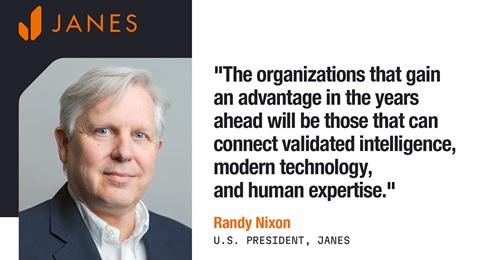
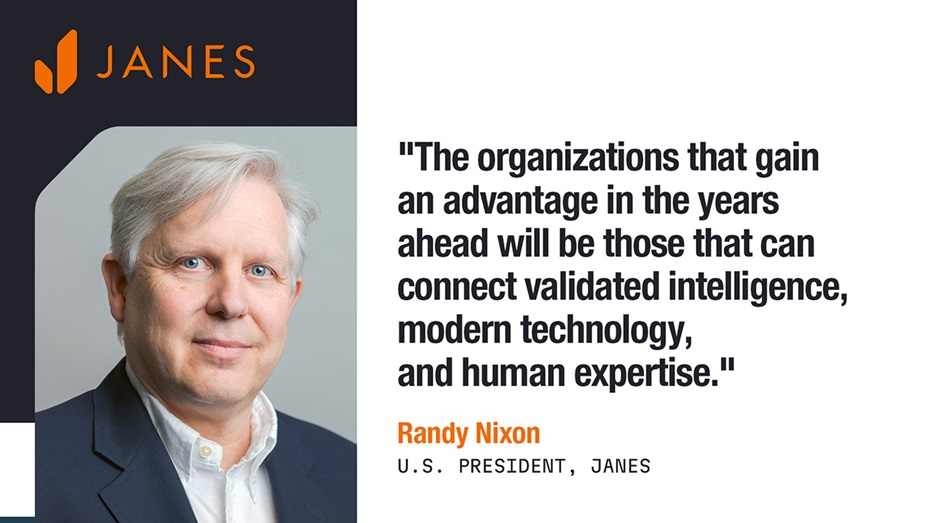
The organizations that gain an advantage in the years ahead will be those that can connect validated intelligence, modern technology, and human expertise. Technology can help accelerate decisions, but only when decision-makers have confidence in the information that powers those systems.
The intelligence community operates in complex threat environments that encompass great-power competitions, regional conflicts, and rapidly evolving technologies. In your view, what are the most pressing intelligence challenges facing the U.S. defense and intelligence communities today?
Randy Nixon: I sometimes push back on the notion that today's environment is uniquely complex. That may be my Generation X perspective. I grew up during the final years of the Cold War, when the possibility of strategic conflict between the U.S. and the Soviet Union was very real. We then experienced the post-Cold War world, followed by decades of counterterrorism operations and military campaigns across the globe. Every generation faces significant security challenges.
What defines today's environment is the convergence of multiple challenges at once. We're seeing renewed strategic competition among major powers, persistent regional instability, rapid technological advancement, cyber threats, geoeconomic competition, and an increasingly contested information environment.
The challenge for intelligence organizations is understanding how military capabilities, industrial capacity, technological innovation, and geopolitical developments combine to shape strategic outcomes, and doing so quickly enough to inform real-time decision-making.
That's where Janes has remained at the forefront for more than 128 years. Evolving through world wars, the Cold War, counterterrorism operations, and today's era of strategic competition, our mission has remained the same: providing validated intelligence on military capabilities, force structures, equipment, and defense developments so leaders can make fast, informed decisions with confidence.
Intelligence organizations have more access to information than ever before, but speed and confidence remain critical. How can agencies ensure they are turning vast amounts of data into decisions at the speed required by modern operations?
Randy Nixon: The most important thing organizations can do is ensure they trust the data they're using.
The world has never produced more information than it does today, but more information does not automatically lead to better intelligence. Much of what is available today is redundant, inaccurate, misleading, or intentionally false. Simply increasing the volume of information available to analysts often creates noise and complexity rather than clarity.
The goal should be enabling analysts, warfighters, and policymakers to spend less time validating and connecting information and more time understanding what it means.
Confidence enables speed. When decision-makers trust the information in front of them, they can move faster. When they don't, they spend valuable time searching for additional validation and corroboration, and those delays can have real consequences.
That is why validated intelligence is so critical, especially when fusing it with other data sources or using it to enhance AI apps. That’s ultimately why I joined Janes. I used Janes as a customer during my time leading the Open Source Enterprise at the CIA. Janes applies rigorous tradecraft to validate, analyze, and contextualize information from multiple sources, creating structured intelligence customers can trust. As organizations increasingly adopt AI-enabled workflows, the quality of the underlying data becomes even more important. AI can accelerate analysis, but it cannot compensate for flawed inputs.
Decision-grade intelligence is ultimately about delivering assured data and analysis leaders can trust.
You will be speaking on a panel at DoDIIS Worldwide, Decision Advantage at Machine Speed: Operationalizing OSINT for the Modern Defense Mission. What does it truly mean to operationalize OSINT today, and what do you hope attendees will take away from that discussion?
Randy Nixon: I would actually challenge the idea that OSINT still needs to be operationalized. In many respects, it already has been.
OSINT is no longer a niche capability. It is a foundational component of modern intelligence and military operations. Organizations across the defense and intelligence communities rely on unclassified information every day to understand military capabilities, assess force posture, monitor defense-industrial developments, and support strategic and operational planning.
Janes has been contributing to that mission for more than 128 years. Our intelligence helps customers understand who is operating what, where military forces are located, how units are organized, what systems are being fielded, and how capabilities are evolving around the world.
What I hope attendees take away from the discussion is that the conversation is no longer about proving the value of OSINT. The value has already been established, providing the data is accurate and trustworthy.
The focus now is maximizing its impact. How do we integrate validated OSINT into C2 systems? How do we leverage it within AI-enabled workflows? How do we combine it with other intelligence disciplines to accelerate understanding while reducing uncertainty?
The military organizations that succeed in the future will be those that establish a validated understanding of the operating environment before a crisis emerges. OSINT plays a vital role in creating that foundation.
Looking ahead, what will separate organizations that successfully achieve decision advantage from those that struggle to keep pace in the next era of intelligence competition?
Randy Nixon: Two things: speed and trust.
First, speed.
Future conflicts and strategic competition will be characterized by compressed decision cycles. The ability to move from an alert or emerging signal to a decision-grade understanding faster than an adversary will be a significant advantage.
But speed isn't simply about processing information faster. It's about eliminating friction.
Analysts shouldn't have to move between disconnected systems, search across multiple databases, or manually reconcile competing data sets to build the operational picture. Every additional step creates delays at the exact moment decision-makers need clarity.
Second, trust.
If decision-makers can't trust the information they receive, they slow down. They seek additional confirmation, revisit assumptions, and decision velocity decreases.
As AI and automation continue to transform workflows, trust becomes even more important because the quality of outputs will always be linked to the quality of inputs. Organizations need confidence not only in the technology, but also in the intelligence that powers it.
The organizations that achieve lasting decision advantage won't simply be the ones with the newest technologies. They'll be the organizations that combine advanced technologies, integrated data ecosystems, validated intelligence, and disciplined tradecraft.
At the end of the day, decision advantage isn't about moving fast for the sake of speed. It's about moving faster than competitors while maintaining confidence in your decisions. That combination of speed and trust is what creates operational advantage, strengthens deterrence, and ultimately drives mission success.
Attending DoDIIS Worldwide? Join Randy for his panel discussion, Decision Advantage at Machine Speed: Operationalizing OSINT for the Modern Defense Mission, and visit Janes at Booth 515 in the Carahsoft Pavilion to see how validated intelligence helps defense and intelligence organizations accelerate decision-making, reduce uncertainty, and gain operational advantage.