Special Report: Military aircraft, UAVs deployed in Nepal–Tibet flood response
Military aircraft, unmanned aerial vehicles (UAVs), engineering and logistics vehicles, medical teams, and specialist rescue equipment have been deployed in response to the 26 August flash floods along the Nepal–China border.
In Nepal, the Nepali Army has deployed at least six helicopters, likely including Mil Mi-17s and Bell 407s, as well as logistics vehicles, medical teams, and ground forces. UAVs have also been employed as part of the wider government response.
The Indian Air Force (IAF) has supported the response with a Lockheed Martin C-130J Super Hercules, while additional Boeing C-17 Globemaster III and C-130J aircraft have been identified to transport further humanitarian assistance.
On the Chinese side of the border, the People's Liberation Army (PLA) has deployed a Western Theater Command Xi'an Y-20 transport aircraft, four Tibet Military Command helicopters, UAVs, engineering and transport vehicles, and specialist rescue and medical equipment to support operations around Gyirong in Tibet.
Two AVIC Wing Loong UAVs have also provided aerial reconnaissance and emergency communications support, with at least one deployed by the Sichuan Provincial Department of Emergency Management.
Nepal
The Nepali Army has led aerial and ground rescue operations in affected areas. On 26 August Army spokesperson Brigadier General Rajaram Basnet was cited by state media as saying that six Nepali Army helicopters and eight civilian helicopters had been deployed for search, rescue, and relief operations.
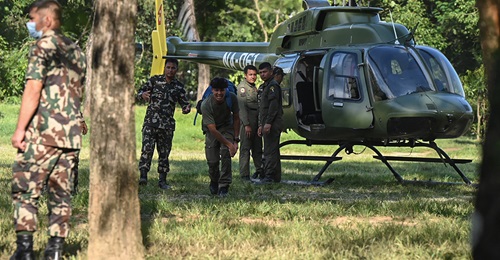
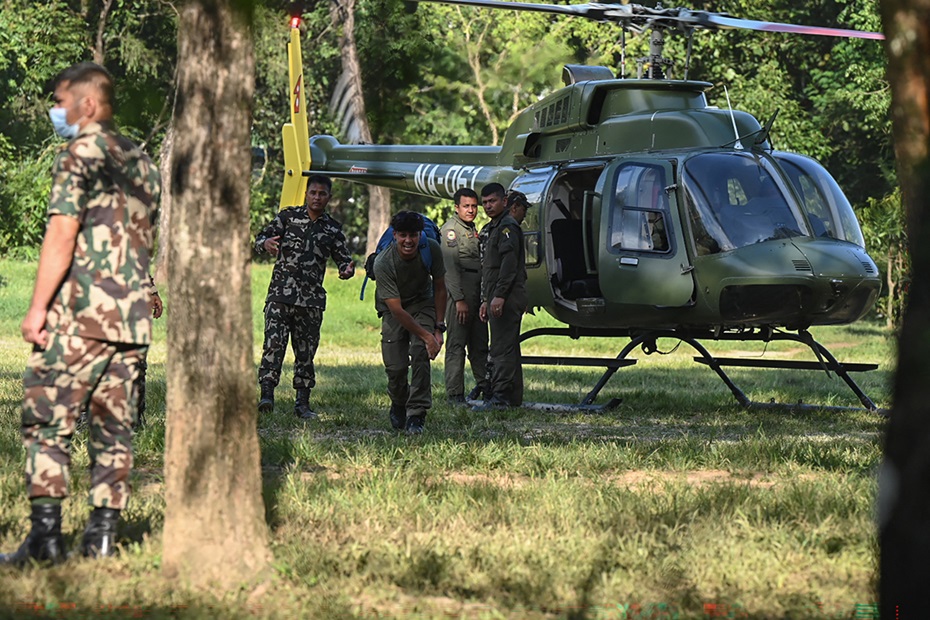
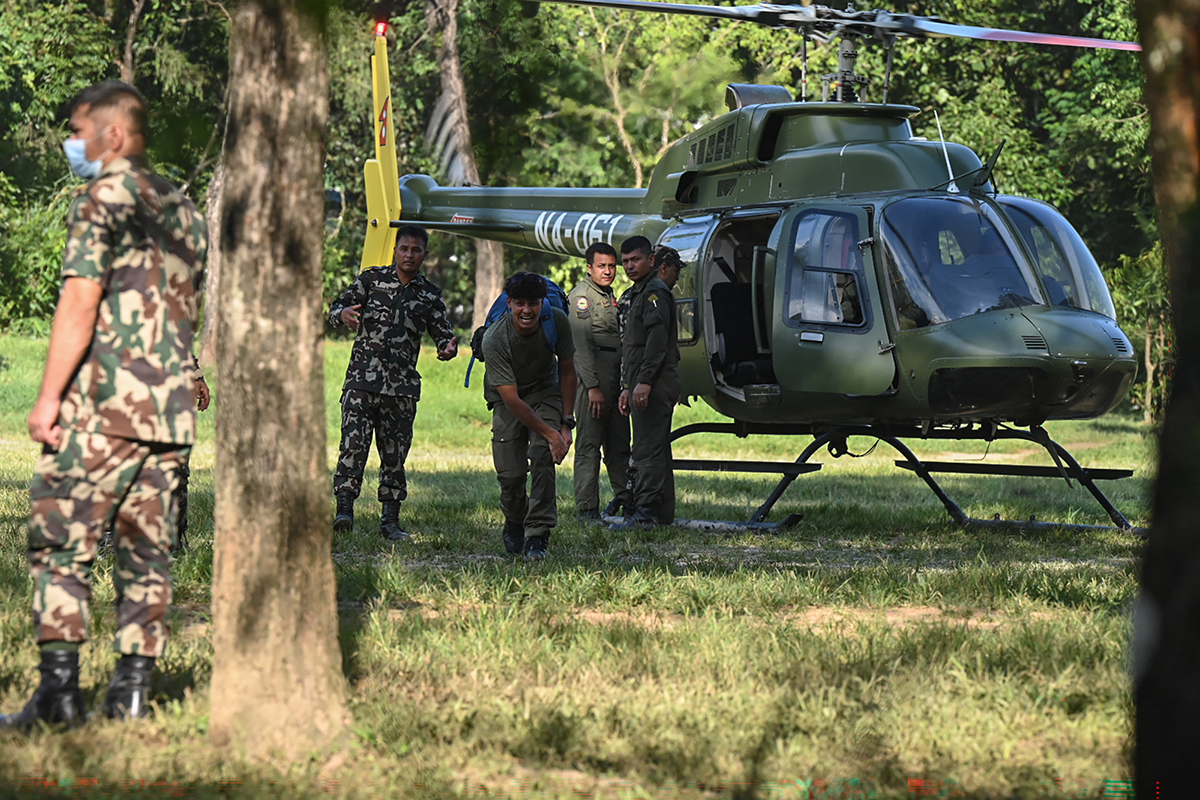 A Nepali Army Bell 407 helicopter during flood-rescue operations at Battar Bazar, Nuwakot district, on 27 August 2026. Image credit: Prakash Mathema / AFP via Getty Images
Prime Minister Balendra Shah said on 27 August that rescue operations were being conducted by air and land, with additional military helicopters on standby. Civilian helicopters were also operating under government direction.
Disaster relief is an important operational role of the Nepali Army. According to Janes World Armies, the army functions as Nepal's primary military humanitarian assistance and disaster relief (HADR) force, with aviation, engineering, logistics, and medical capabilities that can be mobilised during natural disasters. During the 2015 earthquake, the army conducted mass-casualty search-and-rescue, route-clearance, medical evacuation, and logistics operations alongside international forces.
Beyond the assets deployed in the current operation, the Nepali Army operates additional equipment that can support disaster-response operations.
Its Air Wing operates CN235 transport aircraft and a mix of Mi-17V-5, Airbus AS350, Leonardo AW139, and HAL Dhruv helicopters, while two PZL M28 Skytruck short take-off and landing (STOL) transports were contracted for delivery by April 2025. The army also maintains dedicated engineering and logistics formations that can support route clearance, infrastructure repair, transportation, and the movement of relief supplies in affected areas.
India
The IAF deployed a C-130J Super Hercules to Nepal on 26 August carrying 10 tonnes of essential relief materials and medical equipment. The IAF said additional C-17 Globemaster III and C-130J aircraft would transport further assistance, while helicopters had been earmarked for rescue and evacuation operations.
A second IAF flight departed for Nepal on 27 August carrying 37.5 tonnes of HADR supplies, medicines, and food, according to Indian External Affairs Minister S Jaishankar. The two flights carried a combined 47.5 tonnes of assistance.
The IAF's contribution has so far focused on strategic airlift into Kathmandu. Although the service identified helicopters for rescue and evacuation operations, Janes had not identified official confirmation at the time of publication that these aircraft had been deployed.
India has previously deployed substantially larger military capabilities for disaster-relief operations in Nepal. During the response to the April 2015 earthquake, designated ‘Operation Maitri’, the IAF and Indian Army flew 2,223 sorties, evacuated or rescued about 11,200 people, and transported about 1,700 tonnes of relief supplies, according to India's Ministry of Defence (MoD).
The MoD said ‘Operation Maitri’ involved C-130J, C-17, Ilyushin Il-76, and Antonov An-32 transport aircraft and eight Mi-17/Mi-17V5 helicopters. Indian Army engineer units also conducted route-clearance and construction tasks in inaccessible areas, while Army Aviation supported evacuations, relief deliveries, and the insertion of Nepali Army personnel.
China
China has mobilised substantial military and government-operated capabilities for the response in the Gyirong area of Tibet, including fixed- and rotary-wing aircraft, UAVs, engineering and transport equipment, medical teams, and specialist rescue assets.
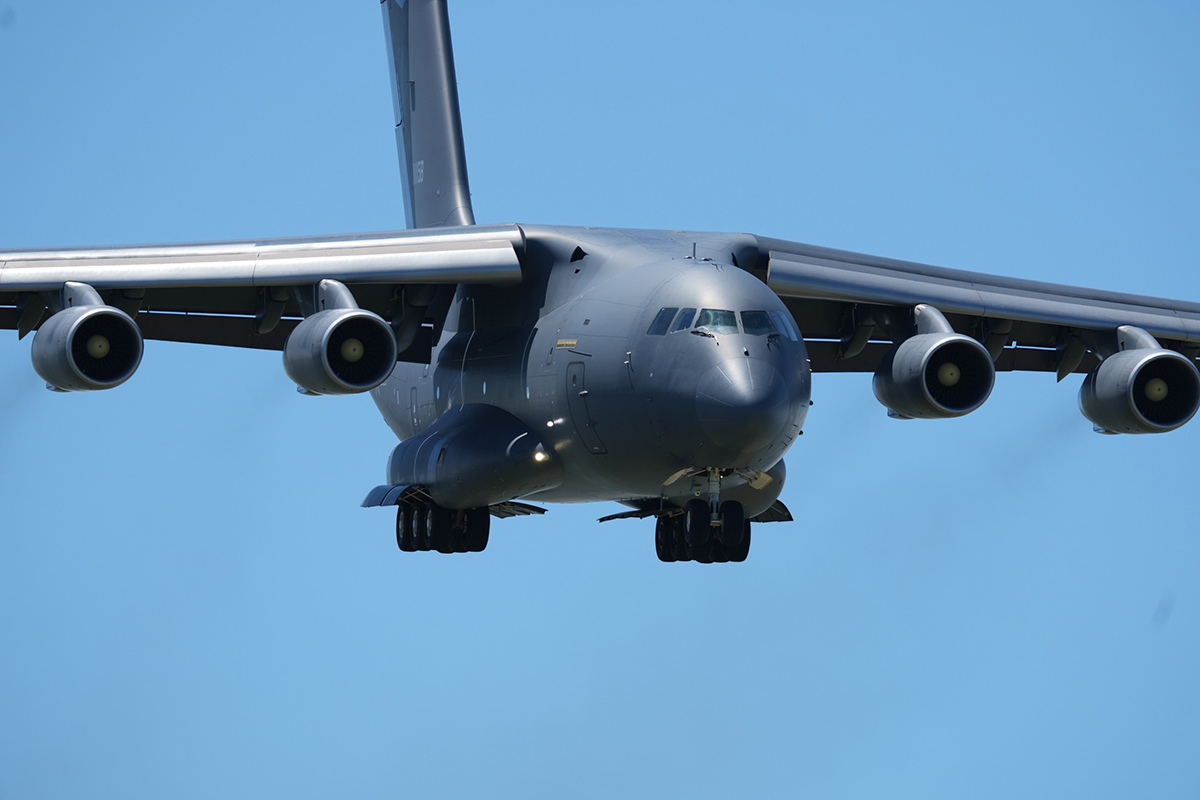 A file image of a Xi'an Y-20 transport aircraft. A Y-20 was deployed by the PLA Western Theater Command to Tibet on 27 August to support flood-response operations. Image credit: Yue Shuhua/VCG via Getty Images
The PLA Western Theater Command deployed a Y-20 transport aircraft to Tibet on 27 August carrying a command group to support the military response. According to China's state-run Global Times newspaper, maintenance personnel also configured the aircraft with cargo-securing equipment and medical-rescue facilities in preparation for personnel transport, supply delivery, and casualty evacuation missions.
The Tibet Military Command deployed four Army Aviation helicopters in two batches carrying medical and rescue equipment. China's Ministry of National Defense (MND) said the helicopters were tasked with reconnaissance of the disaster area and identifying rescue routes. The Western Theater Command Air Force separately deployed an unidentified UAV to the Gyirong Port area on 26 August to conduct disaster reconnaissance.
Two Wing Loong UAVs have also supported the response, conducting aerial reconnaissance and providing emergency communications. Global Times, citing manufacturer Aviation Industry Corporation of China (AVIC), reported that the UAVs operated continuously for more than 22 hours, recording about 6,069 user connections and supporting more than 661 communications calls. AVIC also said Wing Loong aircraft had conducted multiple take-offs and landings at the rescue site in support of repeated missions.
Wing Loong UAVs have previously been deployed for disaster-response operations in China, including following major floods and earthquakes.
A high-altitude-configured Mi-171 helicopter had also reached the disaster area by about 0800 h on 27 August, according to China's Ministry of Emergency Management (MEM). The ministry said 300 engineering-rescue personnel with 120 sets of equipment and another 248 personnel from state-owned engineering enterprises with 264 sets of equipment were also being deployed.
PLA ground forces have also deployed engineering and transport equipment. Global Times, citing a report from the Shigatse Military Sub-command, said the unit mobilised 158 personnel, four pieces of engineering machinery, and more than 20 unidentified vehicles. China Military Online, the PLA's official English-language news website, separately confirmed that personnel from the sub-command deployed to the affected area with engineering machinery.
The Tibet Military Command General Hospital also assembled a 60-person emergency medical team equipped for search-and-rescue treatment, emergency surgery, and the treatment of seriously injured personnel, according to the MND.
For more, please see:
- Nepal to receive M28 tactical airlifters from United States
- China, Nepal agree to enhance military co-operation
- China, Nepal begin first-ever joint military exercise
- Nepal seeks Indian equipment as defence ties resume
Analysis
The Nepali Army's response to the August floods highlights the importance of HADR within its operational responsibilities, but also illustrates limitations in the military's ability to respond independently to a major disaster across Nepal's difficult terrain. Janesassesses that the army requires additional fixed-wing STOL transports and medium utility and transport helicopters to provide effective disaster-response coverage across the country. This reflects Nepal's mountainous geography and the requirement to reach areas isolated by damaged or blocked surface transport routes. |