North Korea commissions first Choe Hyon-class destroyer as Kim signals naval nuclearisation
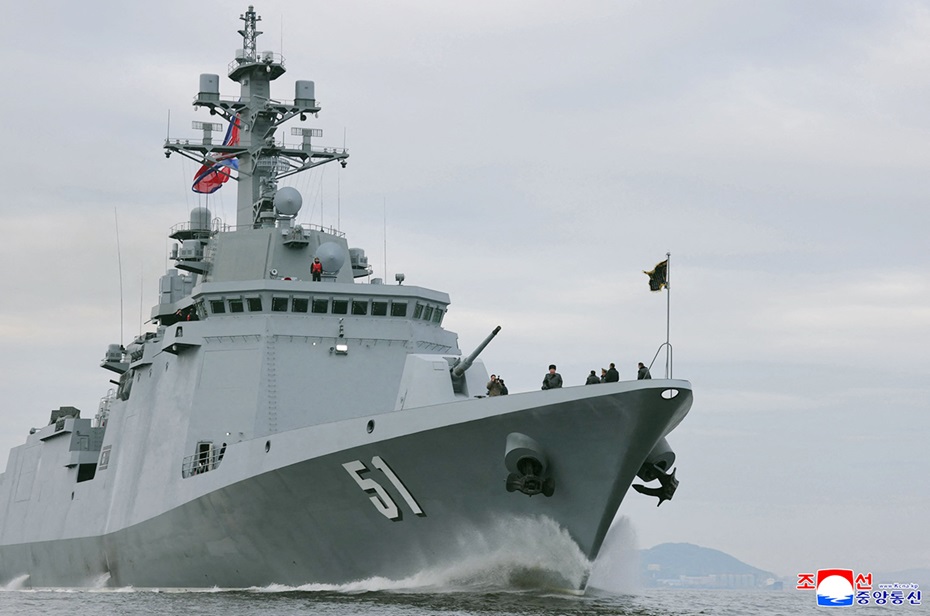
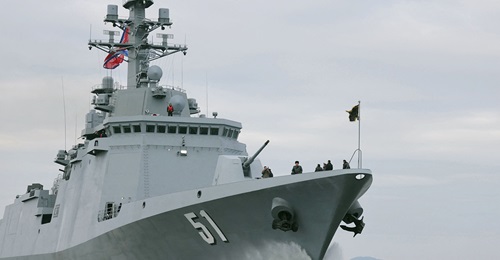
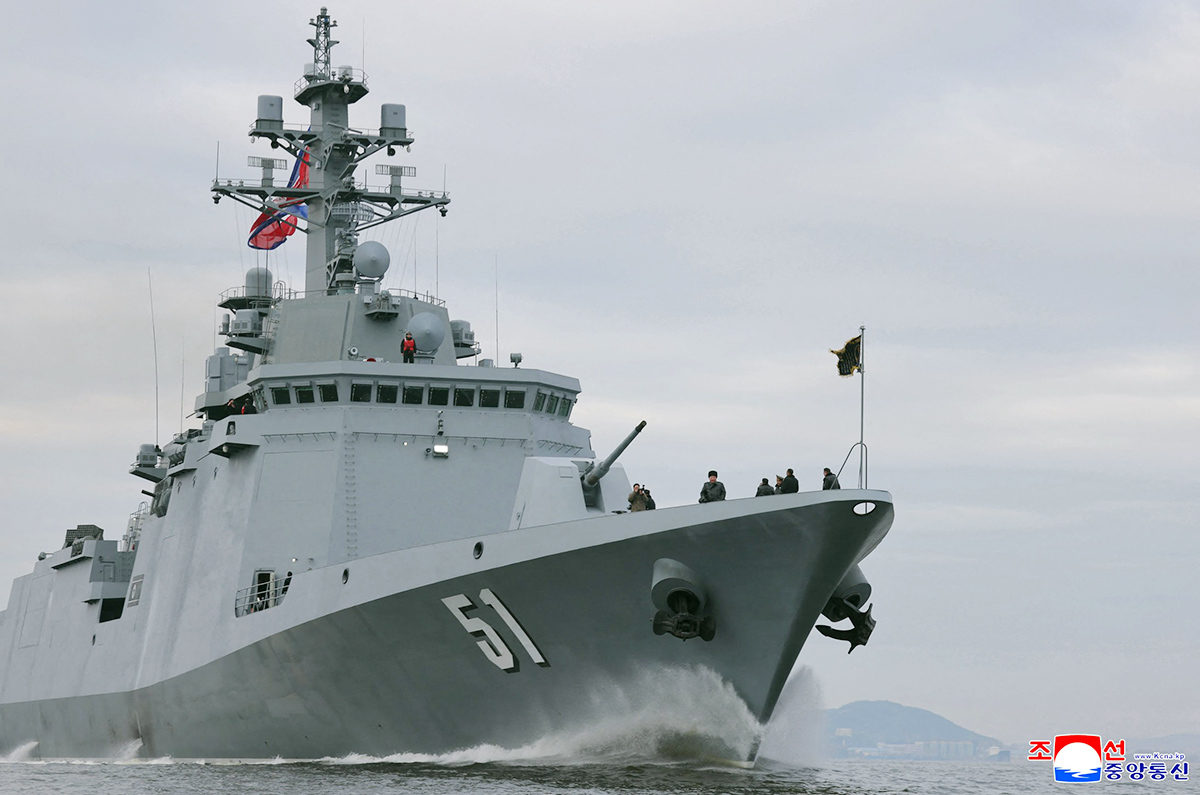 Choe Hyon, seen here during sea trials at an undisclosed location in North Korea, months before its commissioning. The vessel was commissioned on 23 June 2026.
Image credit: KCNA via KNS/AFP via Getty Images
North Korea has commissioned its first Choe Hyon-class guided-missile destroyer, with the country’s leader Kim Jong‐un using the induction ceremony to signal the impending nuclearisation of the Korean People’s Navy and a shift away from a purely coastal defence posture.
In his speech delivered at the commissioning ceremony on 23 June, Kim said the navy is transitioning into a force equipped with strategic capabilities, noting that a programme to arm the service with nuclear weapons is progressing as planned.
He also indicated that the navy’s role will expand beyond littoral defence, stating that the service will be tasked to operate in waters where rival military assets are deployed and to conduct pre-emptive missions.
The ceremony marks the culmination of a development process that has seen the destroyer, Choe Hyon, move rapidly from launch to operational testing.
Choe Hyon was launched in April 2025 but by March 2026 had demonstrated its primary strike role by conducting ripple launches of cruise missiles in quick succession, signalling that its combat systems and weapons integration were nearing operational readiness.
Beyond the commissioning itself, Kim’s speech provided additional insight into the direction of North Korea’s maritime strategy.
Kim acknowledged that the country currently lacks adequate basing infrastructure for large warships, describing the construction of modern naval bases as an urgent requirement.
He also repeated ambitions to expand the fleet with larger surface combatants, including 10,000-tonne-class ships, and indicated that future naval operations will extend further beyond the region.
In terms of production, Kim reiterated plans to accelerate shipbuilding output, including the construction of multiple large surface combatants annually.
This builds on directives issued in March 2026, when he ordered the production of two Choe Hyon-class destroyers per year as part of a broader effort to field a sizeable salvo-capable strike force.
The Choe Hyon class is the largest surface combatant yet built by North Korea.
It displaces approximately 5,000 tonnes at full load, with an overall length of about 143 m and a beam of about 15 m.
It is equipped with an amidships vertical launch system designed to support the salvo firing of cruise missiles, including systems Janes assesses to be nuclear-capable such as the Hwasal-2.
The ship’s defensive fit includes a close-in weapon system arrangement that appears to incorporate both Chinese- and Russian-origin equipment, alongside decoy systems and revised topside configurations introduced after its initial launch.
Operational testing conducted earlier in 2026 demonstrated the vessel’s ability to carry out tightly sequenced launches, suggesting a level of maturity in its combat system integration and fire-control architecture.
In his speech, Kim also confirmed that follow-on ships in the Choe Hyon class are progressing, stating that a second vessel, Kang Kon, will be commissioned soon.
For more, please see: North Korean destroyer carries out repeat ripple launch of strategic cruise missiles
| The commissioning of Choe Hyon and the accompanying policy signals point to a North Korean navy seeking to evolve from a largely coastal force into a more capable and outward-looking service. The combination of nuclear-capable strike systems, salvo-launch capacity, and plans for serial production suggests an intent to build a repeatable maritime strike capability rather than a small number of symbolic flagships. For the US and its regional allies, these developments are likely to complicate maritime security planning in the Northeast Asian theatre of operations. A fleet of destroyers capable of launching multiple cruise missiles in quick succession would place additional strain on existing missile defence arrangements across the region, including those that involve Japan and South Korea. At the same time, North Korea’s ambitions for forward operations and expanded basing indicate a desire to operate further from home waters, potentially extending its influence into key sea lines of communication (SLOCs) across Northeast Asia. While significant questions remain over industrial capacity and the sustainability of such ambitions, the commissioning of Choe Hyon represents a tangible step towards a more capable and strategically significant Korean People’s Navy. |