Analysis: UK Defence Secretary's resignation over funding raises awkward questions
John Healey, the UK Secretary of State for Defence, resigned on 11 June 2026 over what he said was government inability and unwillingness "to commit the resources that the nation needs to defend the country."
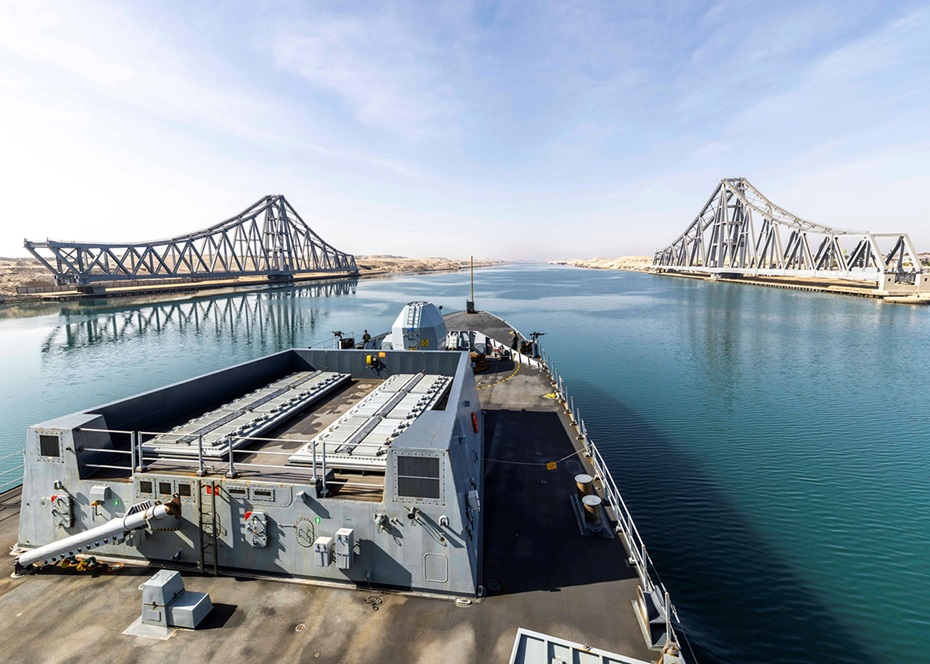
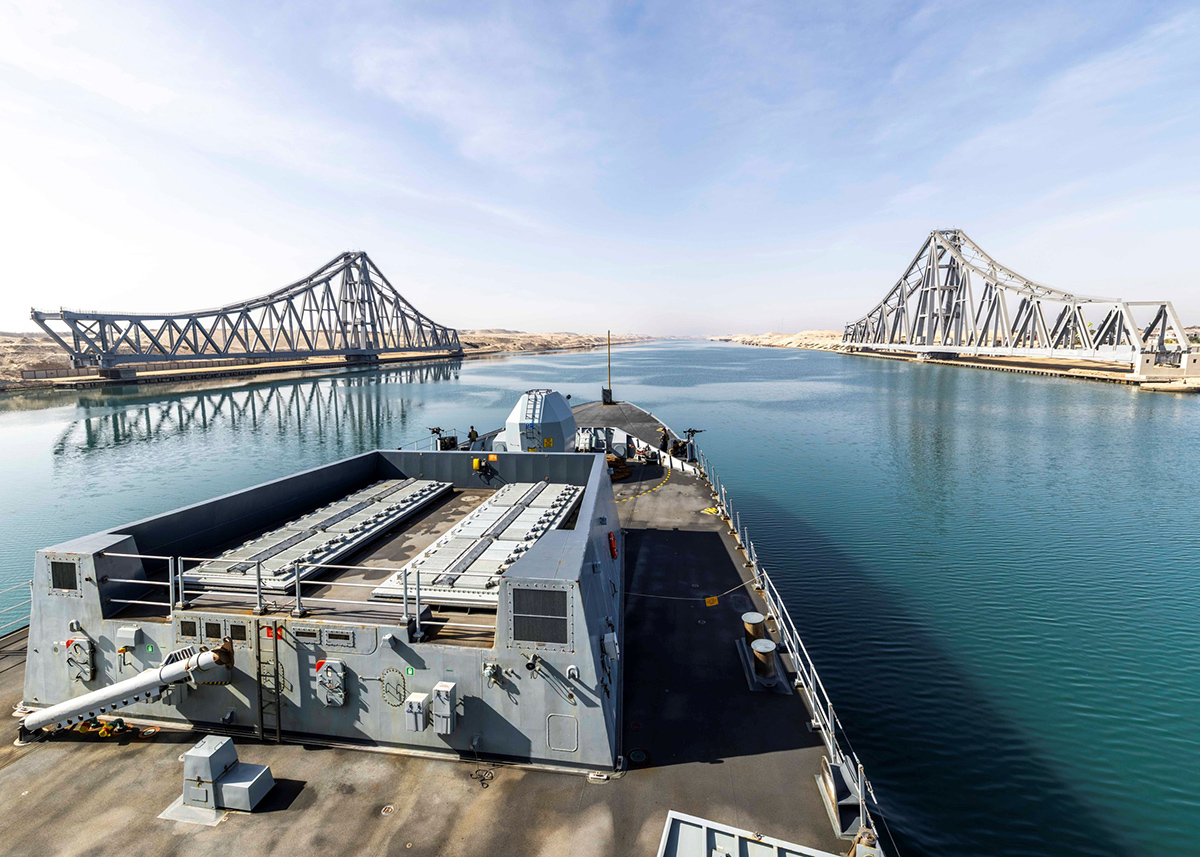 The UK's HMS Dragon conducts a southern bound transit of the Suez Canal on 9 May 2026, ahead of operations in the Middle East.
Image credit: UK MoD/Crown Copyright
In his resignation letter, posted on social media and addressed to Prime Minister Sir Keir Starmer, Healey said that "this new era for defence required further investment through the Defence Investment Plan (DIP). The excellent and extensive cross-government work that completed in January-overseen by you, me and the Chancellor - confirmed the scale of the challenge and the rising demands on defence. Since then, you have been unable, and the Treasury [finance ministry] has been unwilling, to commit the resources that the nation needs to defend the country at this time of rising threats."
Dan Jarvis, Minister of State for Security, was announced as Healey's successor as Secretary of State for Defence later on 11 June.
The DIP was expected in Autumn 2025 to lay out how defence programmes would be funded following the UK's June 2025 Strategic Defence Review (SDR). Months of delay have been accompanied by reports of tensions with the Treasury over defence spending versus other government priorities.
Companies across the defence sector have had to delay design and production decisions while they waited for the DIP. UK jet company Aeralis went into administration on 16 May 2026, saying in a statement that “The appointment [of administrators] follows a sustained period of pressure on the company’s cashflow as a result of continued delays to the UK Defence Investment Plan."
Healey said that since January 2026 UK forces had found themselves leading the multinational Strait of Hormuz military mission, leading NATO's Arctic Sentry mission, and planned to deploy to Ukraine after a ceasefire under the Paris Agreement.
He added that government work had sought to "set a clear path to meet the new NATO commitment you agreed, to spend 3.5% of GDP in 2035." While Healey said that "a headmark date for 3% of GDP on defence in 2030 is what Britain must set," he noted that instead "your DIP financial settlement... falls well short of what is required... The extra support is backloaded [pushed back to later years] when the pressure of operations and imperative to speed up readiness to fight is in the first two years [after 2026] and it rises to just 2.68% of GDP in 2030, when we will reach 2.6% next year [2027] with the investment we are already making."
"Without a DIP that meets the moment in this way, I am being forced to make decisions that would reduce the readiness of our forces and increase the risk to personnel on operations", Healey said. "After explaining to you that I would not be able to accept a DIP settlement that does not give our forces the resources they need, I am now left with no other option than to submit my resignation as your Defence Secretary."
Later on 11 June UK Minister of State for the Armed Forces Alistair Carns also posted his resignation letter on social media. In his letter addressed to the Prime Minister Carns said that, "the character of conflict is changing faster than our procurement can keep up with. We are still purchasing capability suitable for the last war while our adversaries arm for the next one. Platforms that cost billions can be defeated by systems that cost thousands. Any serious Defence Investment Plan has to start from that reality."
He went on, "While I had not a hand in the Defence Investment Plan, that distance does allow me to say plainly that it is not built for the threat we face. It is neither transformative enough, nor sufficiently funded."
Spending
Healey’s characterisation of the DIP appears to fall in line with recent trends in the UK’s defence budget growth, which have long suggested that the country will struggle to make significant progress towards its previously stated funding targets.
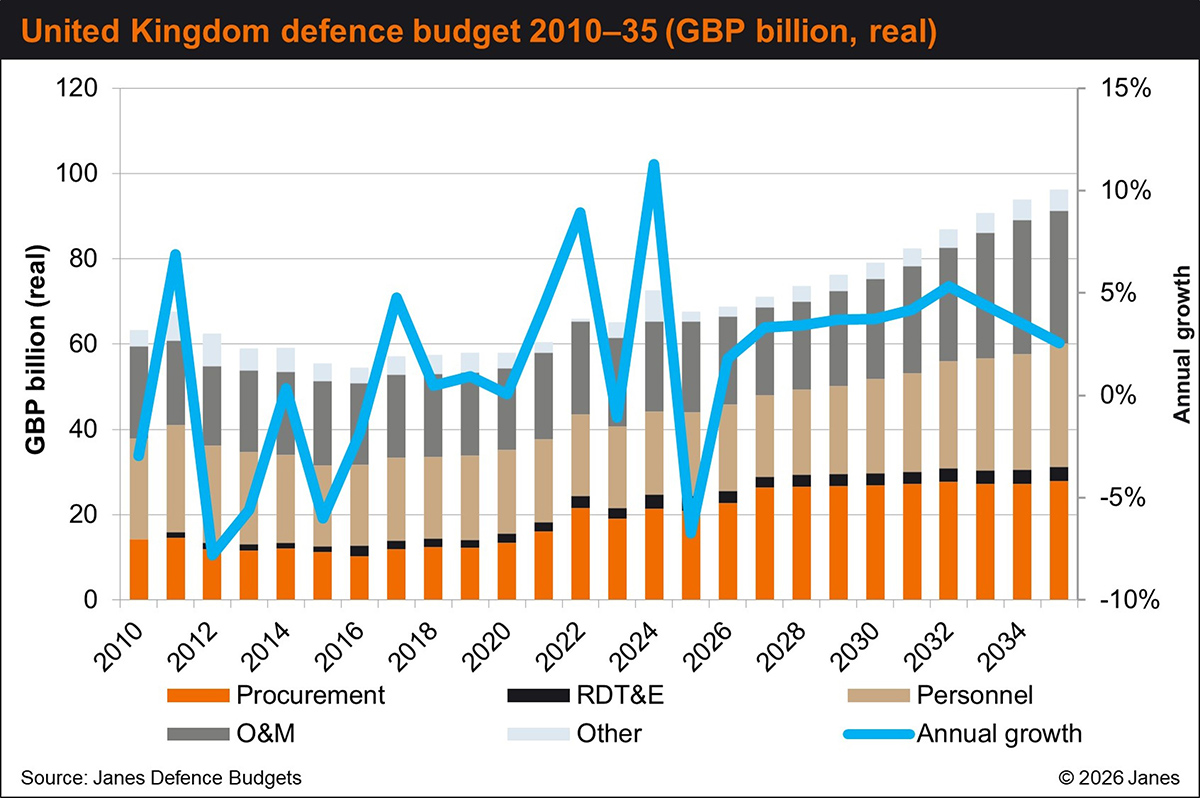
Recorded and projected UK defence budget 2010-2035.
Image credit: Janes
In the latest Main Supply Estimates published in April 2026 the Ministry of Defence (MoD) budget was set at GBP68.9 billion, a nominal rise of 4.3% on the 2025 allocation, which will likely equate to 2.2% of GDP by Janes calculations (which include only the MoD and defence pensions).
While expansion of the UK’s defence budget has accelerated notably since the full-scale invasion of Ukraine by Russia in 2022, growth has been neither steady nor particularly fast in comparison with that of many key allies in Europe.
In both 2022 and 2024 major increases of more than 15% were made to the MoD’s authorised expenditure but in both cases these boosts were followed by a reversion back to much slower growth or even contraction. In 2023 defence funding was raised by a nominal 5% annually, but heightened inflation meant this resulted in a drop in real terms, while in 2024 the budget was cut by 3.3% before inflation, producing a real contraction of 6.7%.
This means that in real terms British defence expenditure is just 13.8%, or GBP8.4 billion, higher in 2026 than in 2021. Although this represents a notable acceleration since the recent low point in the early 2010s, it compares fairly poorly to growth of 87% in Germany, 128% in the Netherlands, 154% in Sweden and 22% in France, whose budgetary politics have been even less forgiving than the UK’s.
With the economic outlook once again worsening during 2026, the likelihood of the considerable escalation in spending expansion necessary to reach the goal of 3.5% of GDP by 2035, and which the UK government committed to at the 2025 NATO summit, looks lower than ever.
Several months prior to the NATO meeting the prime minister had made public a policy of spending funds equal to 2.5% of GDP on defence by 2027 and aiming to reach 3.0% before the end of the next parliament (likely 2032) “as economic and fiscal conditions allow”, at the same time widening the government’s definition of ‘defence’ to include non-military security and intelligence.
Budget laws passed since that point mean that a further double-digit percentage increase would now likely be required to reach 2.7% of GDP in 2027, but the figures for 2030 released by Healey suggest that a more gradual upward trajectory may have been insisted upon by the Treasury.
2.68% of UK GDP in 2030 is expected to be worth around GBP89 billion nominally, and Janes forecasts suggest a corresponding GBP85 billion, or 2.38% of GDP will be allocated to the ‘core’ defence accounts. This would be consistent with an average growth rate of around 5.5% over the coming four years; only slightly higher than that of the previous four.
The UK’s extremely limited fiscal headroom means that even with political consensus around the need for higher defence spending greater than ever, whoever is Chancellor of the Exchequer in the coming years will remain under considerable pressure to keep funding plans restrained.
Wallace comments
Ben Wallace, who served as Secretary of State for Defence from July 2019 until August 2023, posted on social media on 11 June that government claims of 2.6% spending of GDP on defence in 2027 were false. He said that the real number was 2.13% GDP, adding that the rest is other departments' spending.
Citing examples of the lack of manoeuvre in UK defence budgeting, in June 2025 Wallace told Janes after the SDR that "if you're spending billions and billions of dollars on large programmes, and say your Virginia-class programme starts to go over budget you've got a big enough budget in the United States Navy to be able to vie between the two, do different things. Whereas in our [UK] system, you know if the Type-26 [frigate programme] goes over budget there's nothing left. There's not much left of the [Royal] Navy capital budget that year."
He said that, "a large part of our [UK] procurement problem, is simply that we're trying to cover up the fact that we don't have the money. The Army, or Navy, or Air Force indicates that it's got a requirement. It wants something. But no one ever seems to have the guts to turn around and say 'we'd really like to buy these but we don't have any money.' So they sort of string it all on, hoping one day that there'll be a magic wand."
Wallace added, "and you see that in the R&D [research and development] programmes. They [the MoD and the forces] don't want to take the tough decisions. You remember Taranis, the amazing BAE stealth UCAV [unmanned combat aerial vehicle]. Well its sitting in a hangar, because having spent millions of pounds on its development, in the end the decisions were all a bit too uncomfortable to make. 'Ah yes, well if we want 100 we're going to have to cancel some jets'."
As of 2014, the expenditure on the Taranis programme stood at GBP185 million (USD300 million), up from an original figure of GBP140 million. On 11 July that year BAE Systems, leading the consortium behind it, announced a successful flight test of Taranis in what it called a fully stealthy configuration, with a reduced radar signature. One aim of the project had been to provide the UK Ministry of Defence (MoD) with experimental evidence on the potential capabilities of this class of unmanned aerial vehicle (UAV) and help inform decisions on the future mix of manned and unmanned jet aircraft.
Wallace said that the UK defence acquisition system was not universally flawed. "Below the major platforms most of our procurement is on time and on, or under, budget. If you dissect the major problems in the major platforms: some are avoidable and some are not avoidable; or some go back to decisions when a threat was different; or some are just part of an international consortium where inevitably you lose control of them. It's vary hard to keep a cost control on a four nation partnership, because somebody else drives it up, or whatever."
Spiralling international costs could be one of the pitfalls for the UK-Italy-Japan Global Combat Air Programme (GCAP) developing a next generation combat jet, Wallace said, especially with an expected deployment date of 2035 for Tokyo.
Another source of procurement cost-creep is with Foreign Military Sales (FMS) from the US, said Wallace. He cited as a "pet worry," the Royal Air Force's (RAF's) 14 incoming Chinook H-47 ER (Extended Range) heavy lift helicopters. US Special Operations Command (SOCOM) agreed to an FMS worth USD581 million in June 2021, with Boeing Defence UK as the supplier. "When I was there [as Defence Secretary] and I tried to cancel them the costs had grown by GPB500 million. The costs have now [as of June 2025] grown another GBP500 million," he said. "I remember saying to the SF [Special Forces] group, 'you know I could give you three dedicated A400Ms for GBP600 million.' And of course they fought me, and fought me, and fought me, and my time was up. And because you were totally in the hands of US Special Operations, and the Pentagon, if Delta Force was going to come up with some magic whizz bang that was going to cost even more there was nothing we could do about it." The Chinook ERs are expected to be delivered in 2027.
In March 2021 the MoD reduced the the RAF's order of Boeing E-7A Wedgetail airborne early warning and control (AEW&C) aircraft from five to three. Wallace made the decision at the time, he said, because "the RAF were GBP10 billion over 10 years overspent. We didn't have the money. I wasn't going to let them fantasise that some magic wand was going to appear. Secondly, at the time the United States was leaning towards saying 'you won't need these in the future'. Space [assets] will take over [AEW&C roles] in 2030. At the time there was no E-7 programme for the Americas. Thirdly, slightly arrogantly, Britain had decided they weren't going to join the NATO early warning subscription service [NATO Airborne Early Warning & Control (NAEW&C) Programme, using 14 NE‐3A aircraft], which only cost like GBP90 million a year or something. And so it was 'guys, look, you've taken your choice. We don't have the money'. And I remember saying to the RAF, 'you can either have none [of the E-7s], or you can save me GBP750 million,' and they produced three of them."
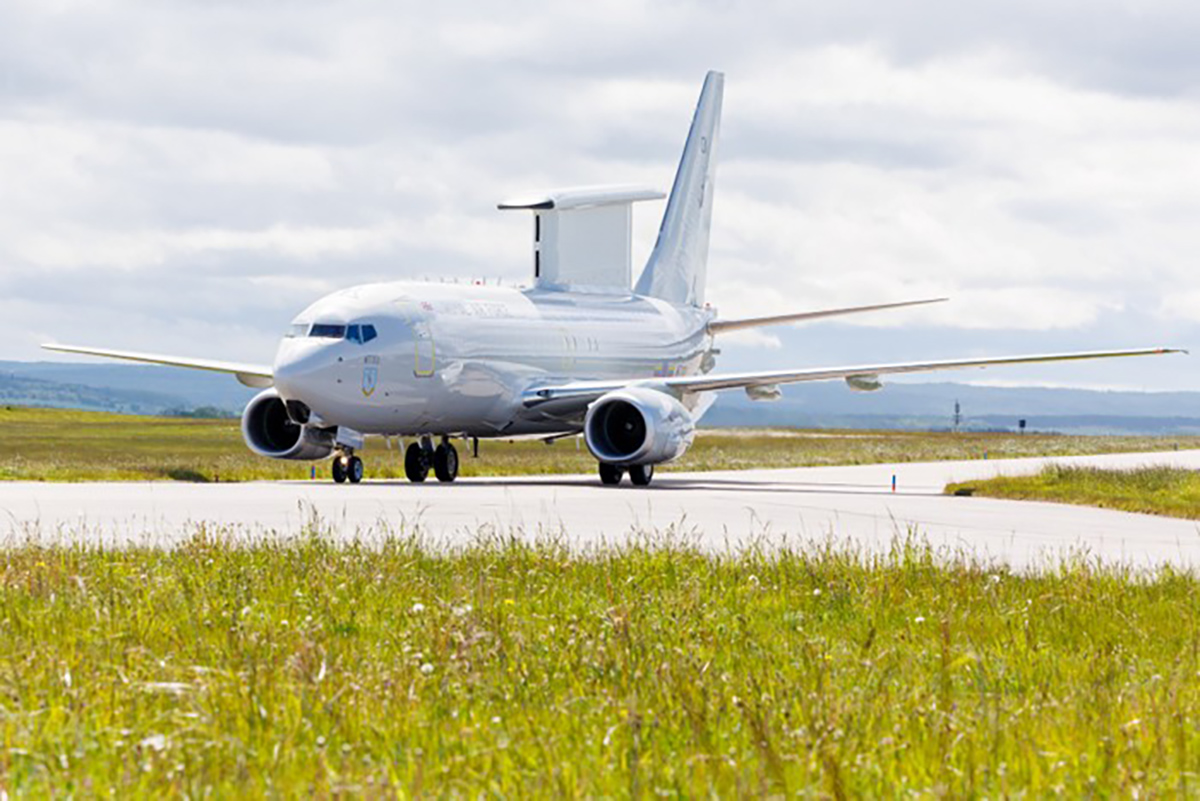 The first of three Boeing E-7A Wedgetail aircraft arrived at RAF Lossiemouth on 21 May 2026.
Image credit: UK MoD/Crown Copyright
For more, please see Analysis: UK Defence Secretary's resignation over funding raises awkward questions